
Apistogramma Cacatuoides (Cockatoo Dwarf Cichlid)
Apistogramma cacatuoides
Also known as: Cockatoo Dwarf Cichlid, Cockatoo Apistogramma, Crested Dwarf Cichlid
Origin: South America (Western Amazon, Peru, Colombia)
Water Parameters
Quick Stats
- Max Size
- 9 cm
- Min Tank
- 80 L
- Lifespan
- 5
- Swimming Level
- bottom
- Schooling
- No
- Diet
- carnivore
- Temperament
- semi-aggressive
About
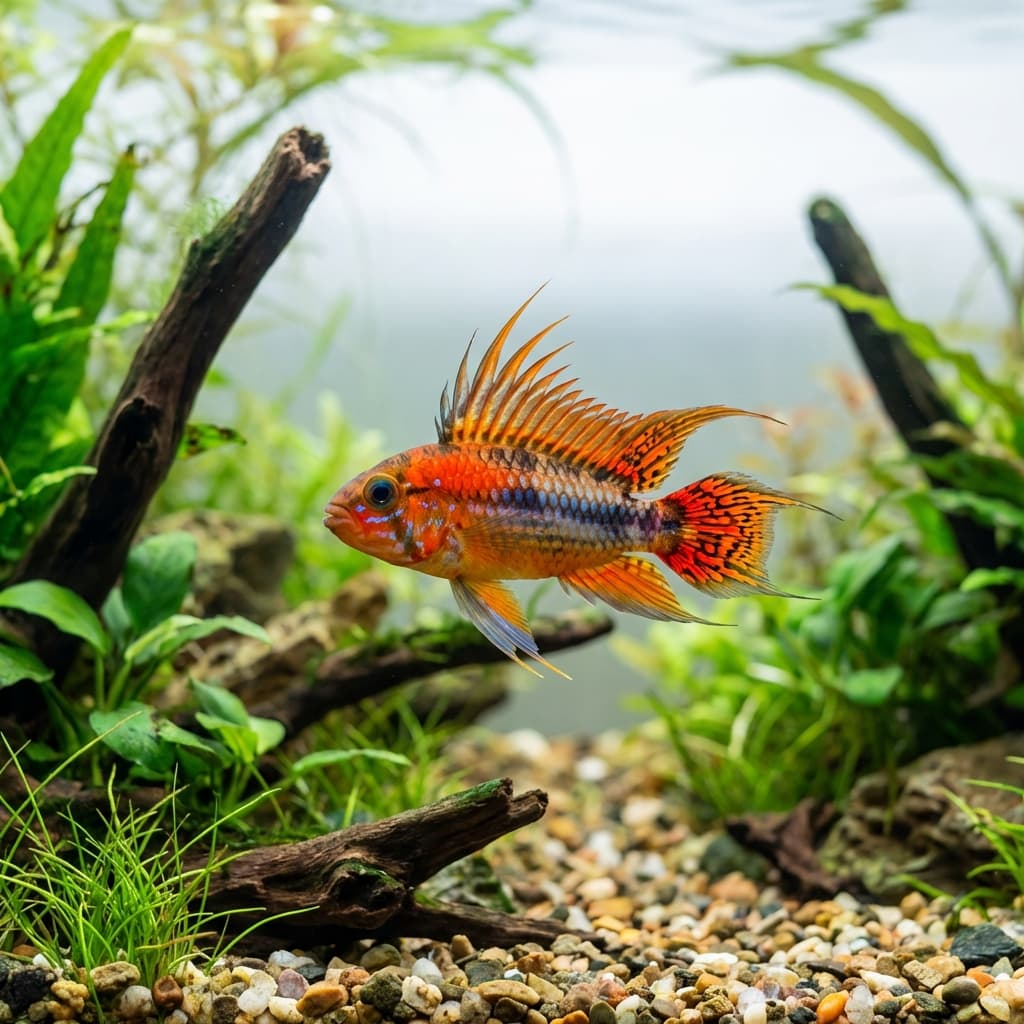
Apistogramma cacatuoides — the Cockatoo Dwarf Cichlid — earns its evocative common name from the elongated first rays of the male's dorsal fin that resemble the crest feathers of a cockatoo. This species is among the most popular and beginner-accessible Apistogramma in the hobby, owing to its hardiness, tolerance for a broader range of water conditions than many congeners, and spectacular male colouration.
Native to the western Amazon basin in Peru and Colombia, A. cacatuoides inhabits shallow, slow-moving to still floodplain pools and forest streams. Wild specimens live in areas of fallen leaf litter, submerged roots, and sandy substrate with very little water movement.
Males grow to 8–9 cm and are dramatically coloured — multiple line-bred strains exist including 'Double Red', 'Triple Red', 'Orange Flash', and others — each displaying intensified orange, red, and yellow tones in the fins. Females are significantly smaller (4–5 cm), yellow-bodied, and when ready to spawn or guarding eggs, turn an intense chrome yellow with black facial markings.
A. cacatuoides is a cave-spawning haremic species: in a large enough aquarium, one male can be kept with multiple females, each establishing her own territory with a cave. The male patrols the collective territory while females independently care for their respective clutches of eggs and fry. This haremic breeding system is fascinating to observe and makes the Cockatoo Dwarf Cichlid an engaging breeding project even for intermediate aquarists.
Care Guide
Tank Setup: An 80-litre minimum for a harem (one male, two to three females). Use fine sand substrate, multiple small caves (coconut halves, ceramic caves, almond pods), driftwood roots for territory division, and robust plants like Anubias, Cryptocoryne, and Java fern. Dense cover is essential for females to retreat from male attention.
Water Parameters: Temperature 23–29°C; pH 6.0–7.5; GH 2–12 °dH; KH 1–6 °dH. More tolerant of harder and neutral water than many Apistogramma — suitable for moderate tap water. Soft, slightly acidic water brings out best colouration.
Feeding: Carnivore-leaning omnivore. High-protein diet: small cichlid pellets, frozen bloodworm, brine shrimp, Daphnia, Mysis shrimp, and live foods for conditioning. Feed twice daily in small amounts.
Tank Mates: Peaceful upper-water schooling fish (small tetras, rasboras, pencilfish) that do not encroach on substrate territory. Avoid other substrate-dwelling cichlids and aggressive fish. Other Apistogramma males in the same tank will fight.
Behaviour: Males are territorial toward rival males. Females become intensely aggressive toward all tank mates when guarding eggs and fry — provide multiple caves and visual barriers. Remove male briefly if he harrasses females excessively post-spawning.
Health: More robust than most Apistogramma species. Susceptible to Hexamita/HLLE (hole-in-the-head) if nitrates rise above 20 ppm. Regular water changes and a varied diet prevent most diseases. Stress from inappropriate tank mates or poor water is the primary cause of illness.
Buy Apistogramma Cacatuoides (Cockatoo Dwarf Cichlid) from FinsHQ shops
Shops currently listing this species with stock available
Sell Apistogramma Cacatuoides (Cockatoo Dwarf Cichlid) in your shop?
Join aquarium shops already using FinsHQ. Get a beautiful webshop, mobile app, and inventory management — built for aquatic retailers.
Start your free store