
Asian Stone Catfish (Hara jerdoni)
Hara jerdoni
Also known as: Asian Stone Catfish, Anchor Catfish, Dwarf Anchor Catfish, Indian Stone Catfish
Origin: South Asia (Bangladesh, India — Assam, West Bengal)
Water Parameters
Quick Stats
- Max Size
- 3 cm
- Min Tank
- 30 L
- Lifespan
- 5
- Swimming Level
- bottom
- Schooling
- Yes (4–12+)
- Diet
- carnivore
- Temperament
- peaceful
About
Hara jerdoni, the Asian Stone Catfish, is one of the smallest catfish species available in the aquarium hobby and a fascinating choice for dedicated nano and cold-water tank enthusiasts. Originating from the mountain streams of Bangladesh, India (Assam, West Bengal), and neighbouring South Asian countries, this species inhabits fast-flowing, rocky hill streams with clear, highly oxygenated water and cool temperatures.
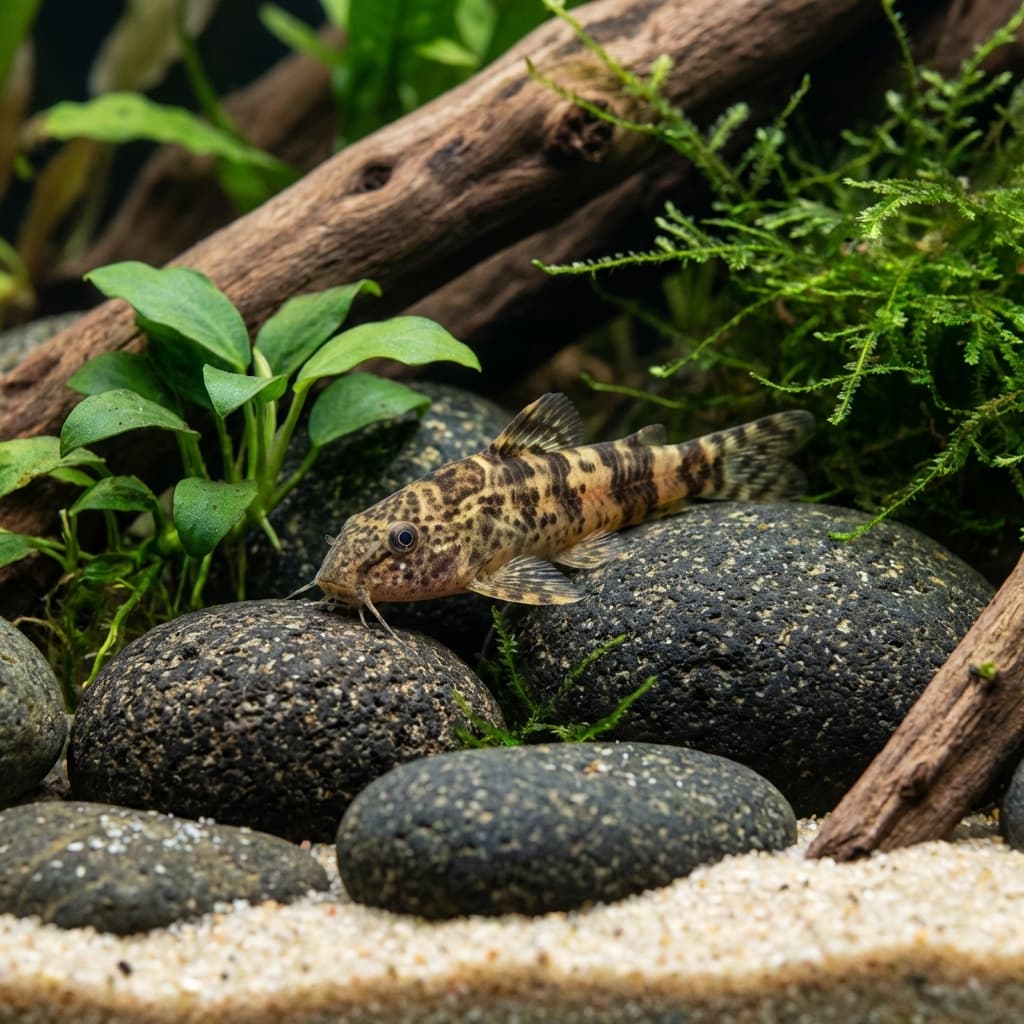
Adults rarely exceed 3 cm, making them one of the smallest true catfish species kept in aquariums. The body is dorsoventrally flattened with large, splayed pectoral and pelvic fins that create an anchor-like silhouette from above — giving rise to the common name 'Anchor Catfish.' The mottled brown and grey colouration provides exceptional camouflage against rocky and leaf-littered substrates, and in a well-decorated aquarium, they can be virtually invisible at rest.
Asian Stone Catfish are nocturnal and spend most of the day wedged under rocks, driftwood pieces, or within leaf litter. After dark, they become more active, foraging for small invertebrates and biofilm. Despite their minute size, they are predatory — in the wild they consume small crustaceans, worms, and insect larvae.
This is not a fish for tropical community tanks — its temperature requirements are distinctly cool (15–24°C), overlapping more with hillstream loach or subtropical fish setups. In a nano tank with appropriate tank mates such as other hillstream species, small mountain minnows, or stone loaches, it thrives beautifully.
Care Guide
Tank Setup: A 30–40 litre nano tank with strong water flow, excellent oxygenation, and rocky substrate is ideal. Use smooth river stones, small pebbles, and dried leaf litter to replicate a mountain stream. A powerhead or strong hang-on filter provides both flow and oxygenation. Avoid soft substrate alone — they prefer to rest on solid surfaces.
Water Parameters: Temperature 15–24°C; pH 6.5–7.5; GH 5–15 °dH; KH 3–10 °dH. Cool water is essential — they struggle in tropical temperatures above 26°C. Good oxygenation is critical. Not suitable for warm tropical community tanks.
Feeding: Carnivore-leaning micro-predator. Feed frozen micro bloodworm, baby brine shrimp, Daphnia, micro worms, and fine-grained sinking pellets. Target-feed at night when lights are off or provide food under a cave. Ensure food sinks and is accessible — they will not chase food aggressively.
Tank Mates: Best with other cool-water, small, peaceful species: hillstream loaches, White Cloud Mountain Minnows, Danio species, and small stone loaches. Avoid tropical fish that require temperatures above 26°C, and any fish large enough to eat them.
Behaviour: Nocturnal and sedentary during the day. In groups of 4+, they interact more and are occasionally seen in daylight. Males may be territorial toward each other but without serious harm. Groups are more active and interesting than solitary specimens.
Health: Hardy if water temperature remains appropriate. Most losses are from overheating in standard tropical tanks. Ensure oxygenation is excellent — they come from fast-flowing mountain streams. Avoid medications containing copper.
Buy Asian Stone Catfish (Hara jerdoni) from FinsHQ shops
Shops currently listing this species with stock available
Sell Asian Stone Catfish (Hara jerdoni) in your shop?
Join aquarium shops already using FinsHQ. Get a beautiful webshop, mobile app, and inventory management — built for aquatic retailers.
Start your free store