
Butterfly Splitfin (Ameca splendens)
Ameca splendens
Also known as: Butterfly Splitfin, Butterfly Goodeid, Ameca
Origin: Mexico (Ameca River, Jalisco — Critically Endangered, functionally extinct in wild)
Water Parameters
Quick Stats
- Max Size
- 12 cm
- Min Tank
- 80 L
- Lifespan
- 5
- Swimming Level
- middle
- Schooling
- No
- Diet
- omnivore
- Temperament
- semi-aggressive
About
Ameca splendens, known as both the Butterfly Splitfin and Butterfly Goodeid, is a critically endangered goodeid livebearer from the Ameca River system in Jalisco, Mexico. It is believed to be functionally extinct in its natural habitat due to dam construction, water extraction for agriculture, and competition from introduced species. The worldwide aquarium community maintains populations that represent the last significant groups of this species.
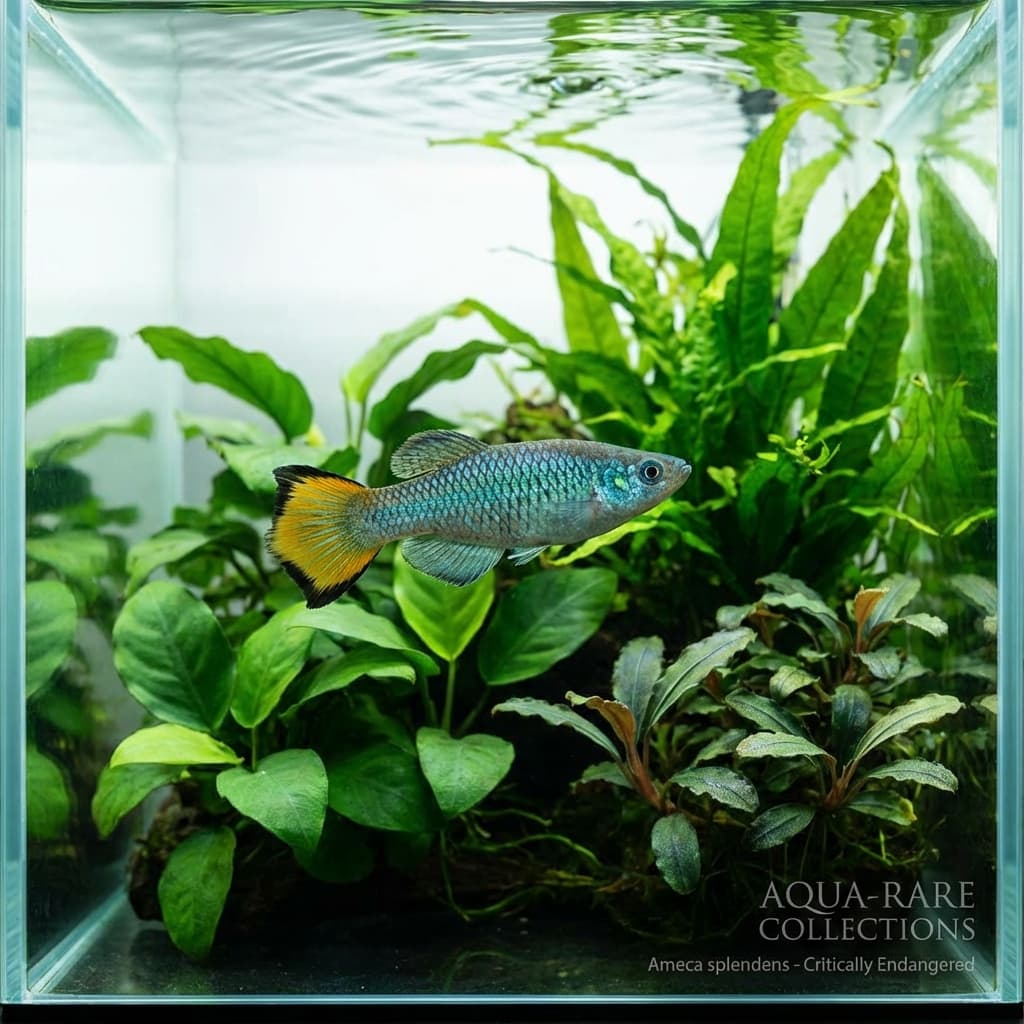
Males display distinctive colouration: a silvery body with blue-green iridescent flanks and a caudal fin that is jet black proximally with a vivid yellow distal band, creating the 'butterfly' effect. Males are smaller and slimmer than females, which are more robust with a plainer silver-olive appearance.
As a goodeid livebearer, Ameca splendens reproduces differently from the more familiar poeciliid livebearers. Embryos are nourished internally via a placenta-like structure (trophotaeniae), resulting in fewer but larger, more developed young at birth. Fry are independent from birth, reaching 1–1.5 cm at delivery.
The Goodeid Working Group (GWG) coordinates conservation breeding efforts for endangered goodeid species. Aquarists keeping Ameca splendens may register their fish with the GWG database, contributing to the documented population and potential reintroduction efforts.
Care Guide
Tank Setup: Minimum 80 litres for a group of six. Moderate water movement, good filtration, robust planting (they graze on soft plants). Rocks and driftwood for structure. A lid is advisable. Cooler temperatures suit them well.
Water Parameters: Temperature 18–26°C; pH 7.0–8.0; GH 8–20 °dH; KH 5–12 °dH. Moderately hard, slightly alkaline water. Unusually cold-tolerant for a 'tropical' fish.
Feeding: Omnivore. Feed quality flake, pellets, blanched vegetables, Daphnia, and brine shrimp. Feed two to three times daily. Appreciates vegetable matter — supplement regularly.
Tank Mates: Active and moderately assertive within species. Keep with other robust medium fish — robust tetras, barbs, corydoras. Avoid very small or delicate fish.
Behaviour: Active swimmers. Males court females persistently. Birth of fry occurs approximately every 60–70 days. No parental care — fry should be removed to a separate tank for best survival.
Health: Hardy and robust. Tolerates cooler temperatures and a range of water conditions. Regular water changes maintain long-term health.
Buy Butterfly Splitfin (Ameca splendens) from FinsHQ shops
Shops currently listing this species with stock available
Sell Butterfly Splitfin (Ameca splendens) in your shop?
Join aquarium shops already using FinsHQ. Get a beautiful webshop, mobile app, and inventory management — built for aquatic retailers.
Start your free store