
Checker Barb (Oliotius oligolepis)
Oliotius oligolepis
Also known as: Checker Barb, Island Barb, Checkered Barb
Origin: Southeast Asia (Sumatra, Indonesia)
Water Parameters
Quick Stats
- Max Size
- 5 cm
- Min Tank
- 60 L
- Lifespan
- 5
- Swimming Level
- middle
- Schooling
- Yes (8–20+)
- Diet
- omnivore
- Temperament
- peaceful
About
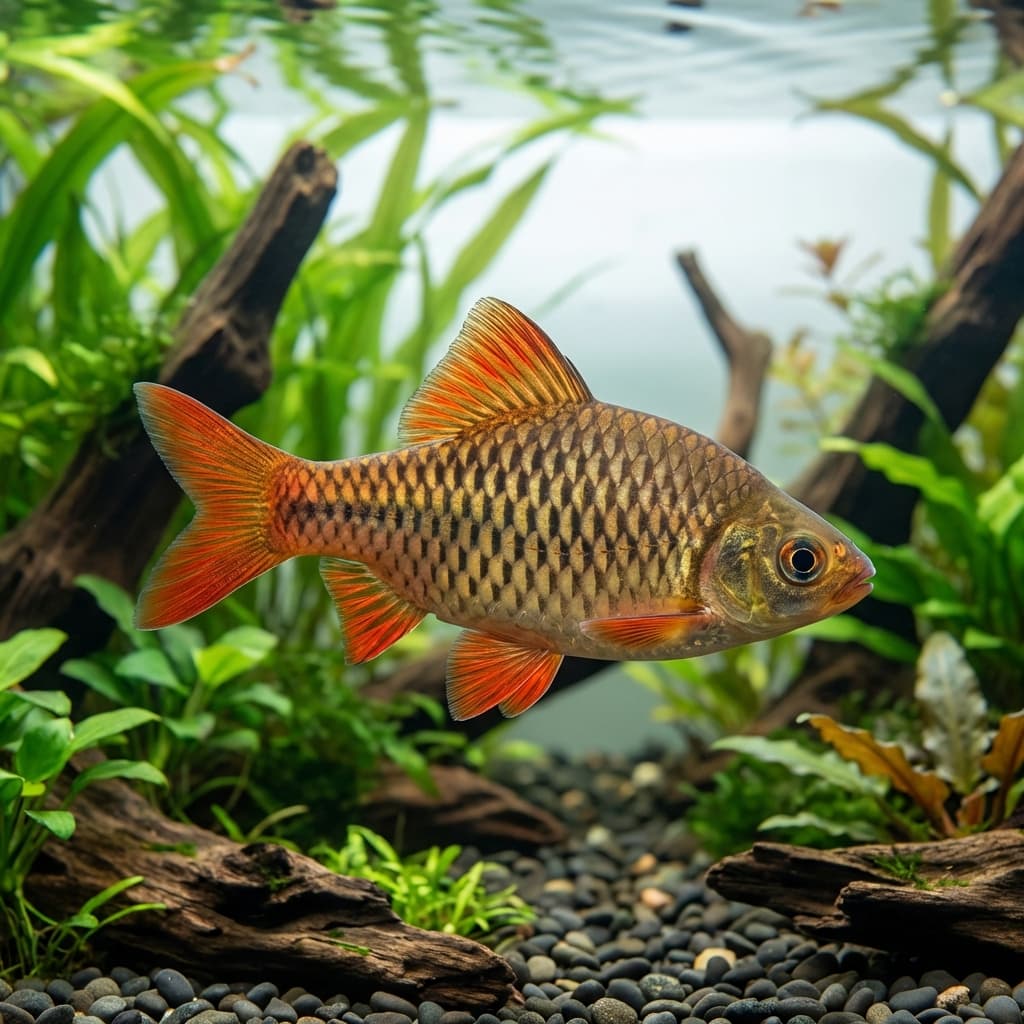
Oliotius oligolepis (formerly Barbus oligolepis, Capoeta oligolepis), the Checker Barb, is a charming small barb from the rivers and streams of Sumatra, Indonesia. Its common name perfectly describes its most distinctive feature: the large, dark-edged scales create a geometric checked or chequered pattern across the flanks, giving the fish an unusual and attractive texture to its appearance.
Males develop vivid colouration with age: reddish-orange fins, particularly in the dorsal and caudal fins, complemented by dark fin margins. The body retains the checker-scale pattern. Females are less colourful, with more transparent fins and the same checked body pattern.
The Checker Barb is one of the more peaceful barb species available — significantly less prone to fin-nipping than species like the Tiger Barb or Rosy Barb. This makes it suitable for community tanks with longer-finned species (with caution) and a wider range of tank mates. In groups of eight or more, any residual nippy tendency is directed inward toward group members.
Growing to approximately 5 cm, the Checker Barb is a manageable size for medium community aquariums and planted tanks. It is an egg-scattering species that spawns among fine-leaved plants — breeding in a planted aquarium is possible without special intervention.
Care Guide
Tank Setup: A minimum 60-litre aquarium for a school of eight. Moderate water flow, dense planting at the sides and back, open swimming lanes in the midwater. Fine to medium substrate. A lid is recommended — barbs can be active jumpers.
Water Parameters: Temperature 20–26°C; pH 6.0–7.5; GH 5–15 °dH; KH 2–8 °dH. Adaptable to a moderate range of conditions. Prefers slightly cooler water than many tropical fish, reflecting its Sumatran highland origin.
Feeding: Omnivore. Accepts quality flake, micro pellets, frozen bloodworm, brine shrimp, Daphnia, and blanched vegetables. Feed twice daily. Enthusiastic feeders that compete well at mealtimes.
Tank Mates: More compatible than most barbs. Suitable with medium tetras, rasboras, gouramis, corydoras, loaches, livebearers, and even longer-finned species (monitor for nipping). Avoid very small nano fish.
Behaviour: Active, schooling mid-water fish. Groups of 8+ display natural shoaling behaviour. Males display to each other with colour intensification. Less nippy than Tiger Barbs but monitor with long-finned tank mates.
Health: Hardy and disease-resistant. Prefers cooler water — susceptible to disease if kept consistently above 27°C. Weekly 25% water changes maintain excellent health.
Buy Checker Barb (Oliotius oligolepis) from FinsHQ shops
Shops currently listing this species with stock available
Sell Checker Barb (Oliotius oligolepis) in your shop?
Join aquarium shops already using FinsHQ. Get a beautiful webshop, mobile app, and inventory management — built for aquatic retailers.
Start your free store