
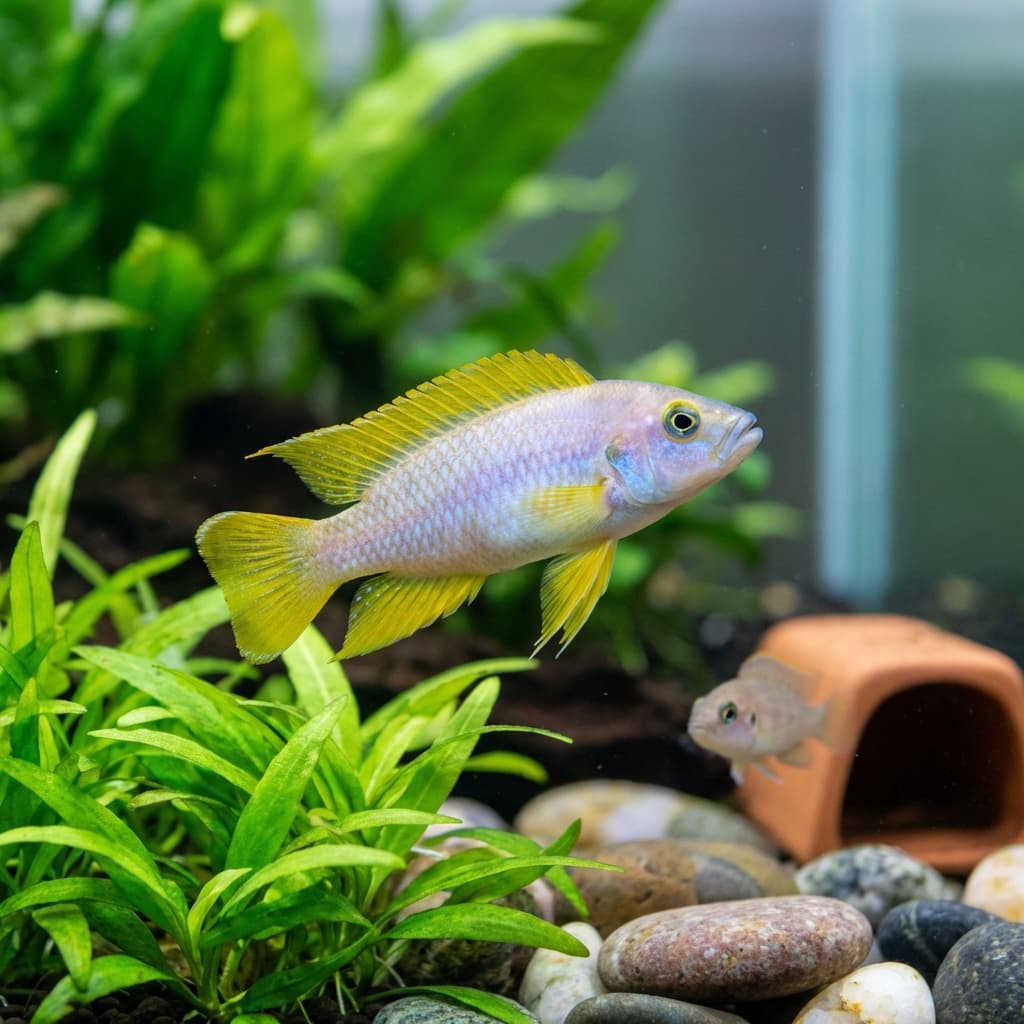
Daffodil Cichlid (Neolamprologus pulcher)
Neolamprologus pulcher
Also known as: Daffodil Cichlid, Princess Cichlid, Daffodil Brichardi
Origin: East Africa (Lake Tanganyika — endemic rocky littoral zone)
Water Parameters
Quick Stats
- Max Size
- 9 cm
- Min Tank
- 120 L
- Lifespan
- 8
- Swimming Level
- middle
- Schooling
- No
- Diet
- carnivore
- Temperament
- semi-aggressive
About
Neolamprologus pulcher, the Daffodil Cichlid, is a slender, elegant cichlid from Lake Tanganyika in East Africa and is closely related to — often confused with — Neolamprologus brichardi (Princess Cichlid). The two species are morphologically similar, both displaying long caudal fin extensions, cream-white bodies with faint blue iridescence, and subtle yellow accents. N. pulcher is distinguished by slightly different facial markings and coloration details.
Both N. pulcher and N. brichardi are famous for their remarkable cooperative breeding behaviour — one of the most complex parental care systems known in freshwater fish. A dominant pair spawns and cares for eggs and fry, but older offspring from previous spawning events remain to assist their parents in guarding and caring for younger siblings. These 'helper fish' in the family group provide a real advantage in fry survival — a form of cooperative altruism called 'kin selection' studied extensively by behavioural ecologists.
In the aquarium, this family group dynamic is fascinating to observe. As successive spawnings produce fry, the colony grows, with older young acting as sentinels and guards. The colony can eventually become quite large and somewhat aggressive toward outside intruders.
The Daffodil Cichlid inhabits the rocky littoral zone of Lake Tanganyika where it shelters among rock formations and hunts zooplankton in the open water above the rocks.
Care Guide
Tank Setup: A minimum 120-litre aquarium for a colony. Extensive rock piling providing multiple caves, crevices, and territories. Crushed coral or aragonite substrate for buffering. Good filtration and water movement. No live plants — they will be uprooted or ignored; rocks are the focus.
Water Parameters: Temperature 24–28°C; pH 7.8–9.0; GH 12–20 °dH; KH 8–14 °dH. Hard, alkaline water essential — reflects Lake Tanganyika chemistry. Maintain stable, consistent parameters.
Feeding: Carnivore/planktivore. Feed high-quality cichlid pellets, frozen Artemia, Daphnia, Mysis shrimp, and small bloodworm. Feed two to three times daily in small portions.
Tank Mates: Best in a species colony or with other compatible Tanganyikan cichlids from different ecological niches (Cyprichromis above, shell dwellers at the base). Colonies can become territorial as they grow — plan for adequate space.
Behaviour: Colony-forming cooperative breeders. A dominant pair breeds centrally while helper fish (previous offspring) guard the periphery. Aggressive toward outside intruders but gentle within the family group. As colony grows, they claim more territory.
Health: Hardy under correct Tanganyikan conditions. Sensitive to soft, acidic water and poor water quality. Weekly 25–30% water changes with Tanganyikan-chemistry water are essential.
Buy Daffodil Cichlid (Neolamprologus pulcher) from FinsHQ shops
Shops currently listing this species with stock available
Sell Daffodil Cichlid (Neolamprologus pulcher) in your shop?
Join aquarium shops already using FinsHQ. Get a beautiful webshop, mobile app, and inventory management — built for aquatic retailers.
Start your free store