
Daisy's Ricefish (Oryzias sp. 'Daisy Blue')
Oryzias sp. 'Daisy Blue'
Also known as: Daisy's Blue Ricefish, Daisy Blue Medaka, Blue Ricefish
Origin: Southeast Asia (Sulawesi, Indonesia)
Water Parameters
Quick Stats
- Max Size
- 4 cm
- Min Tank
- 20 L
- Lifespan
- 3
- Swimming Level
- top
- Schooling
- Yes (6–20+)
- Diet
- omnivore
- Temperament
- peaceful
About
Oryzias sp. 'Daisy Blue', Daisy's Blue Ricefish, is one of several Sulawesi medaka species that have entered the aquarium hobby in recent years, named for the distinctive blue iridescence displayed by healthy specimens. The Oryzias genus (medaka or ricefish) contains numerous species distributed across East and Southeast Asia, with many Sulawesi-endemic forms discovered in recent decades.
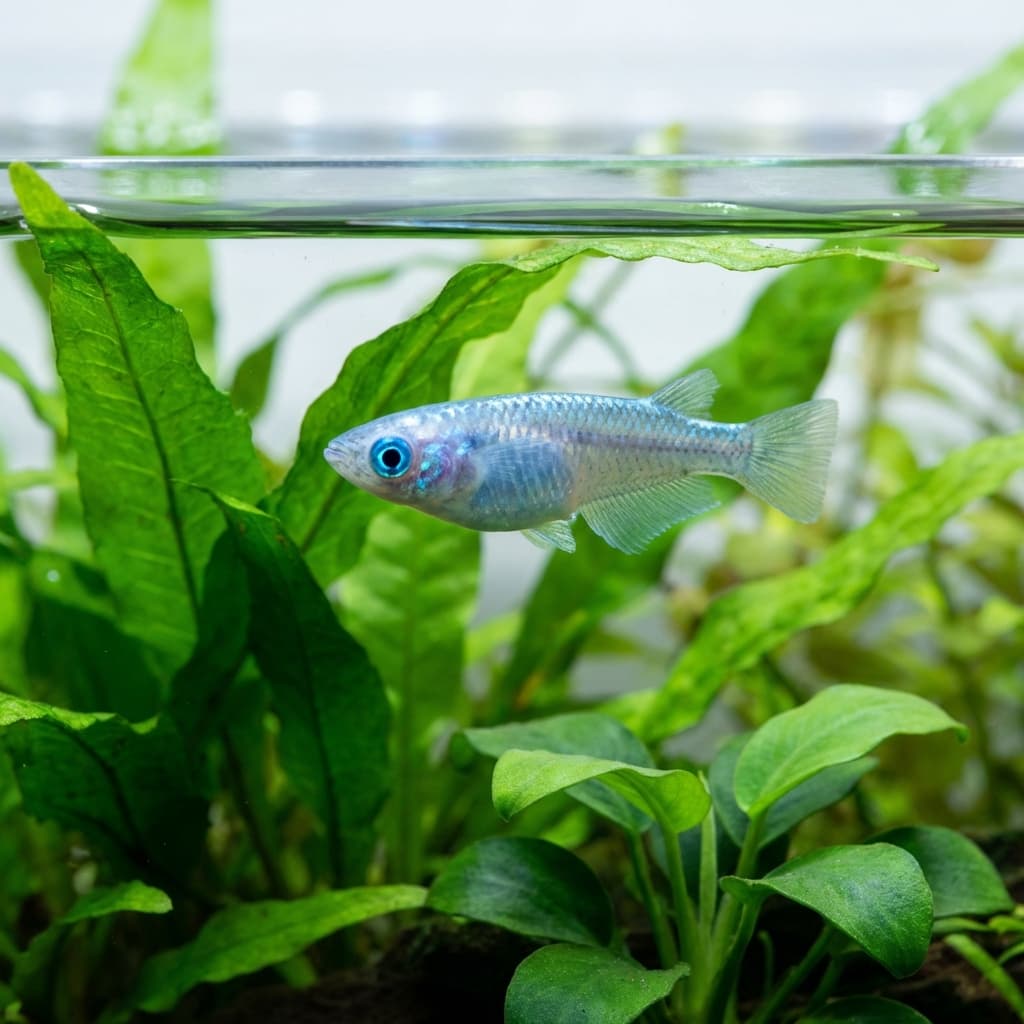
This species displays a small, elongated body typical of medaka, with the characteristic upturned mouth adapted for surface feeding and iridescent blue to blue-green colouration most vivid in direct light. Males tend to display more vivid colour and slightly larger dorsal fins. Females carry small egg clusters attached to their anal fin after spawning — a characteristic medaka behaviour.
Medaka species are adaptable and relatively easy to keep, tolerating a range of water conditions and temperatures. They are surface-oriented fish that feed primarily on small invertebrates and plant material floating on or near the surface. In the aquarium, they accept a wide range of small prepared foods and live/frozen micro foods.
Like other Sulawesi species, Daisy's Blue Ricefish may benefit from slightly harder, more alkaline water reflecting the island's mineral geology, though it is adaptable to neutral to slightly alkaline conditions.
Care Guide
Tank Setup: A 20–40 litre nano aquarium or species tank. Gentle filtration (sponge filter ideal). Floating plants (Salvinia, Frogbit, Water Lettuce) provide surface cover and spawning sites. Fine-leaved plants below the surface. Moderate lighting. Tight lid — medaka can jump.
Water Parameters: Temperature 22–28°C; pH 7.0–8.0; GH 6–15 °dH; KH 3–8 °dH. Moderately hard, neutral to slightly alkaline water. More adaptable than many Sulawesi endemics. Standard tap water (neutralised) often suitable.
Feeding: Omnivore surface feeder. Feed floating micro pellets, crushed flake, micro worms, baby brine shrimp, Daphnia, and small live foods. Feed twice daily at the surface. Small mouths — food must be appropriately sized.
Tank Mates: Peaceful with all similarly sized, non-aggressive nano fish. Suitable with other medaka, small rasboras, small tetras (cool-tolerant), Pygmy Corydoras, and dwarf shrimp. Avoid any fish large enough to eat them.
Behaviour: Surface-oriented. Females carry egg bundles attached to their anal fin — visible as a small cluster of pale eggs. Eggs can be transferred to a separate container with floating moss for hatching. Non-aggressive and social.
Health: Hardy and adaptable. Avoid sustained cold below 18°C. Pristine water quality maintained by regular 20% weekly changes ensures long-term health.
Buy Daisy's Ricefish (Oryzias sp. 'Daisy Blue') from FinsHQ shops
Shops currently listing this species with stock available
Sell Daisy's Ricefish (Oryzias sp. 'Daisy Blue') in your shop?
Join aquarium shops already using FinsHQ. Get a beautiful webshop, mobile app, and inventory management — built for aquatic retailers.
Start your free store