
Dwarf Otocinclus (Otocinclus vittatus)
Otocinclus vittatus
Also known as: Dwarf Otocinclus, Midget Sucker Catfish, Oto Catfish
Origin: South America (Brazil and throughout South America — rivers and flooded areas)
Water Parameters
Quick Stats
- Max Size
- 5 cm
- Min Tank
- 40 L
- Lifespan
- 5
- Swimming Level
- bottom
- Schooling
- Yes (6–20+)
- Diet
- herbivore
- Temperament
- peaceful
About
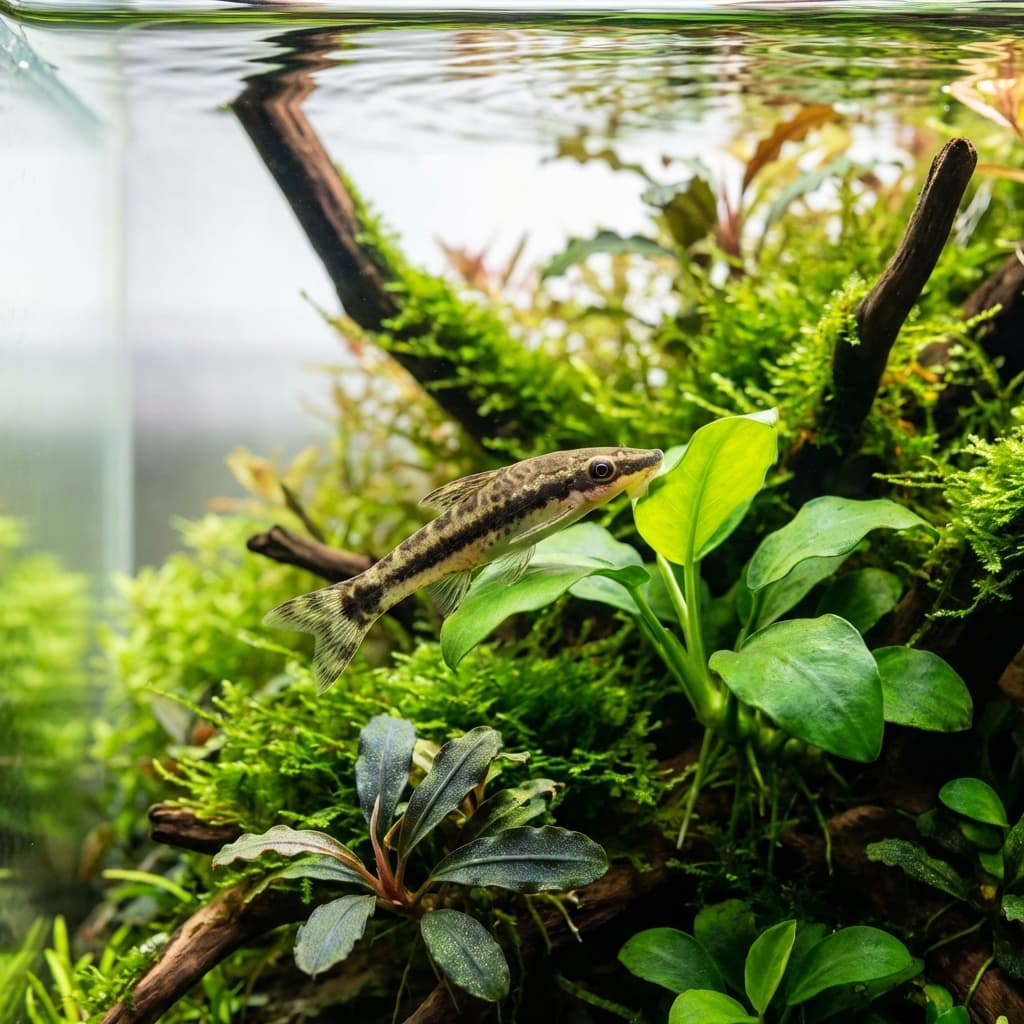
Otocinclus vittatus, the Dwarf Otocinclus (often simply 'Oto'), is one of the smallest and most practically useful suckermouth catfish in the aquarium hobby. Native to Brazil and throughout much of South America, these tiny loricariid catfish inhabit slower-moving rivers, streams, and flooded areas where they graze algae from plant stems, leaves, and submerged wood.
Otocinclus species are algae specialists — their flattened sucker mouth and rasping dental structure is designed for efficient algae removal from plant surfaces. They are particularly effective at controlling soft algae on plant leaves (diatoms, green dust algae, green algae), which many larger algae-eating fish avoid as they prefer to graze glass and rock surfaces. In a planted aquarium where preserving plant leaves is important, Otocinclus are often the only fish capable of cleaning plant surfaces without damaging them.
Otocinclus are social and should be kept in groups of at least six — solitary individuals or small groups are visibly stressed and often waste away. In a group of 6+, they forage confidently on all surfaces, including plant leaves, glass, and decor.
A significant challenge with newly purchased Otocinclus is the adjustment period — most are wild-caught and arrive stressed from collection and transit. Many individuals fail to feed during the first weeks if algae is insufficient. Ensuring the tank has a good algae coating before adding Otocinclus, or supplementing with blanched vegetables, is essential during acclimatisation.
Care Guide
Tank Setup: A 40-litre planted aquarium minimum for a group of six. Established, algae-containing tank is important — Otocinclus require existing algae or supplemental vegetable feeding. Dense planting, driftwood with biofilm, and moderate filtration. No excessive water flow — they prefer moderate to gentle current.
Water Parameters: Temperature 20–27°C; pH 6.0–7.5; GH 3–15 °dH; KH 1–8 °dH. Prefers slightly soft, slightly acidic to neutral water. Avoid very hard, alkaline conditions.
Feeding: Herbivore/algae grazer. Primary food is algae on surfaces — particularly diatoms and green soft algae. Supplement with blanched zucchini, cucumber, spinach, and algae wafers especially during tank establishment. Do not expect them to subsist on algae alone in a clean tank.
Tank Mates: Ideal community fish — completely peaceful with all species. Excellent companions for shrimp (they do not prey on shrimp), nano fish, medium tetras, corydoras, and virtually any non-predatory species.
Behaviour: Constantly grazing — moving from surface to surface. Groups forage together. Spend considerable time on plant leaves (their speciality) and glass. Will 'rest' clinging to glass or wood at intervals — normal behaviour.
Health: Hardy once acclimatised, but the initial acclimatisation is the critical risk period. Ensure adequate algae or supplement vegetable feeding immediately. Sensitive to ammonia and nitrite. Never add to an uncycled tank.
Buy Dwarf Otocinclus (Otocinclus vittatus) from FinsHQ shops
Shops currently listing this species with stock available
Sell Dwarf Otocinclus (Otocinclus vittatus) in your shop?
Join aquarium shops already using FinsHQ. Get a beautiful webshop, mobile app, and inventory management — built for aquatic retailers.
Start your free store