
Emerald Catfish (Corydoras splendens)
Corydoras splendens
Also known as: Emerald Catfish, Emerald Green Cory, Emerald Brochis, Green Catfish
Origin: Upper Amazon basin — Peru, Ecuador, Brazil
Water Parameters
Quick Stats
- Max Size
- 9 cm
- Min Tank
- 100 L
- Lifespan
- 5-10
- Swimming Level
- BOTTOM
- Schooling
- Yes (4–10+)
- Diet
- Omnivore — sinking pellets, wafers, bloodworms, tubifex, daphnia, brine shrimp
- Temperament
- Peaceful; active bottom-dweller, safe with all community fish
About
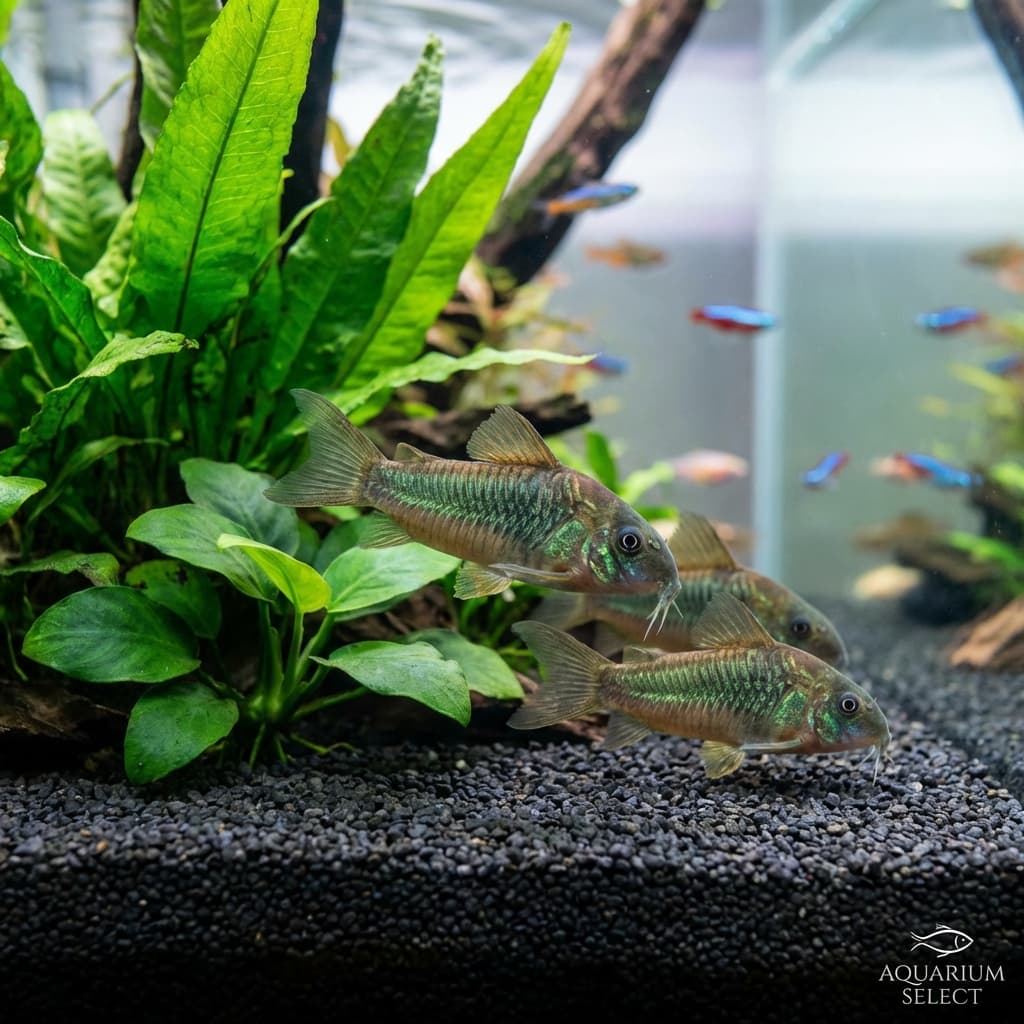
The Emerald Catfish (Corydoras splendens, formerly Brochis splendens) is a hardy catfish species from the upper Amazon basin of Peru, Ecuador, and Brazil. Distinguished from typical corydoras by its slightly larger size and notably deeper body profile, this species showcases brilliant metallic emerald-green coloration across its flanks that shimmers beautifully under aquarium lighting.
Historically classified in the genus Brochis due to morphological differences including a higher dorsal fin ray count and more elongated snout, recent taxonomic revisions have merged Brochis into the broader Corydoras genus. Nevertheless, it retains characteristics that set it apart from smaller cory species, including greater size (8–9 cm) and a somewhat more elongated body shape.
In the wild, Emerald Catfish inhabit slow to moderately flowing rivers and streams with sandy or muddy substrates, dense aquatic vegetation, and leaf litter. They are social fish, typically found in groups, and spend most of their time foraging along the bottom for small invertebrates, organic detritus, and algae.
In the aquarium, Emerald Catfish are model community citizens — peaceful, hardy, and endlessly active in their bottom-dwelling niche. Their larger size compared to pygmy or smaller cory species means they are less vulnerable to being bullied and can coexist with a wider range of tankmates.
Care Guide
Emerald Catfish require soft to moderately hard, slightly acidic to neutral water: pH 6.0–7.5, hardness 2–15 dGH, and temperatures 22–26°C. They are adaptable to a range of water conditions but thrive best with stable parameters and good filtration, as they are sensitive to ammonia and nitrite spikes.
A minimum tank of 100 liters is recommended for a small group of 4–6 individuals. Provide a fine sand or smooth-gravel substrate, as they use their sensitive barbels to sift through the bottom — rough substrate can damage barbels over time. Ample hiding spots via driftwood, smooth rocks, and broad-leaved plants complete the setup.
Feed a varied diet including sinking catfish pellets, wafers, frozen or live bloodworms, tubifex, daphnia, and brine shrimp. Despite their reputation as scavengers, Emerald Catfish need targeted feeding — do not rely solely on leftovers from other fish.
They are schooling fish by nature and should be kept in groups of at least 4–6 individuals, with larger groups of 8+ preferred for the most natural behavior. Solo or paired individuals tend to be shy and less active. They coexist peacefully with virtually all community fish, including small tetras, rasboras, dwarf cichlids, and livebearers.
Regular water changes of 25–30% weekly maintain the water quality this species requires. Avoid overstocking or poor filtration, as deteriorating water quality commonly leads to barbel erosion and susceptibility to bacterial infections.
Buy Emerald Catfish (Corydoras splendens) from FinsHQ shops
Shops currently listing this species with stock available
Sell Emerald Catfish (Corydoras splendens) in your shop?
Join aquarium shops already using FinsHQ. Get a beautiful webshop, mobile app, and inventory management — built for aquatic retailers.
Start your free store