
Furcata Rainbowfish (Pseudomugil furcatus)
Pseudomugil furcatus
Also known as: Furcata Rainbowfish, Forktail Blue-eye, Fork-tailed Blue-eye
Origin: Sepik River drainage, Papua New Guinea
Water Parameters
Quick Stats
- Max Size
- 5 cm
- Min Tank
- 60 L
- Lifespan
- 3-5
- Swimming Level
- MIDDLE
- Schooling
- Yes (6–12+)
- Diet
- Omnivore — micro pellets, baby brine shrimp, daphnia, micro worms, crushed flake
- Temperament
- Peaceful; males perform constant courtship displays; safe with all small peaceful species
About
The Furcata Rainbowfish (Pseudomugil furcatus) is a member of the Pseudomugilidae family native to Papua New Guinea's Sepik River drainage system. The species is also commonly known as the Forktail Blue-eye, referring to its two most distinctive features: the dramatically forked caudal fin and the brilliant cobalt-blue iris shared across all Pseudomugil species.
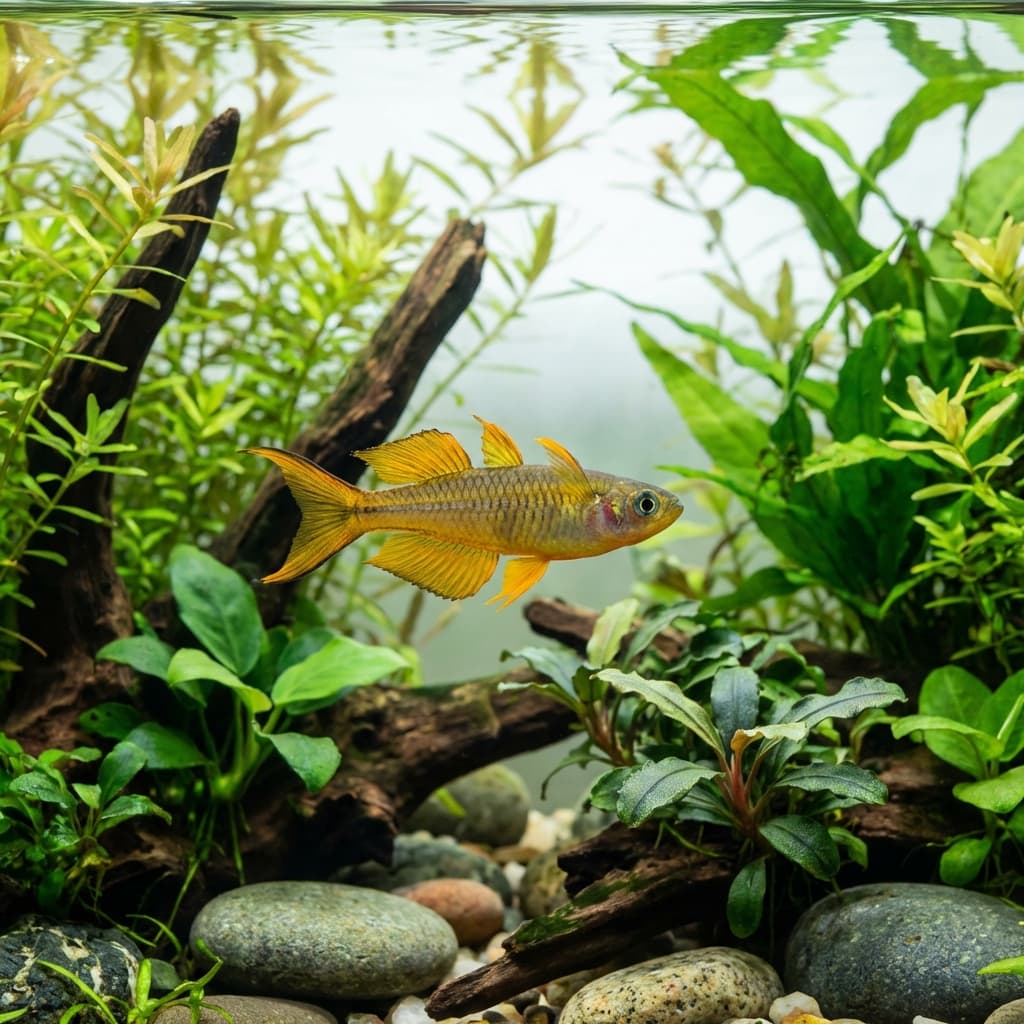
Male Furcata Rainbowfish are among the most ornamental of all small freshwater fish available to aquarists. The caudal fin is deeply forked with both upper and lower lobes elongated and edged in vivid yellow-orange, creating a striking W-shaped tail. The dorsal and anal fins are similarly accented with yellow highlights and dark leading edges in displaying males. The semi-transparent body glimmers with gold on the dorsal surface. Females are smaller, less elaborately finned, and more subdued in color.
In their natural habitat, these fish inhabit clear, oxygen-rich streams and rivers with moderate current, gravel substrates, and riparian vegetation. The water tends to be clean, slightly acidic to neutral, and soft to moderately hard — typical of highland Papua New Guinea river systems.
The Furcata Rainbowfish's greatest appeal in the aquarium is the constant and elaborate courtship behavior of males. Even in small groups, males erect all fins simultaneously and perform spiraling swimming displays to attract females — a mesmerizing performance that makes them one of the most entertaining small fish to observe.
Care Guide
Furcata Rainbowfish require consistently clean, well-oxygenated water: pH 6.5–7.5, hardness 5–12 dGH, and temperatures 22–28°C. They are moderately sensitive to declining water quality and benefit from excellent filtration paired with regular water changes.
A 60-liter planted aquarium with gentle current provides an excellent environment. Use fine-leaved aquatic plants (Java moss, Hornwort, Ceratophyllum, Myriophyllum) for the spawning substrate — females scatter adhesive eggs among fine vegetation. Include floating plants to soften surface lighting. Gentle sponge filtration or a spray bar diffuses current without excessive turbulence.
Feed appropriately small foods: high-quality micro pellets, baby brine shrimp, daphnia, micro worms, and crushed flake food. Their mouths are small — ensure food size matches. Feed multiple small portions daily for best health and coloration.
Furcata Rainbowfish are entirely peaceful and suitable for community setups with other small, gentle species: nano rasboras, small tetras, small Corydoras, freshwater shrimp, and other Pseudomugil species. Avoid nippy or boisterous species that may damage their delicate fins or stress them during feeding.
Maintain groups of at least 6–8 individuals with more females than males (2:1 ratio) to prevent females from being over-courted. Weekly water changes of 20–25% with temperature-matched water maintain pristine conditions and encourage ongoing spawning activity.
Buy Furcata Rainbowfish (Pseudomugil furcatus) from FinsHQ shops
Shops currently listing this species with stock available
Sell Furcata Rainbowfish (Pseudomugil furcatus) in your shop?
Join aquarium shops already using FinsHQ. Get a beautiful webshop, mobile app, and inventory management — built for aquatic retailers.
Start your free store