
Glass Bloodfin Tetra (Prionobrama filigera)
Prionobrama filigera
Also known as: Glass Bloodfin Tetra, Glass Bloodfin, Redfin Glass Tetra
Origin: Paraná and São Francisco River systems, Argentina and Brazil
Water Parameters
Quick Stats
- Max Size
- 6 cm
- Min Tank
- 80 L
- Lifespan
- 4-6
- Swimming Level
- MIDDLE
- Schooling
- Yes (8–20+)
- Diet
- Omnivore — flake, micro pellets, daphnia, brine shrimp, bloodworms, micro worms
- Temperament
- Peaceful; undemanding community schooling fish compatible with most species
About
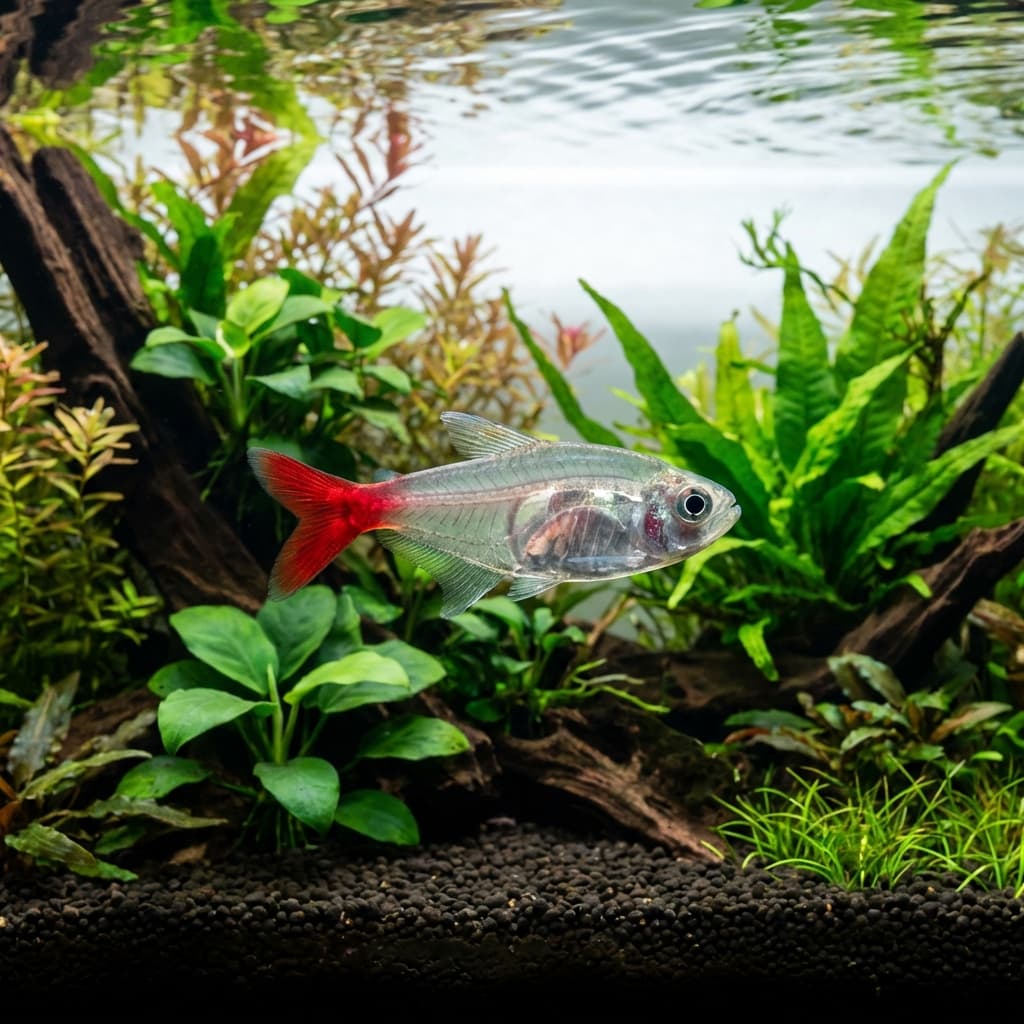
The Glass Bloodfin Tetra (Prionobrama filigera) is native to the Paraná and São Francisco River systems in Argentina and Brazil. This slender, semi-transparent characid is notable for a body so translucent that the backbone and internal organs are clearly visible, giving the fish a delicate, ghostly appearance. The fins are mostly clear and colorless, while the base of the caudal fin (tail) displays a brilliant red-orange coloration that contrasts sharply with the transparent body — hence 'Bloodfin.'
Reaching 5–6 cm in length, Glass Bloodfin Tetras are medium-sized members of the tetra family. Males are slightly slimmer; females are more rounded when gravid. Both sexes share the characteristic transparent body and red caudal marking, though males may display slightly more vivid coloration in breeding condition.
In the wild, Glass Bloodfin Tetras inhabit moderately flowing, clear river channels, pools, and tributaries with sandy and gravelly substrates. They form large schools in open water, relying on transparency and schooling behavior as anti-predator adaptations.
In the aquarium, they are peaceful, adaptable, and easy to care for — suitable for beginners and experienced aquarists alike. Their unique semi-transparent appearance adds a distinct visual element to planted tanks, particularly when the group is backlit and the red caudal markings glow against the clear bodies.
Care Guide
Glass Bloodfin Tetras are adaptable and undemanding: pH 6.0–8.0, hardness 3–20 dGH, and temperatures 18–28°C. Their wide tolerance range makes them one of the easier tetra species to keep, suitable for a range of tank setups and water conditions.
A minimum 80-liter aquarium suits a group of 8–10 well. Provide moderate current, good oxygenation, and a mix of open swimming space and planted areas. Dense plantings along tank sides and back with open central space allows natural schooling behavior. They appreciate well-filtered, clean water.
Feed quality flake food, micro pellets, and supplemental live or frozen foods: daphnia, brine shrimp, micro worms, and bloodworms. They are adaptable feeders that readily accept most standard aquarium foods.
Glass Bloodfin Tetras are entirely peaceful and suitable with most community species: other tetras, rasboras, corydoras, small catfish, livebearers, and peaceful dwarf cichlids. Avoid nippy or fin-nipping species that may target the fins.
Keep in groups of at least 8 for confident schooling behavior. Water changes of 25–30% weekly maintain water quality and encourage the best coloration and condition.
Buy Glass Bloodfin Tetra (Prionobrama filigera) from FinsHQ shops
Shops currently listing this species with stock available
Sell Glass Bloodfin Tetra (Prionobrama filigera) in your shop?
Join aquarium shops already using FinsHQ. Get a beautiful webshop, mobile app, and inventory management — built for aquatic retailers.
Start your free store