
Gold Barb (Barbodes semifasciolatus)
Barbodes semifasciolatus
Also known as: Gold Barb, Chinese Gold Barb, Schubert's Barb
Origin: Red River systems, southern China, Vietnam, Laos, and adjacent Southeast Asia
Water Parameters
Quick Stats
- Max Size
- 8 cm
- Min Tank
- 80 L
- Lifespan
- 4-7
- Swimming Level
- MIDDLE
- Schooling
- Yes (6–12+)
- Diet
- Omnivore — flake, pellets, vegetable flakes, blanched vegetables, daphnia, brine shrimp, bloodworms
- Temperament
- Generally peaceful; may occasionally fin-nip with long-finned species — keep in groups of 6+
About
The Gold Barb (Barbodes semifasciolatus) has a somewhat complex taxonomic and cultural history. The wild form (B. semifasciolatus) is native to Southeast Asia — Red River systems of southern China, Vietnam, Laos, and adjacent regions — with a natural greenish-brown coloration with faint vertical barring. The brilliant golden-yellow aquarium form was developed by Thomas Schubert in the 1960s through selective breeding and is sometimes called 'Schubert's Barb.'
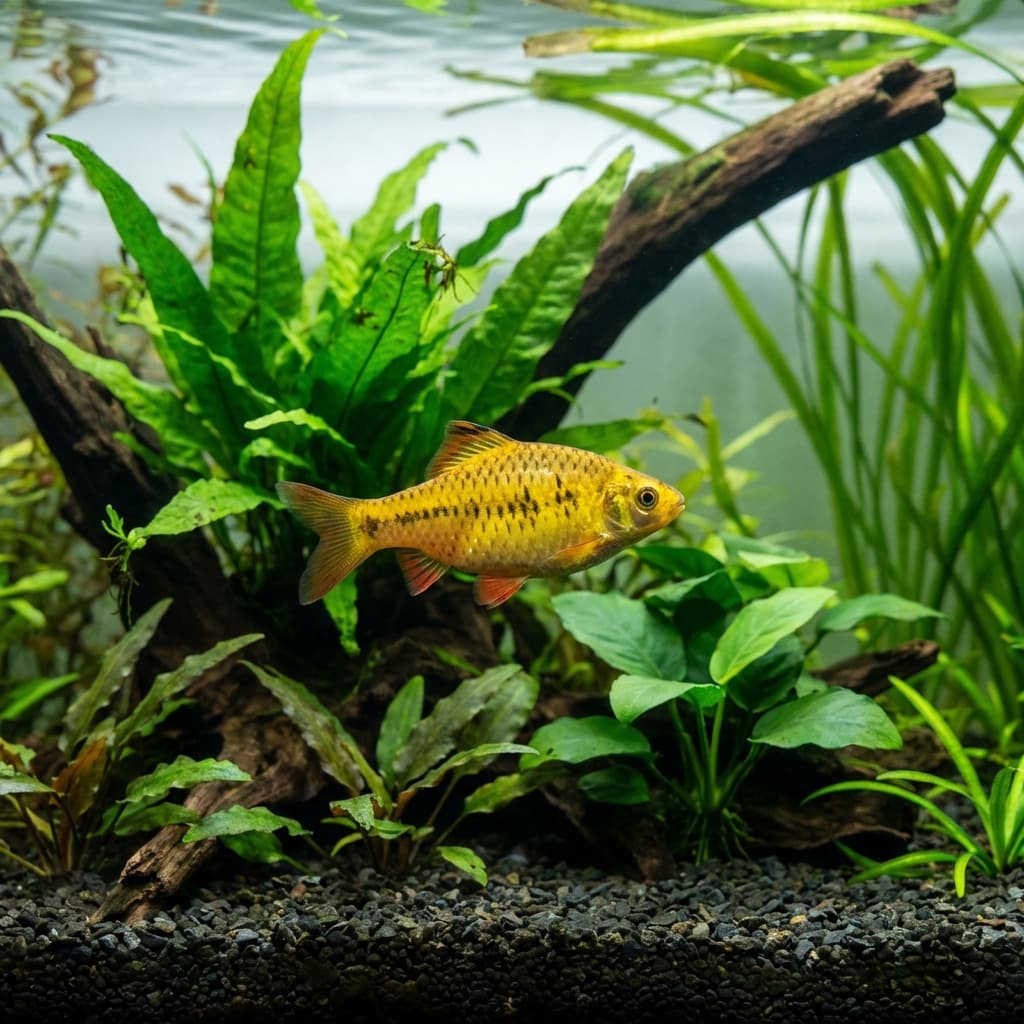
The aquarium strain displays a warm golden-yellow body that intensifies to deeper orange-gold in well-conditioned adults, with subtle scale detail and slightly reddish fins. Males tend to be more intensely colored and slimmer; females are larger and rounder when gravid. Both forms reach approximately 7–8 cm in length.
Gold Barbs inhabit a wide range of freshwater environments in the wild — from slow-moving rice paddies and drainage channels to faster-flowing hill streams — which contributes to their exceptional adaptability in captivity. They are schooling fish that forage actively through all water levels.
In the aquarium, Gold Barbs are considered one of the most reliable and forgiving fish for community setups. They are peaceful with most similarly-sized species but may occasionally nip the fins of very long-finned or slow-moving fish. Keeping them in adequate groups (6+) reduces fin-nipping behavior significantly.
Care Guide
Gold Barbs are exceptionally adaptable, tolerating pH 6.0–8.0, hardness 5–20 dGH, and temperatures 17–26°C. Their subtropical origins mean they perform well at cooler temperatures than many tropical fish, making them suitable for unheated tanks in temperate indoor environments.
A minimum 80-liter aquarium is recommended for a group of 6–8. Provide plenty of horizontal swimming space, dense plantings around the sides and back, and open central swimming space. They appreciate moderate current. A tight lid is recommended as they can jump.
Feed a varied, omnivorous diet: quality flake food, pellets, vegetable flakes, blanched vegetables (spinach, zucchini), daphnia, brine shrimp, and bloodworms. Including plant-based foods prevents them from nibbling on soft aquatic plants.
Gold Barbs are generally peaceful but may occasionally nip fins of long-finned or very slow species (bettas, angelfish, fancy guppies). Keep in groups of 6+ to minimize this behavior and provide natural schooling dynamics. Compatible with most medium community fish: other barbs, tetras, corydoras, danios, livebearers, and larger rasboras.
Weekly water changes of 25–30% maintain water quality. Their adaptability makes them an excellent choice for beginners setting up their first community aquarium.
Buy Gold Barb (Barbodes semifasciolatus) from FinsHQ shops
Shops currently listing this species with stock available
Sell Gold Barb (Barbodes semifasciolatus) in your shop?
Join aquarium shops already using FinsHQ. Get a beautiful webshop, mobile app, and inventory management — built for aquatic retailers.
Start your free store