
Gold Laser Corydoras (Corydoras aeneus var.)
Corydoras aeneus var.
Also known as: Gold Laser Cory, CW010 Corydoras, Laser Cory
Origin: Color variant of Corydoras aeneus — wild form native to Amazon and Orinoco basins, Trinidad
Water Parameters
Quick Stats
- Max Size
- 6 cm
- Min Tank
- 60 L
- Lifespan
- 5-10
- Swimming Level
- BOTTOM
- Schooling
- Yes (6–12+)
- Diet
- Omnivore — catfish pellets, algae wafers, bloodworms, tubifex, daphnia, brine shrimp
- Temperament
- Peaceful; social bottom-dweller, safe with all community fish
About
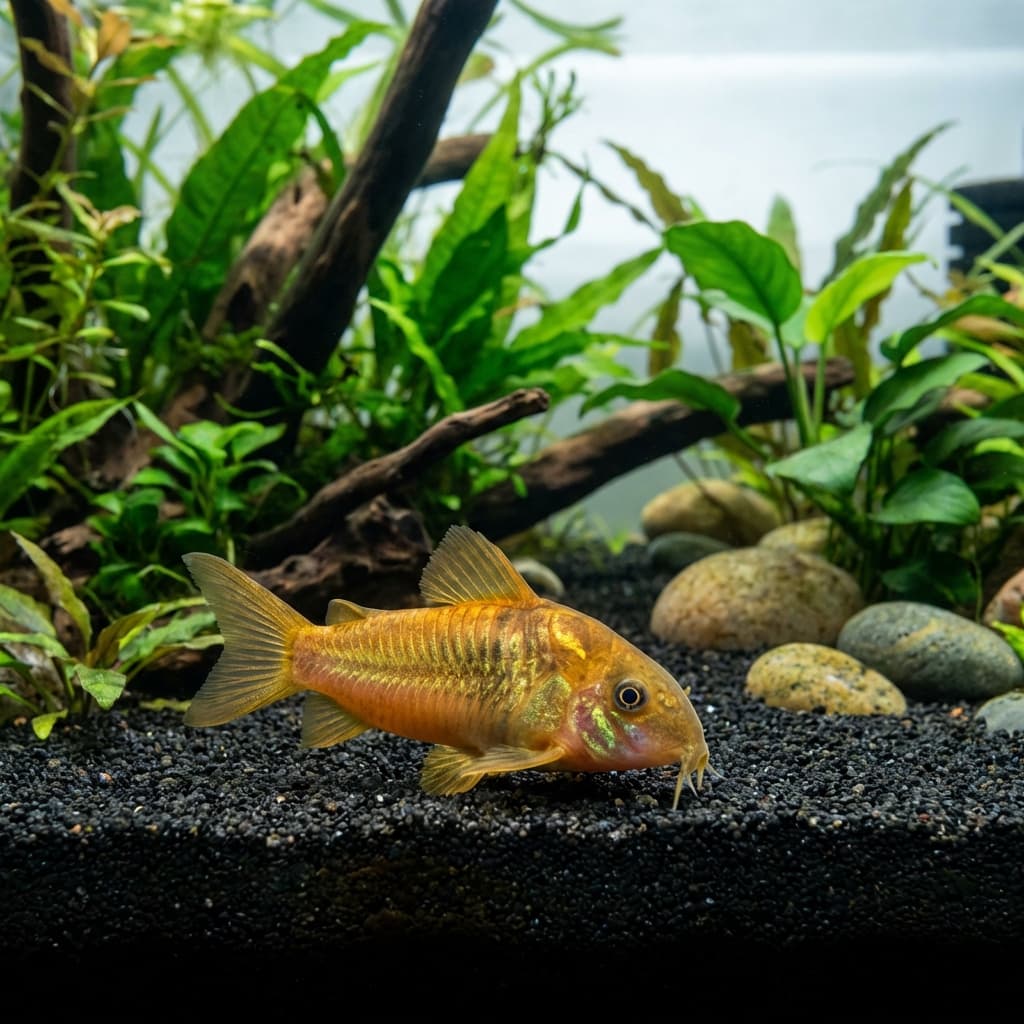
The Gold Laser Corydoras is a selectively developed or naturally occurring color variant of Corydoras aeneus (the Bronze Corydoras), characterized by a vivid, highly reflective gold or chartreuse-yellow stripe running horizontally from behind the gill plate to the caudal peduncle against a contrasting dark body. This distinctive stripe gives the variant its name — the horizontal stripe resembles a beam of golden light cutting through a dark aquarium.
The exact origin of this variant in the trade is somewhat debated — some specimens may represent a natural population variant from certain South American localities, while others are produced through selective breeding programs. Regardless of origin, Gold Laser Corydoras share the well-established care requirements and peaceful temperament of Corydoras aeneus.
Like all Corydoras, they are armored catfish (Callichthyidae) equipped with bony scutes rather than scales, providing physical protection. They breathe atmospheric air by surface-gulping — a normal adaptation to low-oxygen environments that does not indicate oxygen deficiency unless highly frequent.
Gold Laser Corydoras grow to approximately 5–6 cm and are active, social bottom-dwellers that forage continuously along the substrate for food. They are completely peaceful with all aquarium inhabitants and perform valuable scavenging duties, consuming uneaten food that reaches the bottom.
Care Guide
Gold Laser Corydoras thrive in similar conditions to Corydoras aeneus: pH 6.0–7.5, hardness 2–15 dGH, and temperatures 22–26°C. They are adaptable and hardy but sensitive to ammonia, nitrite, and high nitrate levels, which can cause barbel erosion and disease susceptibility.
A minimum 60-liter aquarium is suitable for a group of 6. Fine sand substrate is strongly preferred to protect the sensitive barbels. Provide driftwood, smooth rounded stones, and dense plant cover for hiding spots and security. Keep lighting moderate to soft.
Feed sinking foods targeted at bottom-dwellers: catfish pellets, algae wafers, sinking cichlid wafers, and supplemental frozen or live bloodworms, tubifex, daphnia, and brine shrimp. Feed in the evening when corydoras are most active, ensuring food reaches the bottom past mid-water feeders.
Gold Laser Corydoras are social and must be kept in groups of at least 6 — isolated individuals become stressed and reclusive. They coexist peacefully with virtually all aquarium species. Ideal companions include small to medium tetras, rasboras, livebearers, gouramis, and peaceful cichlids.
Maintain excellent water quality through weekly water changes of 25–30% and avoid overfeeding or overstocking. Monitor barbel integrity as an early indicator of water quality issues.
Buy Gold Laser Corydoras (Corydoras aeneus var.) from FinsHQ shops
Shops currently listing this species with stock available
Sell Gold Laser Corydoras (Corydoras aeneus var.) in your shop?
Join aquarium shops already using FinsHQ. Get a beautiful webshop, mobile app, and inventory management — built for aquatic retailers.
Start your free store