
Gold Tetra (Hemigrammus rodwayi)
Hemigrammus rodwayi
Also known as: Gold Tetra, Rodway's Tetra
Origin: Coastal rivers of Guyana and Suriname, northeastern South America
Water Parameters
Quick Stats
- Max Size
- 5 cm
- Min Tank
- 80 L
- Lifespan
- 4-6
- Swimming Level
- MIDDLE
- Schooling
- Yes (8–20+)
- Diet
- Omnivore — flake, micro pellets, daphnia, brine shrimp, cyclops, bloodworms
- Temperament
- Peaceful; excellent community schooling fish compatible with all peaceful species
About
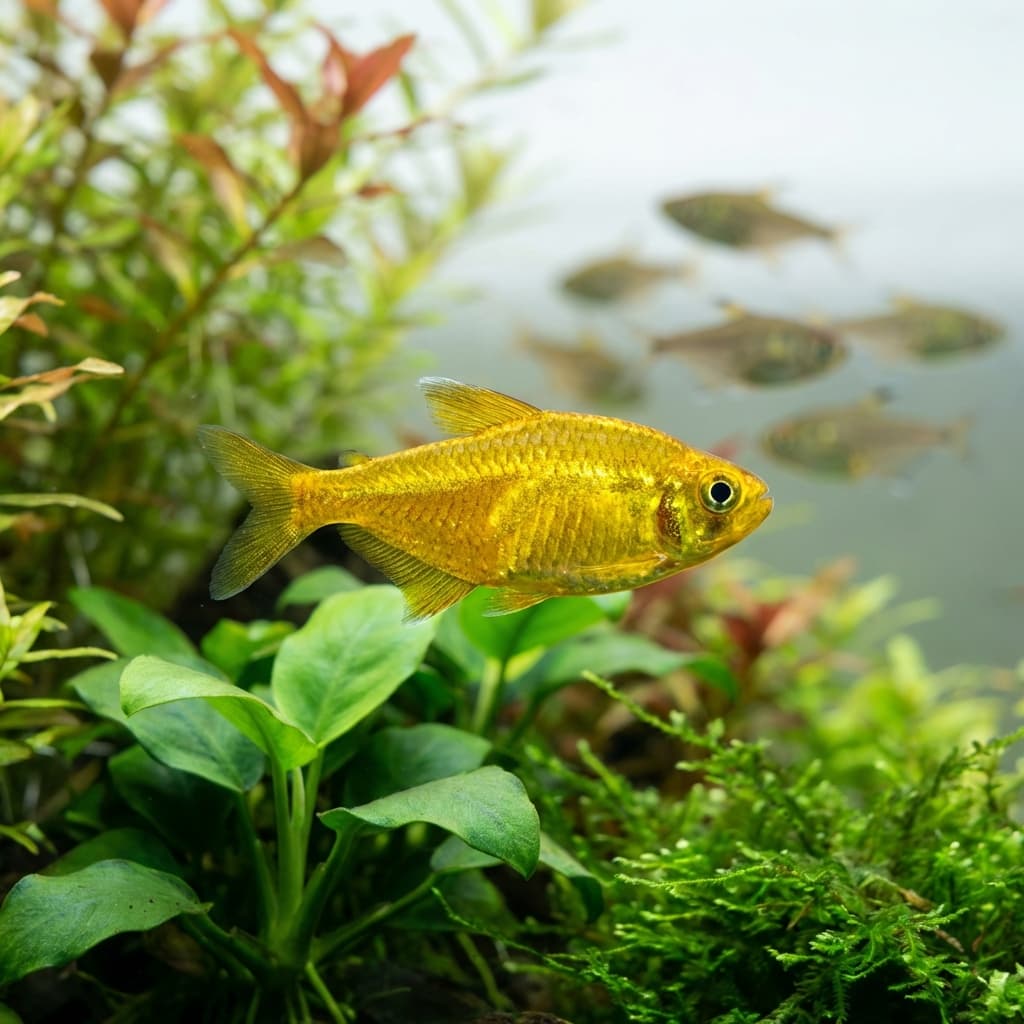
The Gold Tetra (Hemigrammus rodwayi) is native to coastal rivers of Guyana and Suriname in northeastern South America. The species exhibits a fascinating biological phenomenon: wild-caught individuals display a striking golden to coppery metallic sheen across the entire body surface, caused by the deposition of guanine crystals beneath the skin — a physiological response to infection by metacercariae (larval stage of trematode parasites).
This golden coating, while technically a stress response in the wild, creates an extraordinary ornamental appearance that has made this species prized by aquarists. Aquarium-bred specimens may not develop the same intensity of gold sheen without the environmental triggers present in the wild, but many still show attractive gold-bronze iridescence under good aquarium conditions and nutrition.
The body of H. rodwayi is semi-transparent silver-gold with a faint lateral line. The caudal fin base shows a small dark spot similar to other Hemigrammus species. Males are slimmer and more brilliantly shiny in breeding condition; females are larger and rounder.
Reaching 4–5 cm, Gold Tetras are medium-sized within the tetra family. They are peaceful, schooling fish that occupy mid-water levels and are entirely compatible with the full range of community aquarium species.
Care Guide
Gold Tetras prefer soft to moderately hard, slightly acidic to neutral water: pH 6.0–7.5, hardness 3–15 dGH, and temperatures 23–28°C. Soft, slightly acidic water with some tannin content (driftwood, Indian almond leaves) helps maintain their metallic sheen and natural behavior.
A minimum 80-liter planted aquarium is suitable for a group of 8–10. Provide dark substrate, driftwood, dried leaf litter, and dense plantings of fine-leaved plants. Moderate lighting with some shaded areas brings out the metallic gold sheen effectively.
Feed quality flake food, micro pellets, and supplement regularly with live or frozen foods: daphnia, baby brine shrimp, cyclops, and small bloodworms. A varied protein-rich diet maintains the golden metallic coating and overall health.
Gold Tetras are peaceful and compatible with virtually all community species: other tetras, rasboras, corydoras, small catfish, livebearers, small gouramis, and peaceful dwarf cichlids. Avoid fin-nipping species.
Keep in groups of at least 8 for natural schooling behavior. Weekly water changes of 25–30% maintain water quality and encourage the metallic coloration.
Buy Gold Tetra (Hemigrammus rodwayi) from FinsHQ shops
Shops currently listing this species with stock available
Sell Gold Tetra (Hemigrammus rodwayi) in your shop?
Join aquarium shops already using FinsHQ. Get a beautiful webshop, mobile app, and inventory management — built for aquatic retailers.
Start your free store