
Honey Gourami (Trichogaster chuna)
Trichogaster chuna
Also known as: Honey Gourami, Honey Dwarf Gourami, Sunset Gourami
Origin: Bangladesh and northeastern India — Brahmaputra and Ganges river drainages
Water Parameters
Quick Stats
- Max Size
- 5 cm
- Min Tank
- 40 L
- Lifespan
- 4-6
- Swimming Level
- TOP
- Schooling
- No
- Diet
- Omnivore — flake, micro pellets, daphnia, brine shrimp, cyclops, bloodworms
- Temperament
- Very peaceful; ideal for nano and community setups; males display to each other without aggression
About
The Honey Gourami (Trichogaster chuna) is native to densely vegetated, slow-moving or still freshwater habitats in Bangladesh and northeastern India — particularly the Brahmaputra and Ganges river drainages. It inhabits ponds, marshes, rice paddies, and sluggish streams with soft to moderately hard, slightly acidic to neutral water and abundant aquatic vegetation.
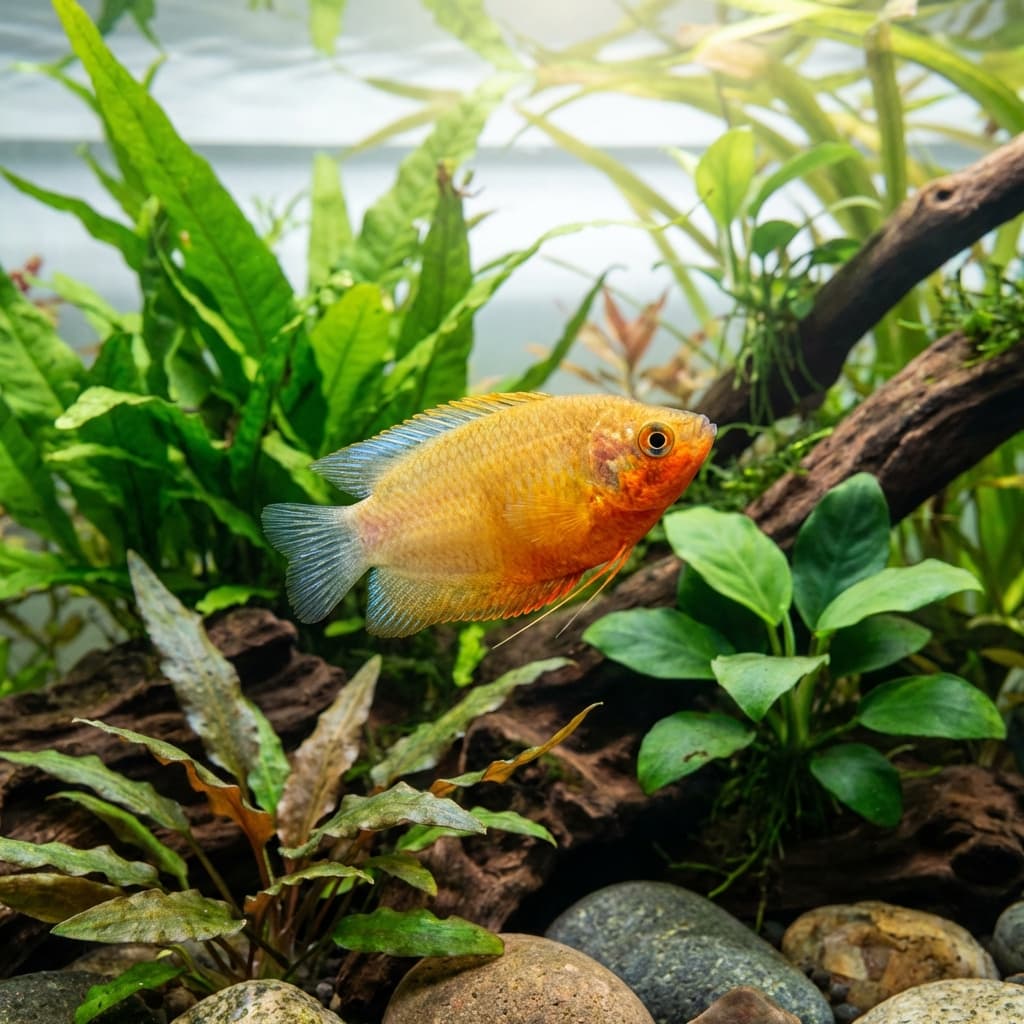
Standard females and non-breeding males display a subtle yellow-olive to silver-brown coloration with a faint dark lateral stripe. Breeding males, however, transform dramatically — the head and chin turn vivid orange to deep red, while the body becomes suffused with warm honey-gold to orange-yellow coloration. This transformation makes breeding males among the most visually impressive of the dwarf gourami group.
The Honey Gourami is a labyrinth fish possessing a suprabranchial organ (labyrinth) that allows it to breathe atmospheric air — an adaptation to oxygen-depleted waters in its native habitat. Males build bubble nests at the water surface among floating plants, and the male tends the nest and guards the eggs.
Compared to the closely related and commonly confused Dwarf Gourami (Trichogaster lalius), the Honey Gourami is notably more disease-resistant, less prone to the viral iridovirus disease that devastates many farmed Dwarf Gouramis, and generally hardier and more peaceful. For this reason, many hobbyists consider it the superior choice.
Care Guide
Honey Gouramis prefer soft to moderately hard, slightly acidic to neutral water: pH 6.0–7.5, hardness 3–12 dGH, and temperatures 22–28°C. They adapt to a range of conditions but do best in softer, slightly acidic water with good vegetation.
A minimum 40-liter planted aquarium suits a pair or small group. Dense floating plants (Salvinia, Frogbit, floating Hornwort) are ideal for bubble nest construction and surface security. Provide plenty of hiding spots with fine-leaved plants, driftwood, and stem plants. Still to gentle water movement is preferred.
Feed varied small foods: high-quality flake, micro pellets, daphnia, baby brine shrimp, cyclops, and small bloodworms. They are shy feeders that may be outcompeted by more boisterous fish — ensure they receive food during feeding time.
Honey Gouramis are very peaceful and suitable with small, gentle community species: nano tetras, small rasboras, corydoras, small catfish, and small shrimp (males may occasionally chase shrimp during breeding). Avoid aggressive, nippy, or boisterous fish that stress these gentle fish.
A single male can be kept or multiple males can coexist in larger tanks with adequate territory. Males may display to each other with spread fins but rarely cause injury. Regular water changes of 25–30% weekly and stable parameters maintain their health.
Buy Honey Gourami (Trichogaster chuna) from FinsHQ shops
Shops currently listing this species with stock available
Sell Honey Gourami (Trichogaster chuna) in your shop?
Join aquarium shops already using FinsHQ. Get a beautiful webshop, mobile app, and inventory management — built for aquatic retailers.
Start your free store