
Kubotai Rasbora (Microdevario kubotai)
Microdevario kubotai
Also known as: Kubotai Rasbora, Neon Green Rasbora, Green Rasbora
Origin: Myanmar — clear hill streams and rivers
Water Parameters
Quick Stats
- Max Size
- 2.5 cm
- Min Tank
- 40 L
- Lifespan
- 3-5
- Swimming Level
- MIDDLE
- Schooling
- Yes (10–25+)
- Diet
- Omnivore — nano pellets, baby brine shrimp nauplii, micro worms, daphnia, crushed flake
- Temperament
- Peaceful; active nano schooling fish, safe with shrimp and all peaceful nano species
About
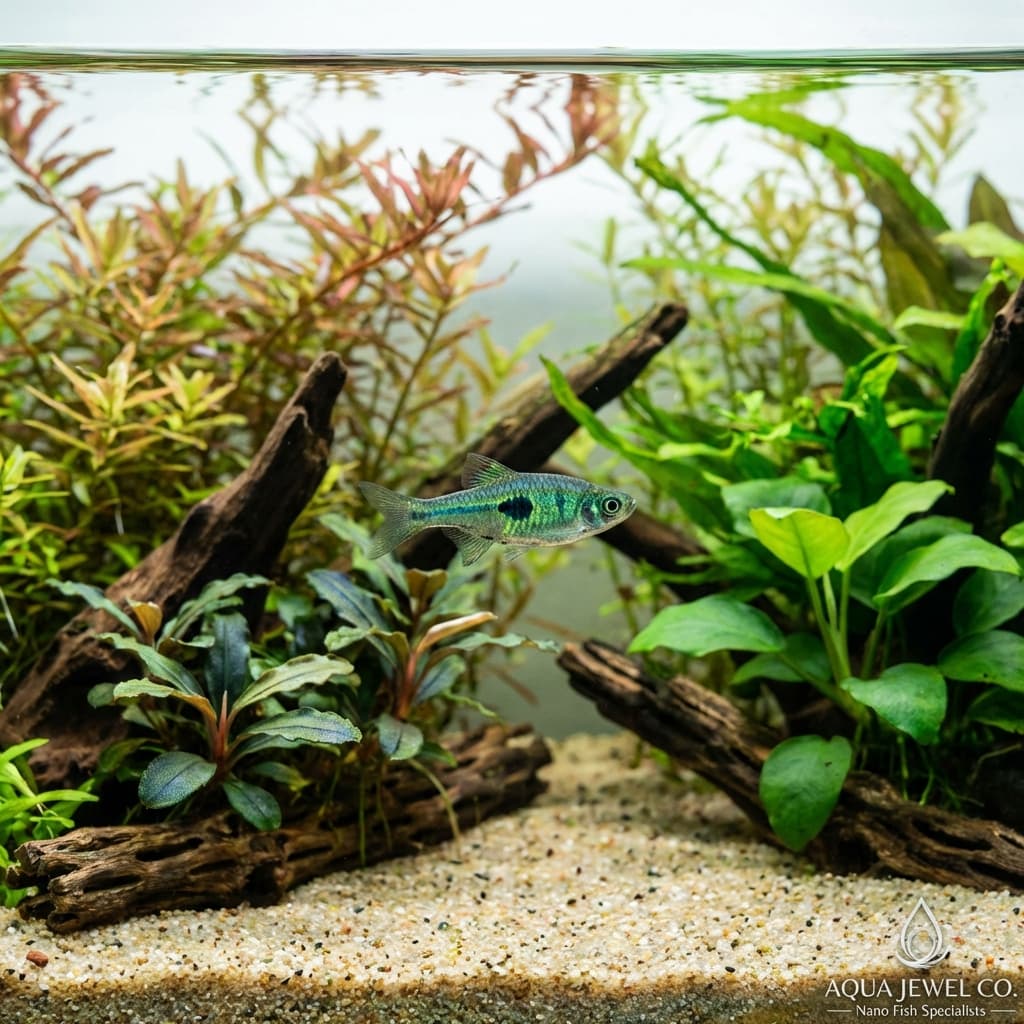
Microdevario kubotai is a diminutive cyprinid native to clear hill streams and rivers in Myanmar, first described in 2007. Despite its tiny size (rarely exceeding 2.5 cm), it makes a tremendous visual impact: the body displays extraordinarily vivid neon-green to chartreuse-yellow iridescence that appears to glow with an internal light source under aquarium illumination. The entire body shimmers with this electric color, making groups appear as floating points of neon light.
Males are typically more vibrantly colored and slimmer; females are slightly larger with a rounder belly. The species was named in honor of Kazutaka Kubota, a Japanese aquarist and ornamental fish researcher.
In their natural habitat, M. kubotai inhabits clear, shallow, fast-flowing hill streams with rocky substrates and minimal vegetation — cool, highly oxygenated water with good visibility. Despite these native conditions, they adapt well to a range of aquarium parameters when acclimatized gradually.
Kubotai Rasboras are active, social schooling fish that occupy mid-water levels, constantly moving in loose formations. In planted aquariums with dark substrate and background, their neon-green bodies stand out dramatically, creating one of the most visually impressive nano fish displays available.
Care Guide
Kubotai Rasboras prefer clean, slightly cool, well-oxygenated water: pH 6.5–7.5, hardness 3–12 dGH, and temperatures 20–26°C. They adapt to a range of conditions but show the most vivid coloration in clean, slightly cooler water with good flow and oxygenation.
A minimum 40-liter planted aquarium is suitable for a group of 10–15. A dark substrate dramatically enhances their neon coloration. Dense plantings of fine-leaved plants (Java moss, Rotala, Staurogyne) around the tank perimeter with open central swimming space create an ideal environment. Moderate gentle current simulates their stream habitat.
Feed micro-sized foods: nano pellets, baby brine shrimp nauplii, micro worms, daphnia, and finely crushed flake. Their tiny mouths require appropriately small food particles. Feed 2–3 times daily in small amounts.
Kubotai Rasboras are entirely peaceful and safe with other small, gentle species: other Microdevario, small Boraras, small Corydoras, freshwater shrimp, and similarly-sized nano fish. Avoid any fish large enough to view them as food.
Keep in groups of at least 10–15 for natural schooling behavior — larger groups of 20+ create more impressive displays. Water changes of 20–25% twice weekly maintain the water clarity and quality this species prefers.
Buy Kubotai Rasbora (Microdevario kubotai) from FinsHQ shops
Shops currently listing this species with stock available
Sell Kubotai Rasbora (Microdevario kubotai) in your shop?
Join aquarium shops already using FinsHQ. Get a beautiful webshop, mobile app, and inventory management — built for aquatic retailers.
Start your free store