
Kuhli Loach (Pangio kuhlii)
Pangio kuhlii
Also known as: Kuhli Loach, Coolie Loach, Cinnamon Loach
Origin: Java, Sumatra, Malaysian Peninsula, and surrounding Southeast Asian islands
Water Parameters
Quick Stats
- Max Size
- 12 cm
- Min Tank
- 60 L
- Lifespan
- 10-14
- Swimming Level
- BOTTOM
- Schooling
- Yes (3–8+)
- Diet
- Omnivore — sinking pellets, algae wafers, bloodworms, tubifex, daphnia; nocturnal feeder
- Temperament
- Peaceful; nocturnal and shy; safe with all community fish; keep in groups of 3+
About
The Kuhli Loach (Pangio kuhlii) is native to the lowland rivers, streams, swamps, and peat bogs of Java, Sumatra, the Malaysian Peninsula, and surrounding Southeast Asian islands. It belongs to the family Cobitidae, represented by its elongated, snake-like body shape and small, inferior mouth with characteristic barbels.
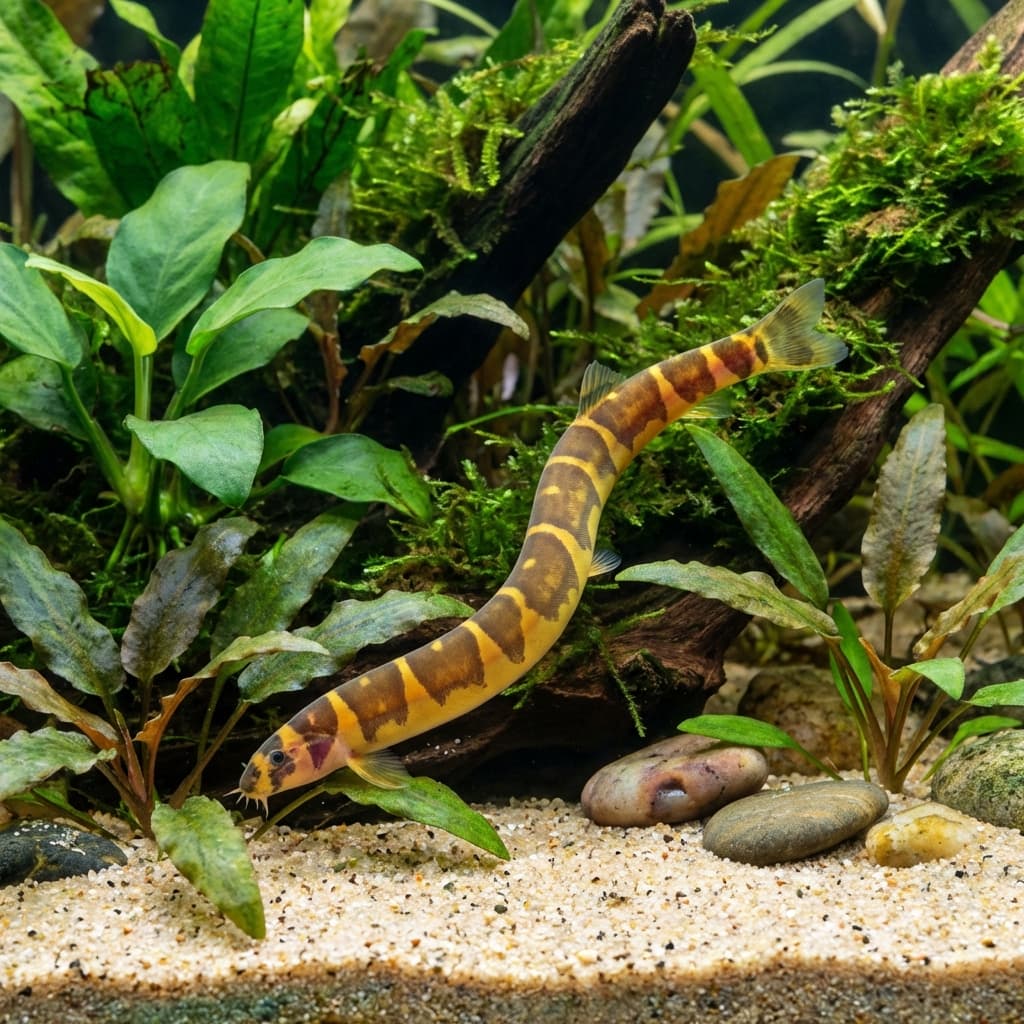
The body is remarkably elongated — almost eel-like — with alternating dark brown to nearly black bands and pale yellow-orange to cream bands encircling the body from behind the head to the tail base. The number and width of bands varies between individuals. The fish lacks significant scales on the head and has small, embedded scales on the body protected by a mucus coating. Four pairs of barbels around the mouth assist in detecting food.
In nature, Kuhli Loaches inhabit slow-moving, soft, acidic waters with sandy substrates, leaf litter, and dense aquatic and marginal vegetation. They are strongly nocturnal and are rarely seen during the day, spending daylight hours buried in soft substrate or hidden in crevices. They emerge after dark to forage along the substrate for small invertebrates, organic debris, and food particles.
In the aquarium, Kuhli Loaches are excellent scavengers that clean the substrate of uneaten food, contributing to tank cleanliness. Despite their shy, reclusive nature during the day, they are entirely peaceful and create no problems for other inhabitants.
Care Guide
Kuhli Loaches prefer soft, slightly acidic water: pH 5.5–7.0, hardness 1–8 dGH, and temperatures 24–30°C. They are warm-water loaches that require tropical conditions and do not tolerate cold temperatures well. Good filtration is important as they are sensitive to poor water quality.
A minimum 60-liter aquarium with fine sand substrate is ideal — they burrow and sift through soft substrate using their barbels. Harsh gravel or rough substrate damages their delicate bodies and barbels. Provide extensive hiding spots: dense plant roots, leaf litter, driftwood with gaps, coconut shells, and PVC tubes. Dim lighting encourages daytime activity.
Feed primarily at night or at lights-off: sinking catfish pellets, algae wafers, and frozen or live foods including bloodworms, tubifex, and daphnia placed on the substrate. They emerge actively after dark to hunt for food and will opportunistically consume any food particles that reach the bottom.
Kuhli Loaches are entirely peaceful with all community species that cannot swallow them. Excellent companions include tetras, rasboras, corydoras, small to medium cichlids, and gouramis. Avoid large predatory fish that may eat them.
Keep in groups of at least 3–5 — social groups make them significantly bolder and more active. They may occasionally be observed intertwined together during the day in shared hiding spots. Weekly water changes of 25–30% maintain water quality.
Buy Kuhli Loach (Pangio kuhlii) from FinsHQ shops
Shops currently listing this species with stock available
Sell Kuhli Loach (Pangio kuhlii) in your shop?
Join aquarium shops already using FinsHQ. Get a beautiful webshop, mobile app, and inventory management — built for aquatic retailers.
Start your free store