
Lamprologus Ocellatus (Gold Shell Dweller)
Lamprologus ocellatus
Also known as: Gold Shell Dweller, Ocellated Shell Dweller, Lamprologus Ocellatus
Origin: Lake Tanganyika, East Africa — shallow sandy shell beds
Water Parameters
Quick Stats
- Max Size
- 6 cm
- Min Tank
- 60 L
- Lifespan
- 5-8
- Swimming Level
- BOTTOM
- Schooling
- No
- Diet
- Carnivore — cichlid micro pellets, daphnia, brine shrimp, cyclops, crushed flake
- Temperament
- Males territorial around shell territory; peaceful toward dissimilar species of appropriate size
About
Lamprologus ocellatus is one of the smallest and most charismatic of the Lake Tanganyika shell-dwelling cichlids, native to the shallow sandy zones along the lake's shoreline where empty shells of the endemic snail Neothauma tanganyicense accumulate in large beds. The species name 'ocellatus' refers to the distinctive ocellus (eye-spot) visible on the upper dorsal fin.
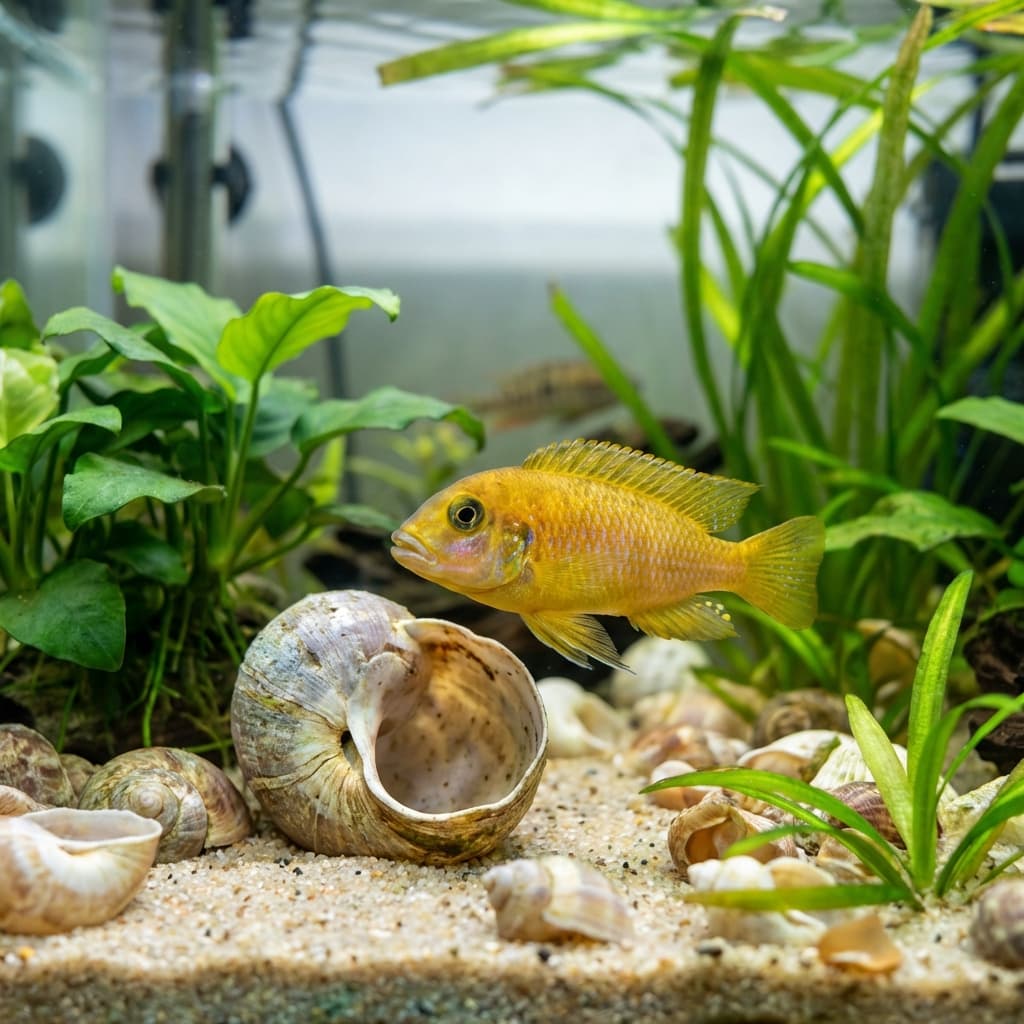
Males reach approximately 5–6 cm; females are notably smaller at 3–4 cm — a significant size dimorphism unusual among cichlids. Males display brilliant coloration: a warm gold to iridescent blue-green body with a complex scale pattern and intense eye spots. Females are duller but still attractively patterned.
Shell-dwelling cichlids have evolved an intimate behavioral relationship with empty shells: they claim individual shells as territory and breeding sites, defending them vigorously. Females spawn inside the shell interior, and both parents guard the entrance while the female tends the eggs and early larvae within. The male defends a larger territory encompassing the female's shell and several spare shells he guards.
This fascinating relationship with shells makes Lamprologus ocellatus one of the most behaviorally interesting small fish available. Their tiny size, complex social dynamics, and Tanganyika biotope requirements make them ideal for specialized shell-dweller setups where their natural behavior can be fully expressed.
Care Guide
Lamprologus ocellatus requires hard, alkaline water replicating Lake Tanganyika: pH 8.0–9.0, hardness 12–20 dGH, and temperatures 24–27°C. They cannot tolerate soft, acidic, or low-mineral water. Crushed coral or aragonite substrate helps buffer pH appropriately.
A minimum 60-liter aquarium is sufficient for a small colony (1 male, 2–3 females). Provide abundant empty snail shells — Neothauma shells are traditional but common escargot or turritella shells work well. Each female needs her own shell plus several spares. Sandy substrate allows shell arrangement and occasional digging.
Feed small, varied foods: quality cichlid micro pellets, daphnia, baby brine shrimp, small cyclops, and crushed flake. Their tiny mouths require appropriately small food particles. Feed 2–3 times daily.
Lamprologus ocellatus can be kept with other Tanganyika species that tolerate the same hard water parameters and won't eat them or crush their shells: small Julidochromis, Synodontis petricola, or other shell-dwellers (separate shell beds per species). Avoid large fish that could consume them.
Males are territorial with each other — space tank appropriately or keep one male per tank. Water changes of 25–30% weekly with mineral-rich water maintain the hard, alkaline conditions essential for this species.
Buy Lamprologus Ocellatus (Gold Shell Dweller) from FinsHQ shops
Shops currently listing this species with stock available
Sell Lamprologus Ocellatus (Gold Shell Dweller) in your shop?
Join aquarium shops already using FinsHQ. Get a beautiful webshop, mobile app, and inventory management — built for aquatic retailers.
Start your free store