
Leopard Ctenopoma (Ctenopoma acutirostre)
Ctenopoma acutirostre
Also known as: Leopard Ctenopoma, Leopard Bush Fish, Spotted Climbing Perch
Origin: Congo River basin and adjacent river systems, Central Africa
Water Parameters
Quick Stats
- Max Size
- 20 cm
- Min Tank
- 200 L
- Lifespan
- 10-15
- Swimming Level
- MIDDLE
- Schooling
- No
- Diet
- Carnivore — prawns, mussels, earthworms, large bloodworms, carnivore pellets/sticks
- Temperament
- Ambush predator; predatory toward all small fish and invertebrates; peaceful with large robust species
About
Ctenopoma acutirostre is native to the Congo River basin and its tributaries in Central Africa, inhabiting slow-moving, vegetated backwaters, floodplain pools, and forested river margins. As a member of the Anabantidae family (bush fish and climbing perch), it possesses the suprabranchial labyrinth organ enabling atmospheric air breathing.
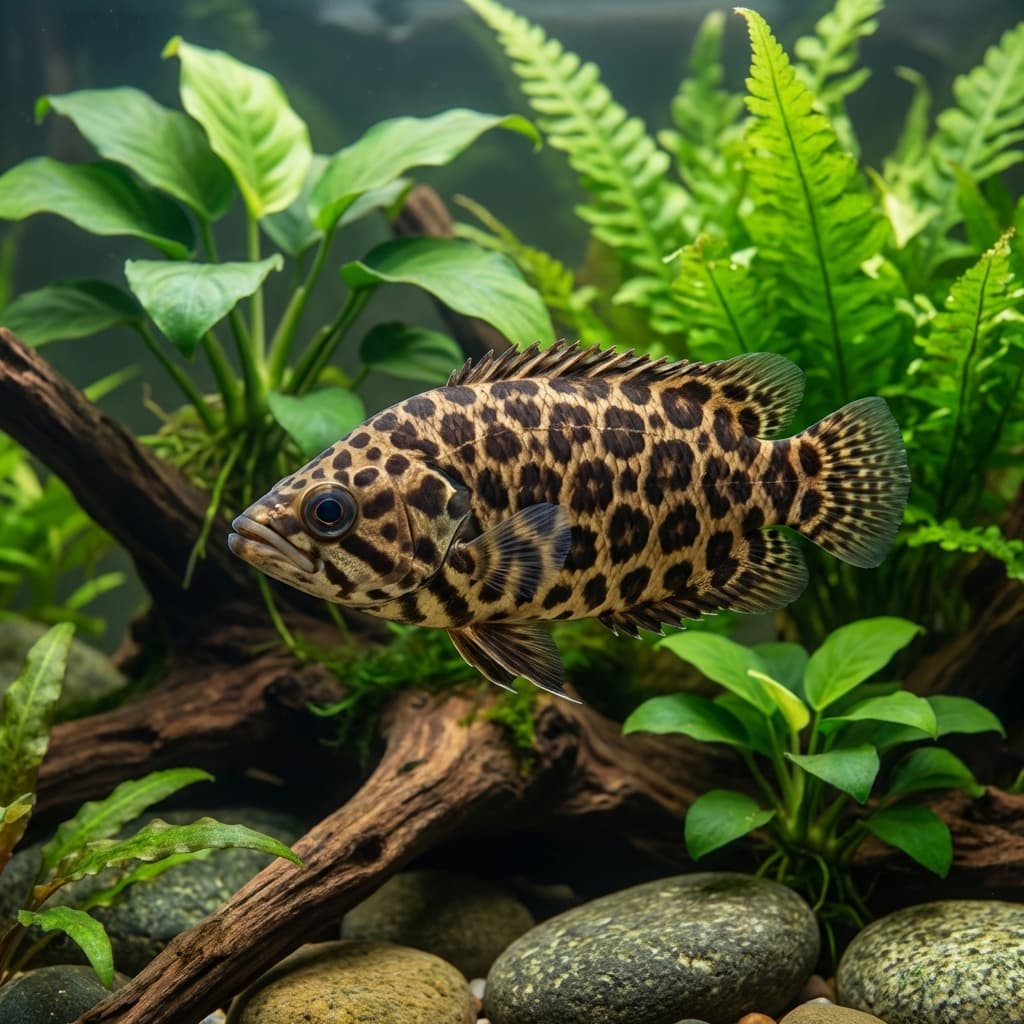
The pale cream to silver body is covered with irregular dark brown to black rounded spots of varying sizes scattered across the body and fins in a pattern strikingly reminiscent of a leopard. A dark ocular stripe passes through the eye. The laterally compressed body, pointed snout, and large, capable mouth are adapted for its role as a precision ambush predator.
The hunting strategy of C. acutirostre is remarkable: it drifts motionless in the water column at a slight angle, fins pressed close, perfectly mimicking a dead leaf suspended in gentle current. Prey fish that approach too close are seized with explosive, sudden acceleration. This behavioral adaptation makes it fascinating to observe in the aquarium.
Males develop small spines on the gill covers and body flanks. Females are generally rounder. Both sexes reach 15–20 cm in well-maintained aquariums. This species is long-lived and may survive 10–15 years under good conditions.
Care Guide
Leopard Ctenopoma prefer soft to moderately hard, slightly acidic to neutral water: pH 6.0–7.5, hardness 3–15 dGH, and temperatures 23–28°C. They are adaptable within this range but require good water quality and proper filtration.
A minimum 200-liter aquarium is recommended for a single adult. Dense plantings with large, robust plants (Vallisneria, Crinum, large Echinodorus), significant driftwood structure, and floating surface plants create an ideal environment. Dim lighting replicates the shaded Congo forest habitat and makes the fish more comfortable and active.
Feed primarily carnivorous foods: whole prawns, mussels, large bloodworms, earthworms, and high-quality carnivore pellets or sticks. May initially refuse prepared foods, preferring live prey — patience and gradual food transitions are needed. Feed every 2–3 days in moderate amounts.
Compatible tankmates must be too large to be consumed — at least 7–8 cm or half the Ctenopoma's body length. Suitable companions include large barbs, large catfish, medium to large cichlids, and other robust species. All small fish, shrimp, and invertebrates will be consumed.
Keep singly or in pairs in large setups. Weekly water changes of 25–30% maintain the water quality essential for long-term health.
Buy Leopard Ctenopoma (Ctenopoma acutirostre) from FinsHQ shops
Shops currently listing this species with stock available
Sell Leopard Ctenopoma (Ctenopoma acutirostre) in your shop?
Join aquarium shops already using FinsHQ. Get a beautiful webshop, mobile app, and inventory management — built for aquatic retailers.
Start your free store