
Longfin Bristlenose Pleco (Ancistrus sp. 'Longfin')
Ancistrus sp. 'Longfin'
Also known as: Longfin Bristlenose Pleco, Longfin Bushynose Catfish, Longfin Ancistrus
Origin: Ornamental variant derived from Ancistrus spp. — wild forms native to South America, primarily Brazil
Water Parameters
Quick Stats
- Max Size
- 15 cm
- Min Tank
- 100 L
- Lifespan
- 10-15
- Swimming Level
- BOTTOM
- Schooling
- No
- Diet
- Herbivore/Omnivore — algae wafers, blanched vegetables, driftwood; occasional protein supplement
- Temperament
- Peaceful with community fish; males territorial with each other; requires cave territories
About
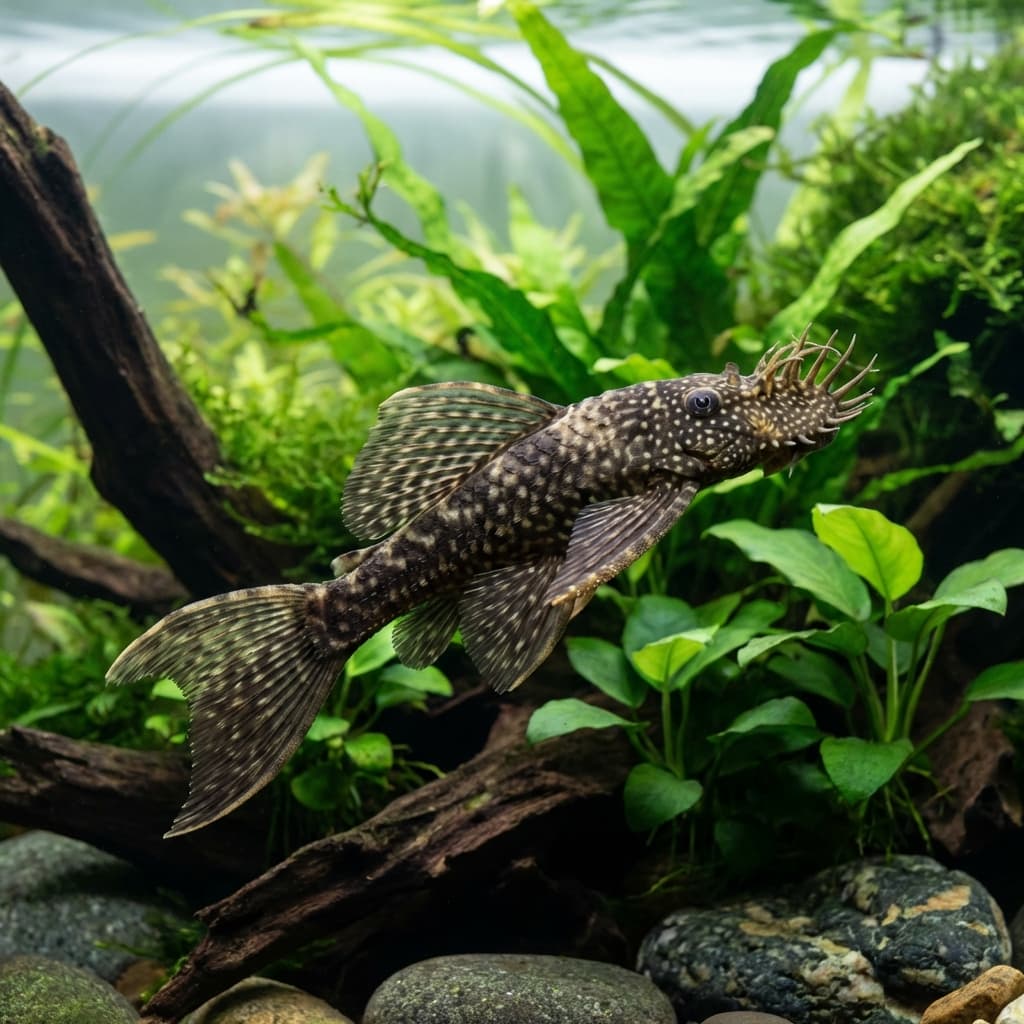
The Longfin Bristlenose Pleco is a selectively bred variant of Ancistrus spp. (Bristlenose Catfish), developed for greatly extended fin rays that create flowing, veil-like fins — particularly the dorsal, caudal, and pectoral fins. The overall size and behavior remain identical to standard Bristlenose Plecos, which typically reach 12–15 cm and are derived from multiple Ancistrus species native to South American river systems, primarily Brazil and neighboring countries.
The characteristic that defines the genus Ancistrus is the development of branched, fleshy tentacles ('bristles') on the snout of males — extending outward from around the mouth and nose in a bushy array. Females may develop small bristles along the snout rim. These bristles are more prominent and elaborate in dominant males, serving in territorial and courtship displays.
The Longfin variety displays these same bristles alongside the extended fin rays, creating a distinctive and attractive combination. The body is typically dark brown to gray with pale spots covering the entire body and fins — the spot pattern is variable between individuals.
Bristlenose Plecos are primarily herbivorous algae grazers, rasping algae, biofilm, and vegetable matter from surfaces with their specialized sucker mouth. Their manageable adult size (compared to Common Plecos that can exceed 50 cm) makes them practical algae control fish for standard community and planted aquariums.
Care Guide
Longfin Bristlenose Plecos adapt to a wide range of conditions: pH 6.0–8.0, hardness 5–20 dGH, and temperatures 20–28°C. They are hardy and forgiving of water parameter variation, making them suitable for a range of aquarium setups.
A minimum 100-liter aquarium is recommended for an adult. Provide multiple driftwood pieces (wood is both a substrate for grazing and an important dietary cellulose source), caves and hollow structures for shelter, and robust plants. Good filtration handles their waste production. Smooth rock surfaces and aquarium glass provide additional grazing surfaces.
Feed a primarily plant-based diet: algae wafers, blanched zucchini, cucumber, spinach, peas, and sweet potato are staples. Provide driftwood for grazing always available. Supplement with protein (sinking pellets, bloodworms, brine shrimp) once or twice weekly — Bristlenose Plecos need some protein but should not be exclusively protein-fed.
Bristlenose Plecos are generally peaceful but males are territorial with each other. Keep one male per tank unless the aquarium is very large (200+ liters) with multiple distinct cave territories. They coexist peacefully with virtually all community fish.
Longfin fin rays are somewhat more delicate than standard Bristlenose — avoid housing with nippy fish (tiger barbs, some cichlids) that may target the flowing fins. Regular water changes of 25–30% weekly maintain water quality.
Buy Longfin Bristlenose Pleco (Ancistrus sp. 'Longfin') from FinsHQ shops
Shops currently listing this species with stock available
Sell Longfin Bristlenose Pleco (Ancistrus sp. 'Longfin') in your shop?
Join aquarium shops already using FinsHQ. Get a beautiful webshop, mobile app, and inventory management — built for aquatic retailers.
Start your free store