
Mayan Cichlid (Mayaheros urophthalmus)
Mayaheros urophthalmus
Also known as: Mayan Cichlid, Mexican Mojarra, Orange Tiger
Origin: Atlantic slope river systems from Yucatan Peninsula, Mexico through Guatemala and Belize to Honduras
Water Parameters
Quick Stats
- Max Size
- 30 cm
- Min Tank
- 300 L
- Lifespan
- 10-15
- Swimming Level
- MIDDLE
- Schooling
- No
- Diet
- Carnivore/Omnivore — large cichlid pellets, earthworms, prawns, mussels, fish fillet
- Temperament
- Highly territorial and aggressive; suitable only for large cichlid community tanks with robust species
About
Mayaheros urophthalmus (formerly Cichlasoma urophthalmus) is native to the Atlantic slope river systems of Central America — from the Yucatan Peninsula of Mexico south through Belize and Guatemala to Honduras. It inhabits a remarkable range of freshwater environments including rivers, lagoons, cenotes, coastal mangroves, and even mildly brackish coastal waters, reflecting exceptional physiological adaptability.
The common name 'Mayan Cichlid' honors its distribution across the ancient Mayan territories of the Yucatan Peninsula. The species name 'urophthalmus' means 'tail-eye' — referring to the distinctive ocellus (black eye-spot with white border) at the upper base of the caudal fin, characteristic of the species.
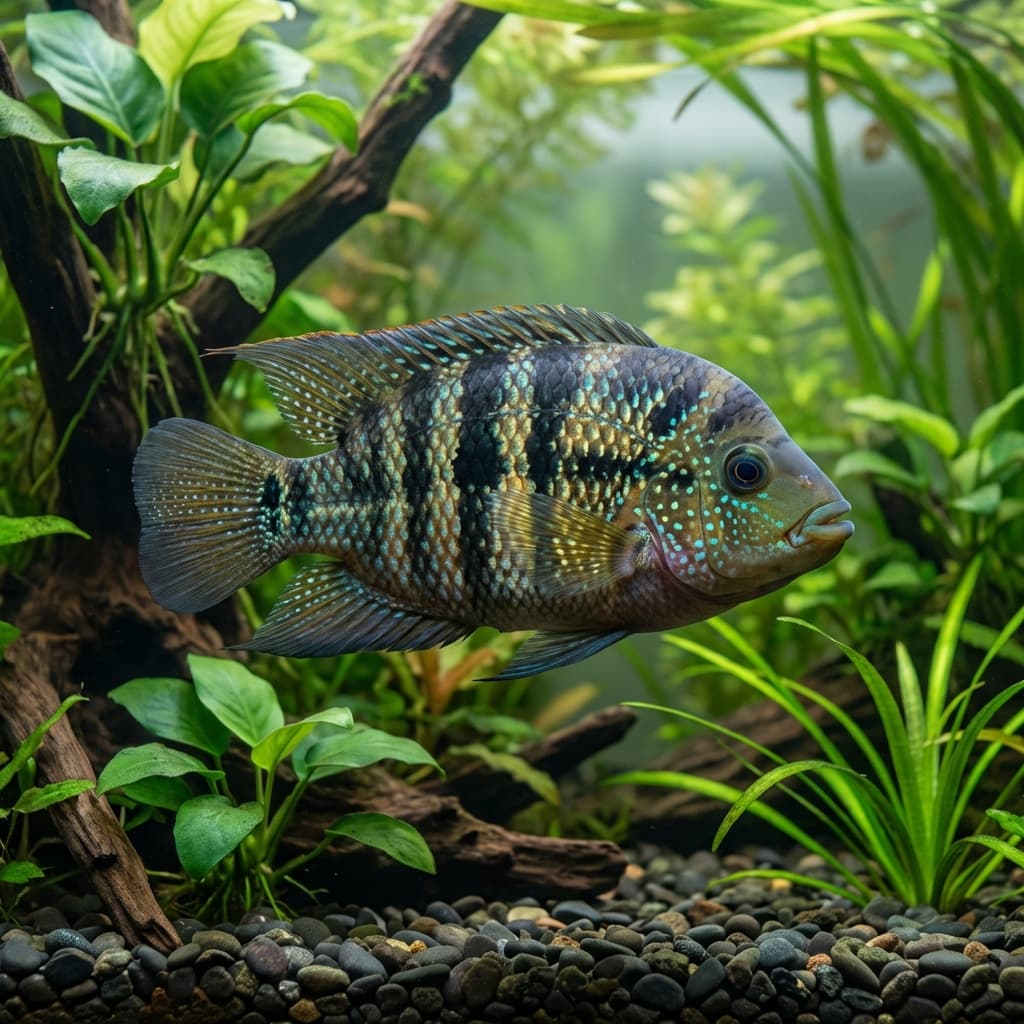
Body coloration varies by condition and mood: typically silver to olive with rows of greenish iridescent spots across the flanks that can intensify to brilliant emerald-green in breeding condition. The posterior body and fins may show orange-red coloration, particularly in breeding males. Multiple wild color populations exist with different base intensities.
Mayan Cichlids are large and territorial, reaching 25–30 cm in the aquarium. They are substrate spawners that form monogamous pairs and provide intensive biparental brood care. Their tolerance of brackish conditions makes them unique among commonly kept cichlids and opens the possibility of slightly brackish setups.
Care Guide
Mayan Cichlids are highly adaptable: pH 7.0–8.5, hardness 8–25 dGH, and temperatures 20–30°C. They tolerate slightly brackish conditions (up to SG 1.005), hard alkaline water, and even cooler subtropical temperatures — an unusually wide tolerance range for cichlids.
A minimum 300-liter aquarium is required for an adult pair. Provide large rocks, driftwood, and robust decor for territory establishment. Sandy or fine gravel substrate is appropriate. Plants will likely be uprooted during breeding territory establishment — use robust, potted, or floating plants.
Feed quality cichlid pellets, sticks, and large supplement foods: earthworms, prawns, mussels, fish fillet strips, and quality carnivore foods. They are vigorous, opportunistic feeders.
Mayan Cichlids are aggressive and territorial, particularly during breeding. They are compatible only with other large, robust cichlids and large catfish (Plecos, Synodontis) of comparable size. Never house with smaller fish that will be bullied or consumed. Provide maximum tank volume and complex territory structures to reduce aggression in multi-cichlid setups.
Pair bonds are formed through group growing of juveniles or careful introduction of similarly-sized individuals. Breeding pairs intensely defend their territory and brood — remove other fish if aggression causes injury. Water changes of 30–40% weekly maintain water quality.
Buy Mayan Cichlid (Mayaheros urophthalmus) from FinsHQ shops
Shops currently listing this species with stock available
Sell Mayan Cichlid (Mayaheros urophthalmus) in your shop?
Join aquarium shops already using FinsHQ. Get a beautiful webshop, mobile app, and inventory management — built for aquatic retailers.
Start your free store