
Mosquito Rasbora (Boraras urophthalmoides)
Boraras urophthalmoides
Also known as: Mosquito Rasbora, Exclamation Point Rasbora, Least Rasbora
Origin: Thailand, Cambodia, Laos, Vietnam — blackwater peat swamp streams and pools
Water Parameters
Quick Stats
- Max Size
- 2 cm
- Min Tank
- 30 L
- Lifespan
- 3-5
- Swimming Level
- MIDDLE
- Schooling
- Yes (15–30+)
- Diet
- Omnivore — baby brine shrimp nauplii, micro worms, daphnia, infusoria, micro pellets
- Temperament
- Peaceful; safe with shrimp; must only be kept with similarly tiny, non-predatory species
About
Boraras urophthalmoides — commonly known as the Mosquito Rasbora or Exclamation Point Rasbora — is among the smallest fish regularly available in the aquarium trade, typically reaching only 1.5–2 cm in length. Native to slow-moving and still blackwater habitats across Thailand, Cambodia, Laos, and Vietnam, this species inhabits soft, acidic, tannin-rich waters with dense aquatic vegetation and minimal current.
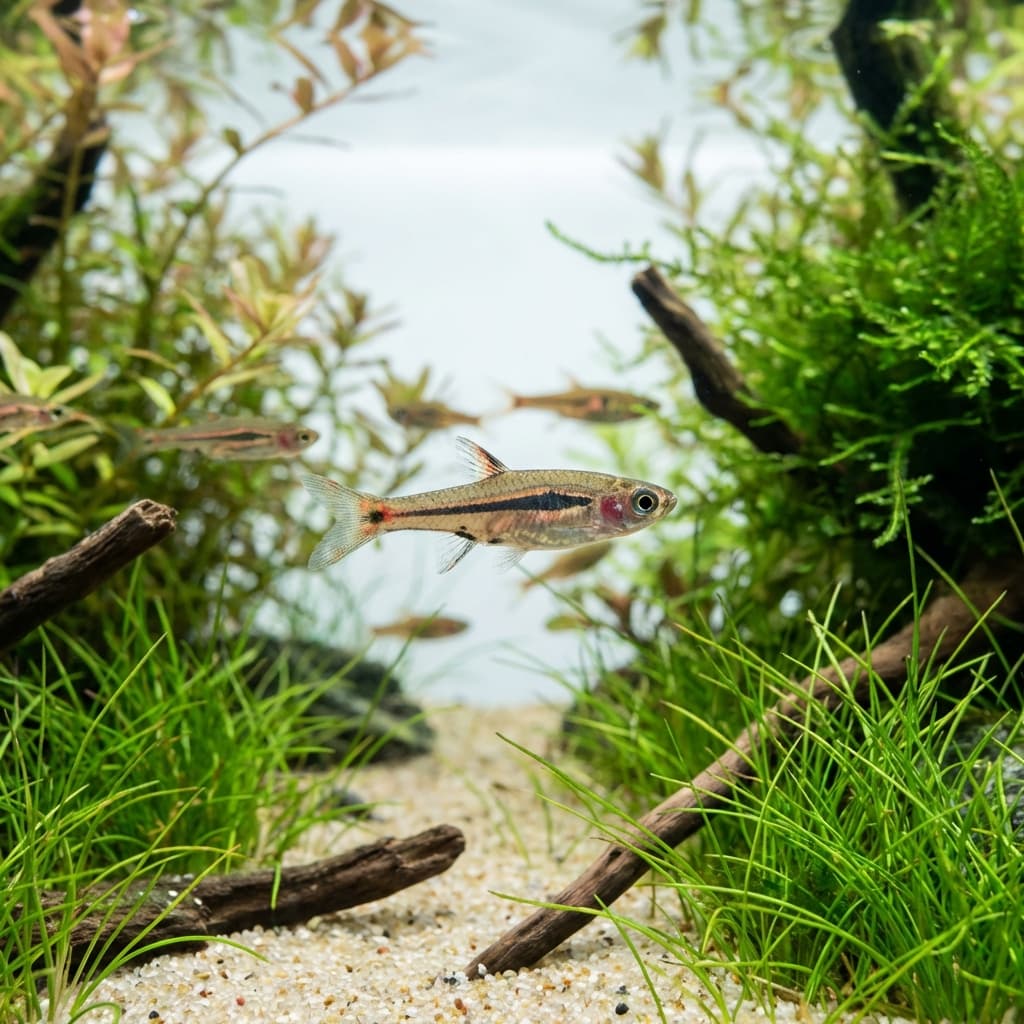
The common name 'Mosquito Rasbora' derives from the fish's tiny size, comparable to a mosquito, while 'Exclamation Point Rasbora' refers to the characteristic black spot on the flank combined with the horizontal dark stripe below it — resembling an exclamation mark (!) when viewed from the side.
Base coloration ranges from translucent pale pink to slightly golden-yellow depending on condition, diet, and water chemistry. Males are more vibrantly colored with deeper red-pink tones; females are plumper and slightly paler. The distinctive black marking pattern — a midlateral spot and stripe combination — is consistent across all individuals.
As a member of genus Boraras, this species is closely related to the Chili Rasbora (B. brigittae), Dwarf Rasbora (B. maculatus), and Strawberry Rasbora (B. naevus). All Boraras species are blackwater specialists that benefit greatly from soft, acidic, tannin-rich aquarium conditions.
Care Guide
Mosquito Rasboras require soft, acidic blackwater conditions for optimal health and coloration: pH 4.0–7.0, hardness 1–5 dGH, and temperatures 22–28°C. Tannin-rich water achieved with driftwood, Indian almond leaves, and dried botanicals produces the most vivid coloration and most natural behavior.
A nano aquarium of 30–40 liters with dense fine-leaved plantings, dark substrate, and floating plants creating dim surface lighting provides an ideal habitat. Very gentle sponge filtration replicates the still-to-gentle flow of their natural habitat.
Feed the smallest available foods: baby brine shrimp nauplii, micro worms, daphnia, infusoria, and micro pellets. Their tiny mouths require extremely small food particles — standard aquarium flake is often too large. Feed small amounts 2–3 times daily.
Mosquito Rasboras are entirely peaceful and safe with freshwater shrimp (Neocaridina, Caridina), other Boraras species, small Corydoras, and similarly-sized nano fish. Any fish with a mouth larger than approximately 2 cm is a potential predator and must be avoided.
Keep in groups of at least 15–20 for confident schooling behavior and stress reduction. Regular small water changes (15–20% twice weekly) with soft, acidic water maintain the conditions required.
Buy Mosquito Rasbora (Boraras urophthalmoides) from FinsHQ shops
Shops currently listing this species with stock available
Sell Mosquito Rasbora (Boraras urophthalmoides) in your shop?
Join aquarium shops already using FinsHQ. Get a beautiful webshop, mobile app, and inventory management — built for aquatic retailers.
Start your free store