
Odessa Barb (Pethia padamya)
Pethia padamya
Also known as: Odessa Barb, Scarlet Barb
Origin: Irrawaddy River system, Myanmar
Water Parameters
Quick Stats
- Max Size
- 9 cm
- Min Tank
- 120 L
- Lifespan
- 4-6
- Swimming Level
- MIDDLE
- Schooling
- Yes (8–15+)
- Diet
- Omnivore — flake, pellets, daphnia, brine shrimp, bloodworms, vegetable flakes
- Temperament
- Generally peaceful in groups of 8+; may occasionally fin-nip slow-moving species
About
Pethia padamya was formally described in 2008 from specimens collected in Myanmar, though it had been known in the aquarium hobby for decades under various names including 'Odessa Barb' — a name that predates its formal scientific description and refers to the Ukrainian city where it was first widely distributed in the hobby after appearing in an aquarist's collection in the 1970s.
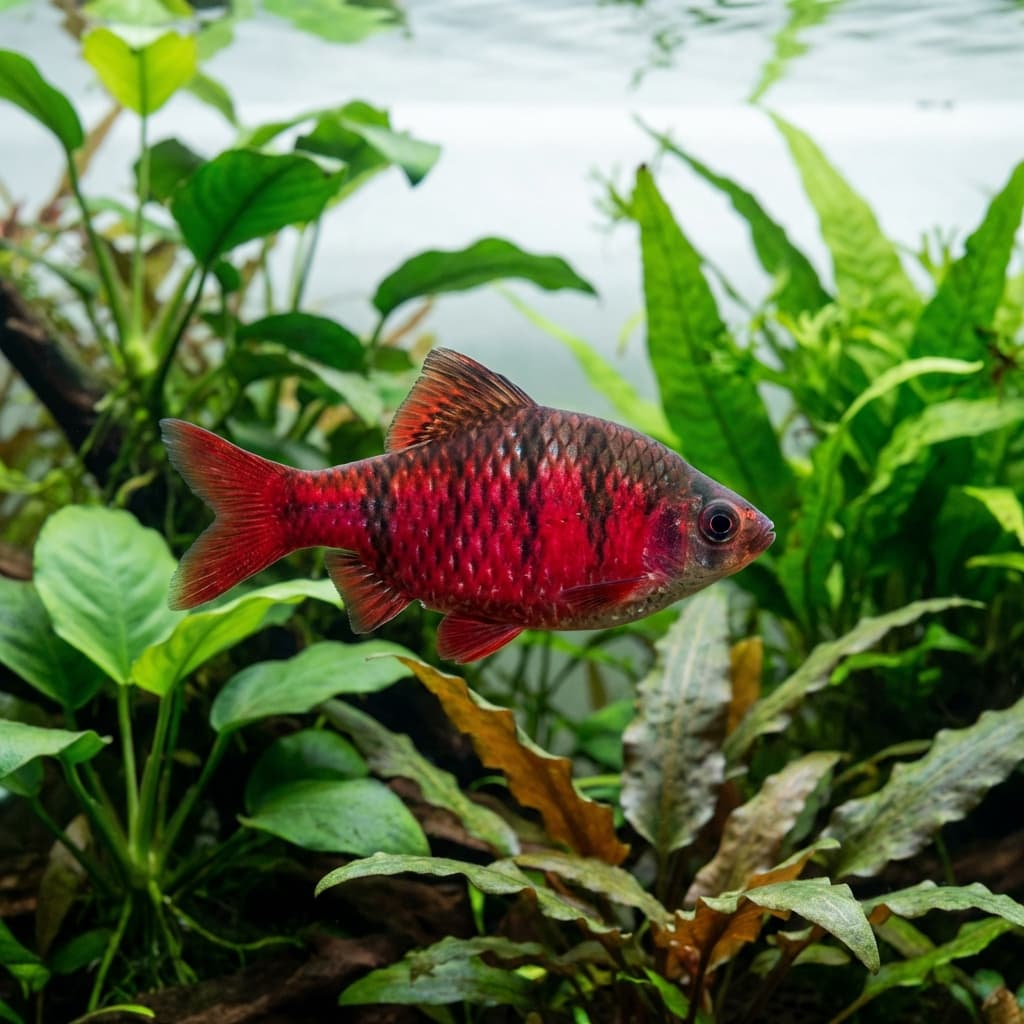
Males are spectacular: the body is silver with a warm golden sheen, displaying a vivid scarlet-red to orange-red horizontal stripe running from behind the gill cover to the tail base. Occasional iridescent scale highlights add dimension. The fins may be orange-red in breeding males. Females lack the colored stripe and are larger, more robust, and plain silver-olive in coloration.
Reaching 8–9 cm, the Odessa Barb is a moderately sized barb, larger than species like the Cherry Barb but smaller than the Tiger Barb. It is active, robust, and an energetic schooling fish that occupies all water levels.
In the wild, P. padamya inhabits flowing rivers and streams in the Irrawaddy River system of Myanmar, including reservoirs and artificial water bodies — a habitat range that contributes to its adaptability in captivity. Despite its relatively recent formal description, captive-bred specimens are widely available and make excellent community fish.
Care Guide
Odessa Barbs are adaptable and hardy: pH 6.5–7.5, hardness 5–15 dGH, and temperatures 20–26°C. They prefer slightly cooler, well-oxygenated water reflecting their hill stream origins, though they adapt to standard tropical conditions.
A minimum 120-liter aquarium is recommended for a group of 8–10. Provide horizontal swimming space, moderate current, dense plantings around the perimeter, and open central swimming space. Good filtration maintains water quality for this active, large-appetite species.
Feed quality flake food, pellets, and varied live or frozen supplements: daphnia, brine shrimp, bloodworms, and vegetable flakes. A varied diet maintains the brilliant red stripe coloration in males.
Odessa Barbs are generally peaceful in schools of 8+, where any fin-nipping tendency is minimized through natural schooling behavior. Compatible with similarly sized community fish: larger tetras, corydoras, rainbowfish, danios, and peaceful loaches. Avoid very long-finned or slow-moving species that may be fin-nipped.
Keep in groups of at least 8 for best behavior. Males compete for female attention with displays but rarely cause injury. Water changes of 25–30% weekly maintain water quality.
Buy Odessa Barb (Pethia padamya) from FinsHQ shops
Shops currently listing this species with stock available
Sell Odessa Barb (Pethia padamya) in your shop?
Join aquarium shops already using FinsHQ. Get a beautiful webshop, mobile app, and inventory management — built for aquatic retailers.
Start your free store