
Orange Chromide (Pseudetroplus maculatus)
Pseudetroplus maculatus
Also known as: Orange Chromide, Orange Chromide Cichlid
Origin: Coastal river systems, backwaters, and estuaries of peninsular India and Sri Lanka
Water Parameters
Quick Stats
- Max Size
- 10 cm
- Min Tank
- 100 L
- Lifespan
- 5-10
- Swimming Level
- MIDDLE
- Schooling
- No
- Diet
- Omnivore — cichlid pellets, flake, spirulina, algae wafers, bloodworms, brine shrimp
- Temperament
- Relatively peaceful; territorial during breeding; brackish-tolerant cichlid
About
Pseudetroplus maculatus is native to the coastal river systems, backwaters, lagoons, and estuaries of peninsular India and Sri Lanka, where it inhabits a remarkable range of habitats from freshwater rivers to brackish coastal zones. It is one of only a handful of cichlid species with a significant tolerance for salinity.
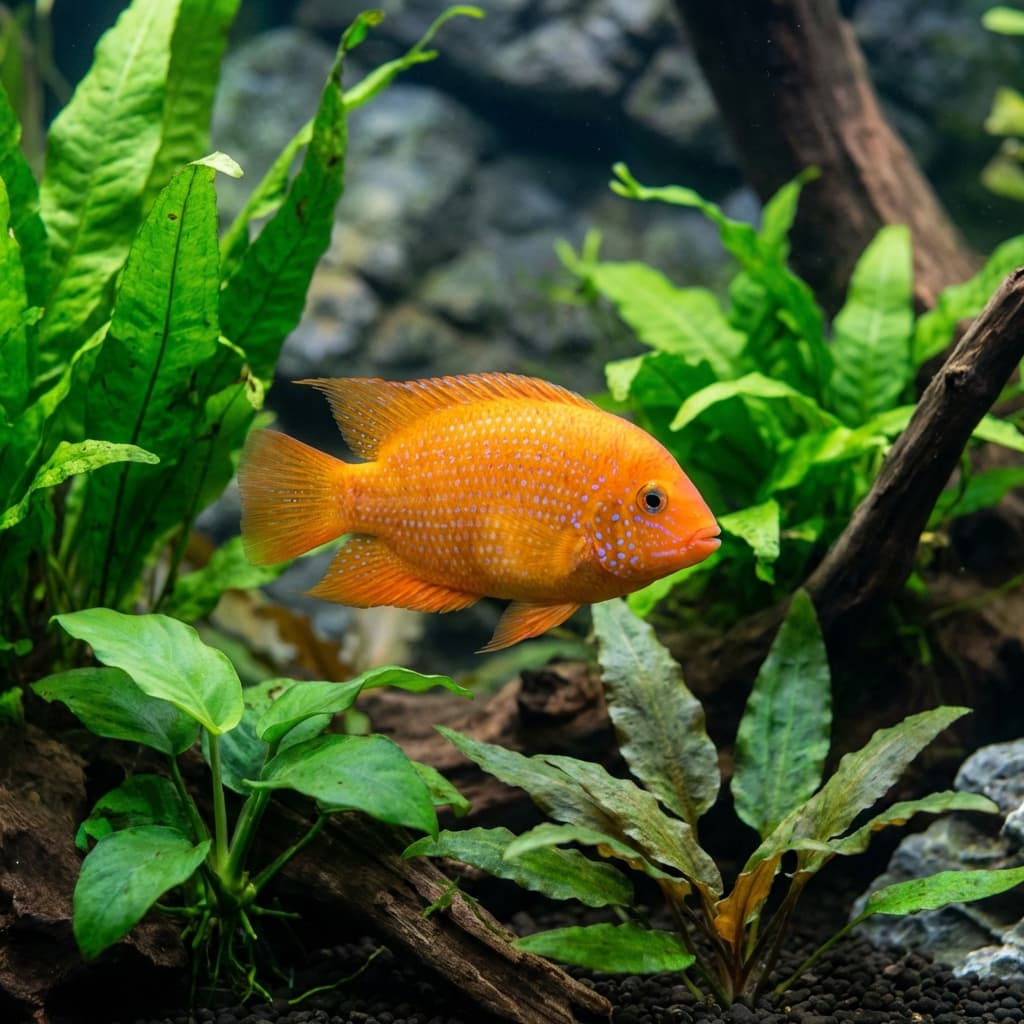
The body is pale cream to yellowish-white, heavily spotted with numerous bright orange-red to reddish spots covering the flanks, head, and fins — a pattern that becomes more vivid during breeding season. A bold dark spot is prominently displayed on the lateral line at the center of the body. Males may develop deeper coloration during breeding; females are similar but generally slightly less vivid.
Reaching 8–10 cm, the Orange Chromide is a compact cichlid — modest in size compared to many cichlid species. It was long classified in the genus Etroplus alongside the Green Chromide (Etroplus suratensis) and Pearlspot Cichlid (Etroplus canarensis), with which it often co-occurs in the wild.
In the aquarium, Orange Chromides are interesting for their brackish tolerance, which can be exploited in mixed brackish setups alongside species like mudskippers, monos, and scats — unusual companions for a cichlid. They can also be maintained in moderately hard freshwater.
Care Guide
Orange Chromides adapt to a wide range of conditions: pH 7.0–8.5, hardness 10–20 dGH, and temperatures 22–28°C. They benefit from the addition of aquarium salt (1–3 tsp per 10L) and can be maintained in mildly brackish setups (SG up to 1.005). Avoid soft, acidic water.
A minimum 100-liter aquarium suits a pair or small group. Provide rocks, driftwood, and structured hiding spots. They are plant-tolerant for a cichlid — robust plants may survive in their aquarium. Sandy substrate is preferred.
Feed a varied omnivorous diet: quality cichlid pellets, flake, vegetable-based foods (spirulina flakes, algae wafers), frozen or live bloodworms, brine shrimp, and small invertebrates. Including plant-based foods is important as they are omnivorous with herbivorous tendencies.
Orange Chromides are relatively peaceful for cichlids but become territorial and aggressive during breeding. Compatible with similarly-sized fish that tolerate brackish conditions: Mollies, Monodactylus, Scatophagus, and brackish-tolerant community species. Avoid soft-water species.
Breeding pairs are biparental substrate spawners that provide intensive care of eggs and fry. Pairs may aggressively defend the spawning territory. Regular water changes of 25–30% weekly maintain water quality.
Buy Orange Chromide (Pseudetroplus maculatus) from FinsHQ shops
Shops currently listing this species with stock available
Sell Orange Chromide (Pseudetroplus maculatus) in your shop?
Join aquarium shops already using FinsHQ. Get a beautiful webshop, mobile app, and inventory management — built for aquatic retailers.
Start your free store