
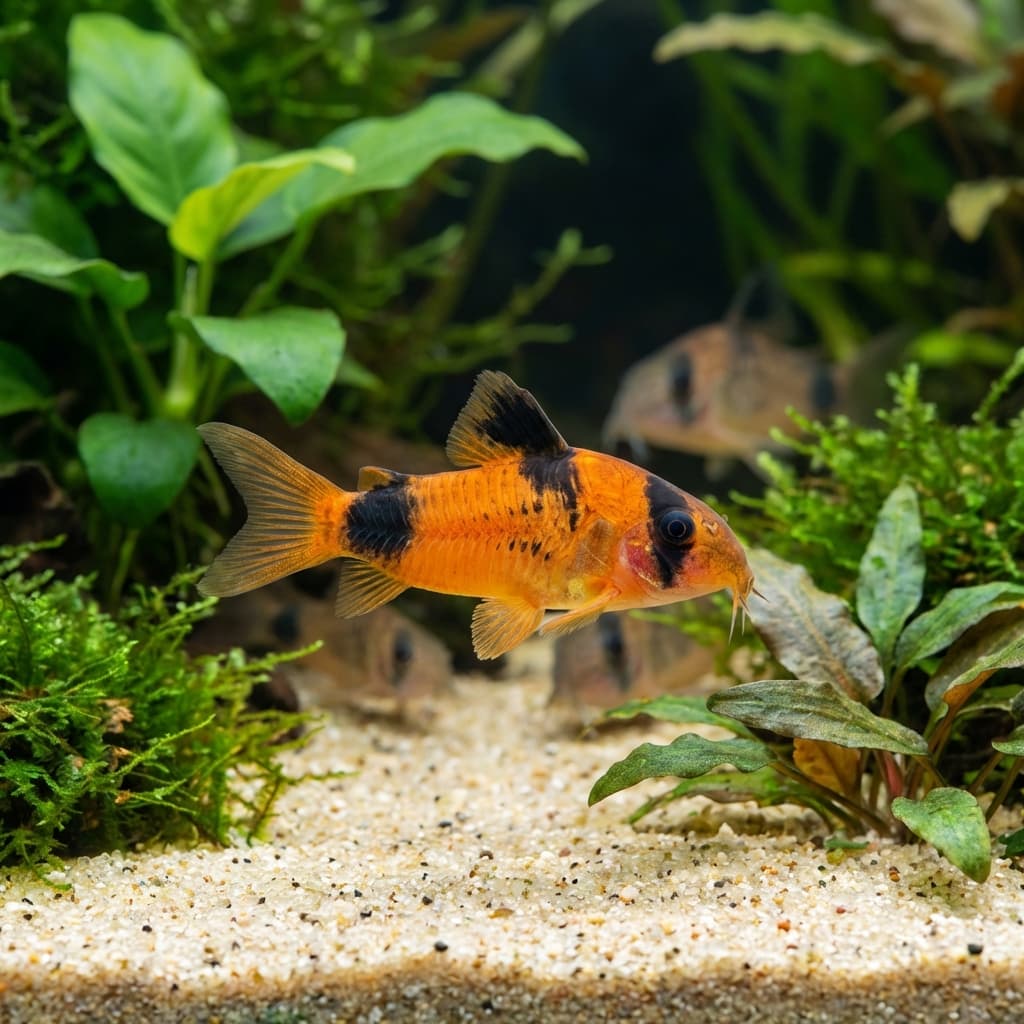
Orange Venezuela Corydoras (Corydoras venezuelanus)
Corydoras venezuelanus
Also known as: Orange Venezuela Cory, Venezuela Corydoras, Orange Cory
Origin: Coastal river systems of northern Venezuela — Lake Valencia and surrounding drainages
Water Parameters
Quick Stats
- Max Size
- 7 cm
- Min Tank
- 80 L
- Lifespan
- 5-10
- Swimming Level
- BOTTOM
- Schooling
- Yes (6–12+)
- Diet
- Omnivore — sinking pellets, algae wafers, bloodworms, tubifex, daphnia, brine shrimp
- Temperament
- Peaceful; social bottom-dweller; keep in groups of 6+; safe with all community fish
About
Corydoras venezuelanus is native to coastal river systems of northern Venezuela, particularly the lake system and rivers around Lake Valencia and surrounding drainages in the Carabobo and Aragua states. It was formally described by Ihering in 1911 and has been in the aquarium hobby for many decades.
The body displays the characteristic armored corydoras profile with bony scutes replacing scales, a stout body, and the three pairs of barbels typical of callichthyid catfish. Coloration features an olive-tan to warm orange-brown base with iridescent scale detail. The orange tinting on the flanks and fins is more pronounced in well-conditioned adults, giving this species a warmer, more colorful appearance than many common corydoras.
Like all Corydoras, C. venezuelanus breathes atmospheric air by periodically surfacing to gulp air — a normal, healthy adaptation that should not be confused with oxygen deficiency unless occurring with excessive frequency. They release mild toxic secretions when severely stressed, a defense mechanism shared across the genus.
Corydoras venezuelanus is a robust, adaptable species that has proven to be an excellent aquarium fish — hardier than some of the more delicate small corydoras species and tolerant of a range of water conditions, while still benefiting from the high water quality all corydoras appreciate.
Care Guide
Orange Venezuela Corydoras adapt well to pH 6.0–7.5, hardness 5–15 dGH, and temperatures 22–27°C. They are more adaptable than many corydoras but still sensitive to ammonia and nitrite — pristine water quality and good filtration are important.
A minimum 80-liter aquarium with fine sand substrate suits a group of 6 well. Provide driftwood, smooth stones, dense plant cover, and multiple hiding spots. The fine substrate is important for protecting their sensitive barbels — sharp gravel causes barbel erosion over time.
Feed quality sinking corydoras pellets, algae wafers, and supplemental frozen or live foods: bloodworms, tubifex, daphnia, and brine shrimp. Feed in the evening when corydoras activity is highest. Ensure food reaches the bottom layer.
Orange Venezuela Corydoras are peaceful with all community species. Compatible with small to medium tetras, rasboras, livebearers, small gouramis, and peaceful cichlids. Must be kept in groups of at least 6 for natural social behavior — isolated individuals become stressed.
Weekly water changes of 25–30% maintain water quality. Monitor barbel condition as a water quality indicator — deteriorating barbels signal declining water conditions.
Buy Orange Venezuela Corydoras (Corydoras venezuelanus) from FinsHQ shops
Shops currently listing this species with stock available
Sell Orange Venezuela Corydoras (Corydoras venezuelanus) in your shop?
Join aquarium shops already using FinsHQ. Get a beautiful webshop, mobile app, and inventory management — built for aquatic retailers.
Start your free store