
Otocinclus Affinis (Dwarf Suckermouth Catfish)
Otocinclus affinis
Also known as: Otocinclus, Dwarf Suckermouth Catfish, Oto Catfish, Dwarf Oto
Origin: Paraíba do Sul River basin and coastal drainages, southeastern Brazil
Water Parameters
Quick Stats
- Max Size
- 4.5 cm
- Min Tank
- 40 L
- Lifespan
- 3-5
- Swimming Level
- BOTTOM
- Schooling
- Yes (4–8+)
- Diet
- Herbivore — green algae, diatoms, biofilm; supplement with algae wafers, blanched vegetables
- Temperament
- Peaceful; essential planted tank algae cleaner; keep in groups of 4-6+
About
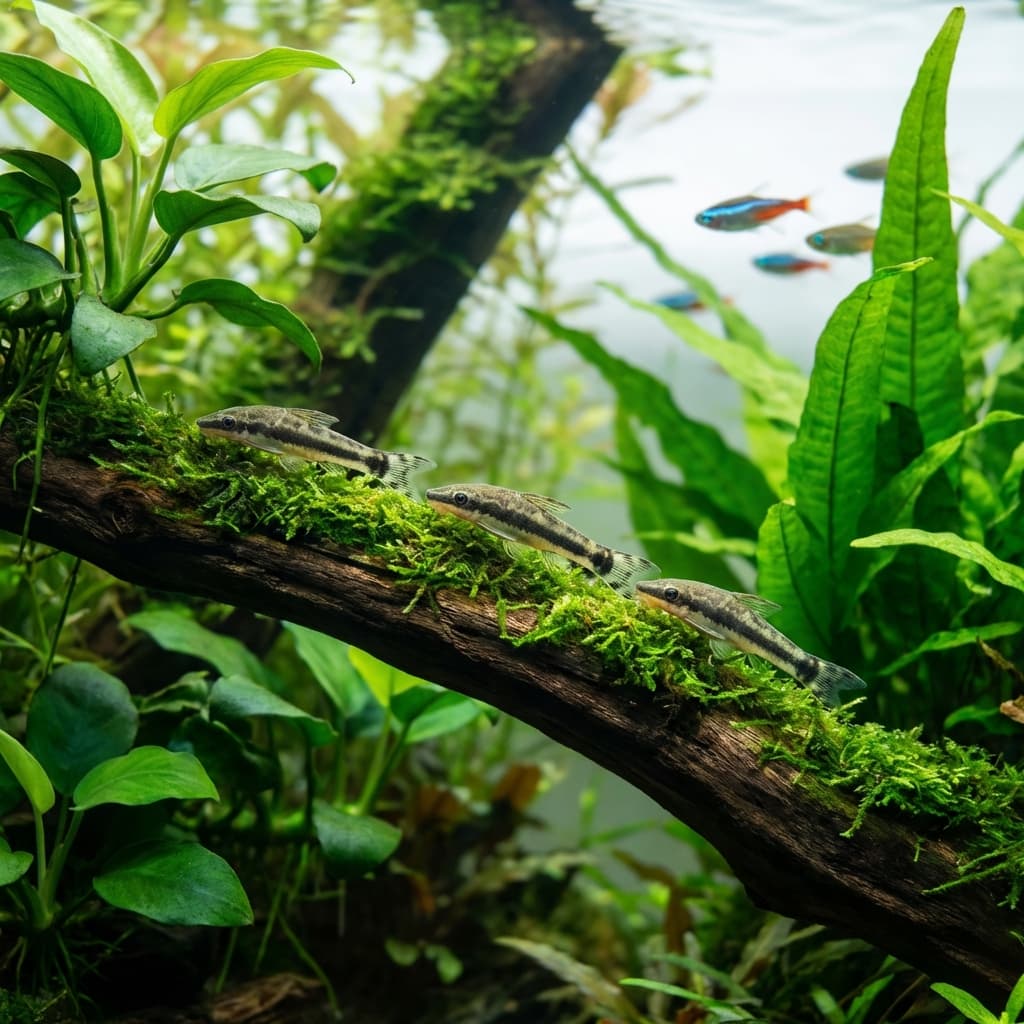
Otocinclus affinis is native to the coastal rivers of southeastern Brazil, particularly the Paraíba do Sul River basin and adjacent coastal drainages in Rio de Janeiro and São Paulo states. It belongs to the loricariid catfish family and is distinguished from other otocinclus species by the relatively plain brown dorsal surface with a dark lateral stripe and pale underside.
Reaching only 3.5–4.5 cm, Otocinclus affinis (and related otocinclus species collectively called 'otos') is among the smallest loricariid catfish. The body is covered with interlocking bony plates (scutes), and the underslung sucker mouth is adapted for rasping algae and biofilm from surfaces. The combination of small size, peaceful temperament, and prodigious algae-eating capability makes otos one of the most valued utility fish in the planted aquarium hobby.
Unlike the larger plecostomus species, otocinclus do not damage plants — they are primarily soft-bodied algae and biofilm grazers that work their way methodically across plant leaves, glass, and other surfaces. They consume soft green algae, diatoms (brown algae), and biofilm but not tough spot algae or filamentous algae types.
In the wild, O. affinis inhabits shallow, fast-flowing, oxygen-rich rivers and streams with rocky and sandy substrates, strong light supporting dense algae growth, and moderate to fast current. Captive specimens require comparable conditions, particularly high oxygen levels.
Care Guide
Otocinclus affinis requires clean, well-oxygenated water: pH 6.0–7.5, hardness 3–15 dGH, and temperatures 20–26°C. They are sensitive to poor water quality and DO NOT tolerate newly established (un-cycled) aquariums, elevated ammonia/nitrite, or high nitrate levels. Only add otos to fully established, stable aquariums.
A minimum 40-liter planted aquarium with extensive algae growth suits a small group. Provide smooth rocks, driftwood, and dense plantings for grazing surfaces and hiding spots. Good water movement and surface agitation maintain the oxygen levels they require.
Feed primarily through natural algae development on surfaces. Supplement when algae is insufficient with algae wafers, blanched zucchini, cucumber, and spinach. They must have continuous access to food — they are constant grazers and can starve quickly in algae-poor tanks.
Otocinclus are entirely peaceful and compatible with all community species. They are commonly kept with freshwater shrimp (excellent compatibility), small tetras, rasboras, corydoras, and all planted tank inhabitants. Never house with large cichlids that may harass or consume them.
Keep in groups of at least 4–6 — solitary individuals are stressed and fare poorly. Quarantine new specimens carefully — wild-caught otocinclus are prone to parasitic disease (particularly internal parasites) and can be sensitive to transition from wild to captive conditions. Weekly water changes of 25–30% maintain water quality.
Buy Otocinclus Affinis (Dwarf Suckermouth Catfish) from FinsHQ shops
Shops currently listing this species with stock available
Sell Otocinclus Affinis (Dwarf Suckermouth Catfish) in your shop?
Join aquarium shops already using FinsHQ. Get a beautiful webshop, mobile app, and inventory management — built for aquatic retailers.
Start your free store