
Platinum Flasher Wrasse Killi (Nothobranchius ugandensis)
Nothobranchius ugandensis
Also known as: Uganda Nothobranchius, Flasher Killifish, Uganda Killifish
Origin: Uganda, East Africa — seasonal floodplains and temporary pools
Water Parameters
Quick Stats
- Max Size
- 6 cm
- Min Tank
- 20 L
- Lifespan
- 0.5-1
- Swimming Level
- MIDDLE
- Schooling
- No
- Diet
- Carnivore — daphnia, brine shrimp, bloodworms, micro worms, micro pellets
- Temperament
- Males aggressive toward each other; keep one male per tank; annual species requiring egg incubation
About
Nothobranchius ugandensis is an annual killifish native to the seasonal floodplains, temporary pools, and marshes of Uganda in East Africa. Like all Nothobranchius species, it has evolved a remarkable life history strategy: the entire life cycle from egg to adult must be completed within a single rainy season before temporary water bodies dry out completely during the dry season.
Adult fish survive for only a few months. However, the eggs — deposited in the muddy substrate during the wet season — remain dormant in the dried substrate through the dry season in a state of diapause (developmental arrest). When rains return and pools refill, the eggs hatch rapidly, producing a new generation that quickly reaches sexual maturity.
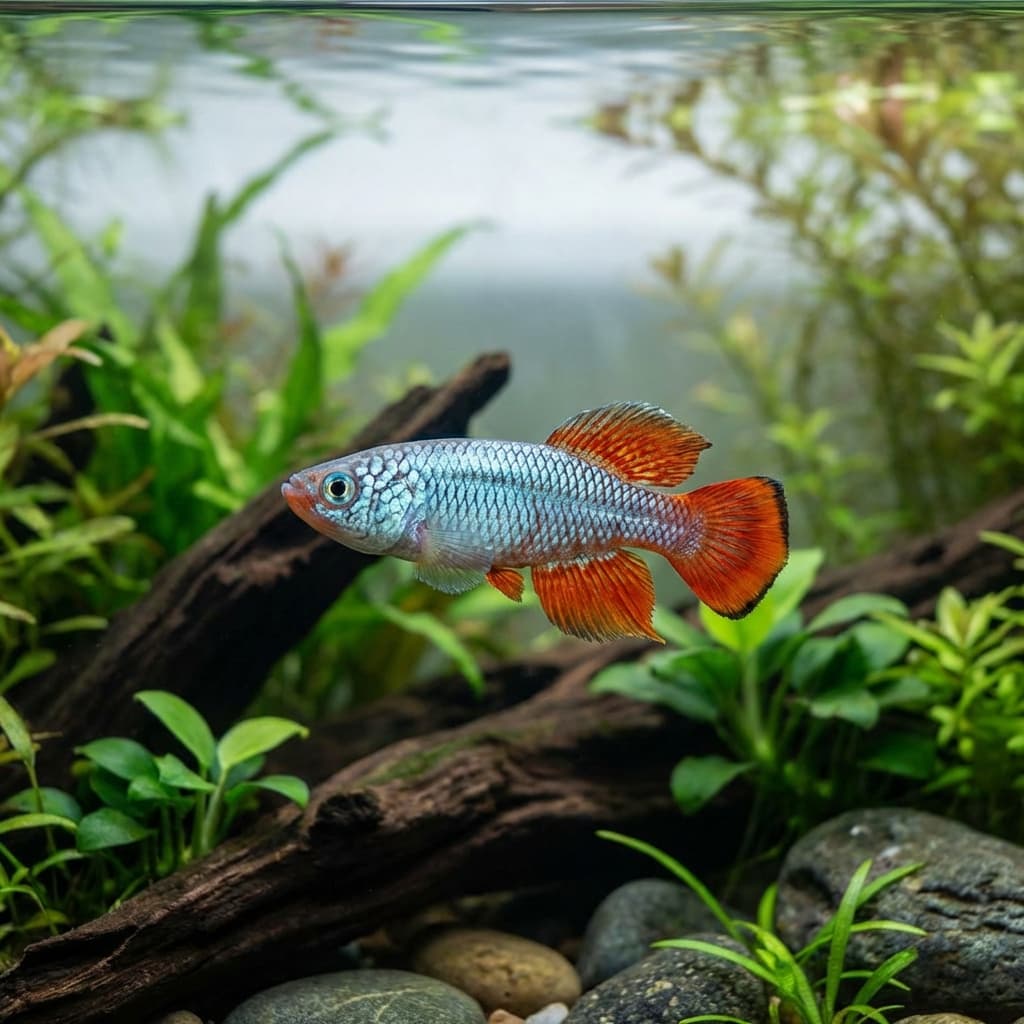
Males display brilliant coloration: the body can show various combinations of iridescent electric blue, teal, red-orange, and yellow patterns that vary between populations and collections. The intensity of color rivals many marine fish. Females are considerably plainer in brown-olive coloration.
Breeding requires peat moss or coconut substrate for egg deposition. After spawning, eggs are harvested, placed in slightly moist peat, and stored in darkness for 6–12 weeks (simulating the dry season) before being remoistened — at which point the eggs hatch rapidly.
Care Guide
Nothobranchius ugandensis prefer soft to moderately hard, slightly acidic to neutral water: pH 6.0–7.5, hardness 3–12 dGH, and temperatures 20–25°C. They are annual fish with short lifespans (typically 6–9 months) — breeding should be initiated promptly as fish age.
A small, dedicated tank of 20–40 liters with a tight-fitting lid (essential — excellent jumpers) suits a pair or trio. Provide floating plants (Salvinia), Java moss, and peat moss substrate or a spawning container filled with moist peat for egg deposition. Dim lighting is preferred.
Feed varied, protein-rich foods: daphnia, brine shrimp, bloodworms, micro worms, and quality micro-pellets. Annual killifish have high metabolic rates requiring frequent feeding (2–3 times daily) for best coloration and breeding condition.
Males are aggressive toward each other. Keep single males or one male per tank unless a large setup with visual barriers. Females must be maintained with males for continuous spawning — remove eggs or peat regularly for incubation.
For breeding: provide 5–8 cm of moist peat in a spawning container. Fish spawn continuously over 4–6 weeks. Remove peat, dry lightly for 24 hours, and store at 22–25°C in plastic bags for 6–10 weeks before remoistening with soft, slightly acidic water to trigger hatching.
Buy Platinum Flasher Wrasse Killi (Nothobranchius ugandensis) from FinsHQ shops
Shops currently listing this species with stock available
Sell Platinum Flasher Wrasse Killi (Nothobranchius ugandensis) in your shop?
Join aquarium shops already using FinsHQ. Get a beautiful webshop, mobile app, and inventory management — built for aquatic retailers.
Start your free store