
Platinum Ricefish (Oryzias latipes var.)
Oryzias latipes var.
Also known as: Platinum Ricefish, White Medaka, Platinum Medaka
Origin: Ornamental variant of Oryzias latipes — wild form from Japan, Korea, China, and adjacent East Asia
Water Parameters
Quick Stats
- Max Size
- 4 cm
- Min Tank
- 20 L
- Lifespan
- 2-5
- Swimming Level
- MIDDLE
- Schooling
- Yes (6–20+)
- Diet
- Omnivore — micro flake, micro pellets, daphnia, brine shrimp, micro worms
- Temperament
- Peaceful; extremely adaptable; ideal for outdoor pond and unheated aquariums
About
Oryzias latipes — the Japanese Medaka or Ricefish — is native to the slow-moving freshwater habitats of Japan, Korea, China, and adjacent East Asian countries, where it inhabits rice paddies, ponds, ditches, and gently flowing streams. The 'Platinum' variant is a selectively bred white to silvery-white color form developed for aquarium and ornamental pond use.
Medaka have remarkable biological significance — they were among the first animals to breed in space (aboard the Space Shuttle Columbia in 1994) and are widely used as model organisms in developmental biology and genetics research.
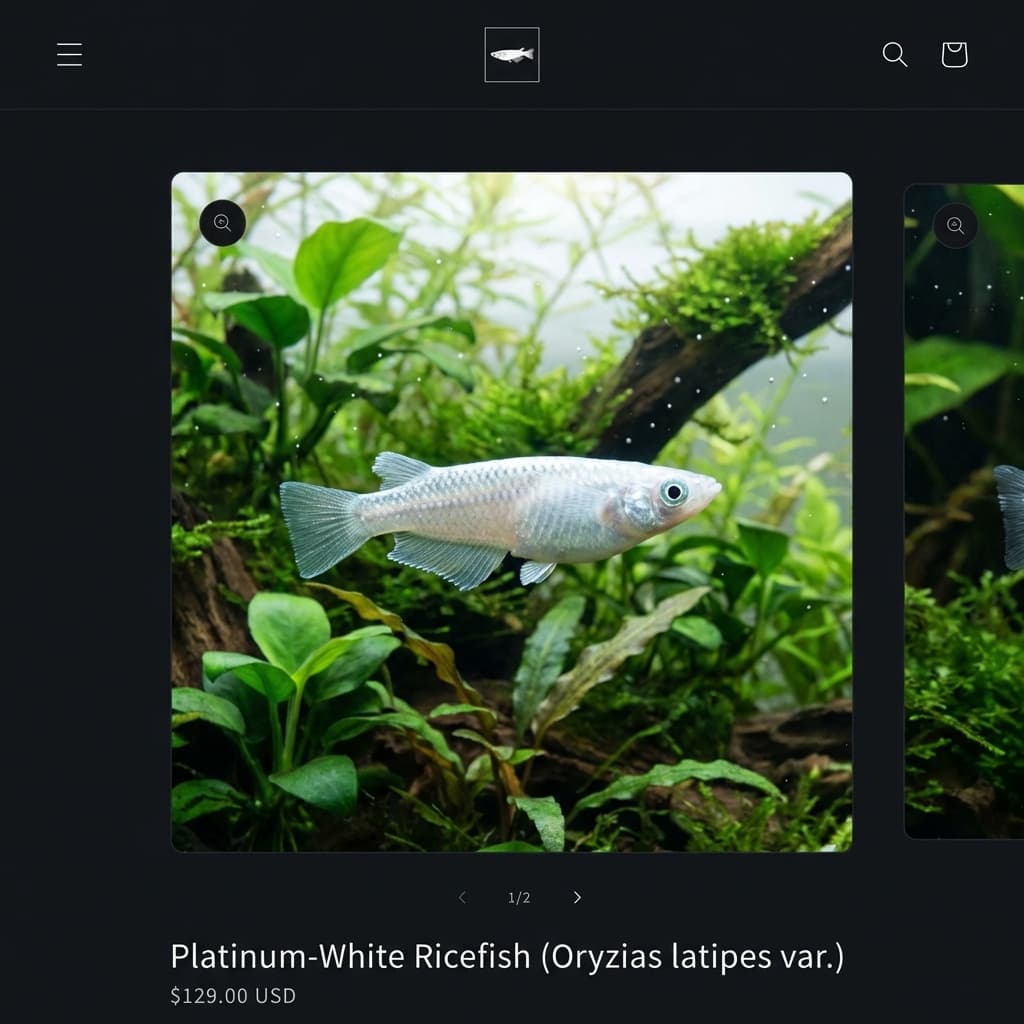
The Platinum Ricefish displays a clean white to pale silver body that shimmers faintly under light. Males are distinguished from females by a longer dorsal fin and a notched anal fin edge. As egg-bearers (not livebearers), females produce small clusters of adhesive eggs that they carry attached to the ventral fin before depositing on fine-leaved plants.
Mediaka are exceptionally hardy, tolerating temperatures from near-freezing (2°C) to 35°C, slightly brackish conditions, and a wide range of pH and hardness — making them among the most adaptable freshwater fish available. This adaptability makes them perfect for outdoor garden ponds in temperate climates across all four seasons.
Care Guide
Platinum Ricefish are extraordinarily adaptable: pH 6.0–8.5, hardness 5–25 dGH, and temperatures 5–30°C. They are truly suitable for outdoor pond use year-round in temperate climates with mild winters, making them unique among aquarium fish.
A minimum 20-liter aquarium or small garden pond suits a group of 8–10 well. Dense plantings of fine-leaved plants (Hornwort, Elodea, Ceratophyllum) provide spawning sites for the egg clusters females carry. Floating plants help diffuse light and provide surface refuge.
Feed varied, small foods: quality micro flake, micro pellets, daphnia, baby brine shrimp, and micro worms. Feed small amounts 2–3 times daily. Their adaptability extends to food — they accept a wide range of foods readily.
Entire peaceful and compatible with virtually all peaceful community species of appropriate size. Ideal companions include small tetras, corydoras, small rasboras, and freshwater shrimp. Their hardiness makes them reliable outdoor pond fish alongside goldfish, koi, and other pond inhabitants.
Keep in groups of at least 8 for natural schooling. Outdoor ponds in temperate climates can sustain medaka year-round without heating. Weekly water changes of 25% maintain aquarium water quality.
Buy Platinum Ricefish (Oryzias latipes var.) from FinsHQ shops
Shops currently listing this species with stock available
Sell Platinum Ricefish (Oryzias latipes var.) in your shop?
Join aquarium shops already using FinsHQ. Get a beautiful webshop, mobile app, and inventory management — built for aquatic retailers.
Start your free store