
Princess Cichlid (Neolamprologus brichardi)
Neolamprologus brichardi
Also known as: Princess Cichlid, Fairy Cichlid, Brichardi Cichlid
Origin: Lake Tanganyika, East Africa — rocky shoreline littoral zone
Water Parameters
Quick Stats
- Max Size
- 9 cm
- Min Tank
- 100 L
- Lifespan
- 8-10
- Swimming Level
- MIDDLE
- Schooling
- No
- Diet
- Carnivore — cichlid micro pellets, daphnia, brine shrimp, cyclops, bloodworms
- Temperament
- Territorial around cave and family territory; cooperative family breeding behavior; relatively peaceful outside territory
About
Neolamprologus brichardi is endemic to Lake Tanganyika in East Africa, specifically found along the rocky shoreline where it inhabits crevices and caves among rock rubble in the shallow littoral zone. It has been in the aquarium hobby since the early 1970s and remains one of the most popular and easily bred Lake Tanganyika cichlids.
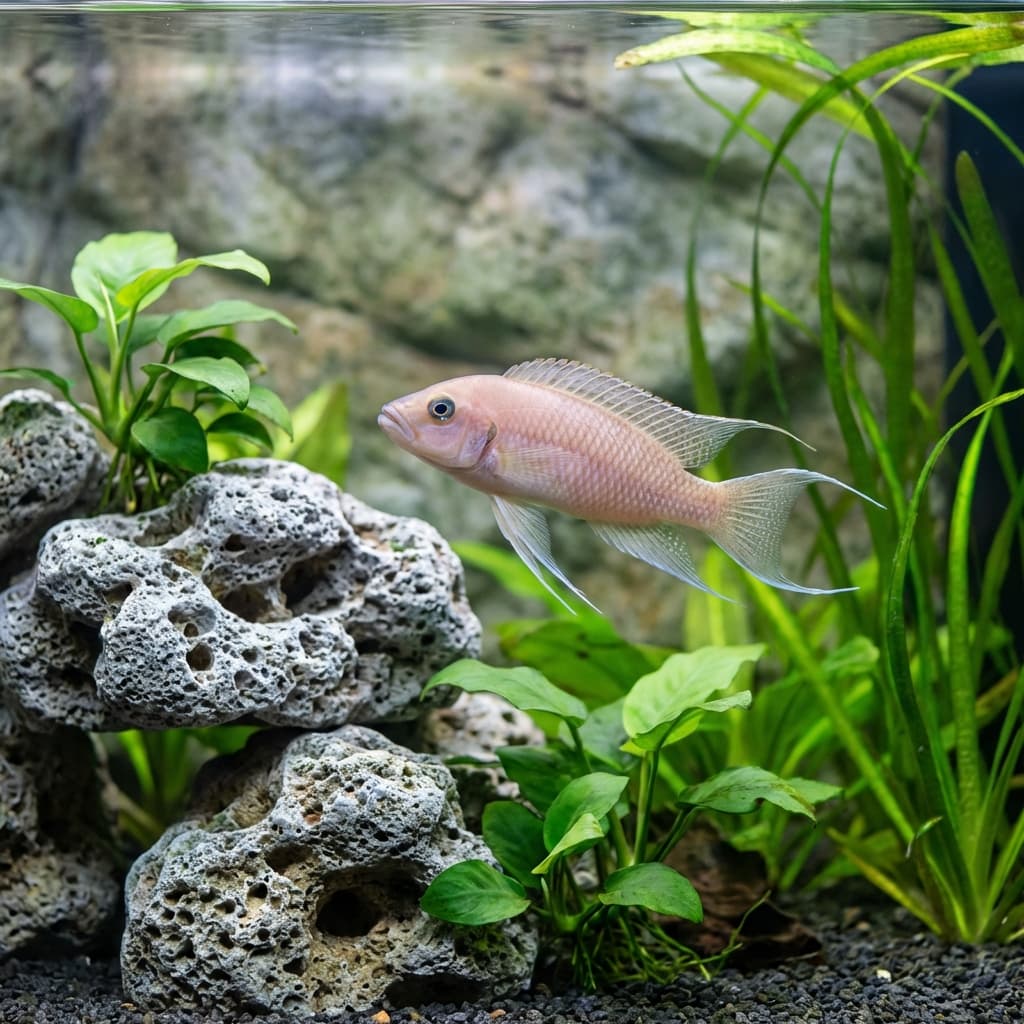
The body is a warm beige to tan, with subtle iridescent scale detail and distinctive black facial markings — a dark spot at the gill cover edge and dark eye stripes. The most characteristic feature is the caudal fin with dramatically elongated upper and lower lobe extensions tipped with white, creating the 'lyretail' appearance. Dorsal and anal fins are similarly long and pointed. Males develop slightly more elaborate finnage; females are slightly smaller.
N. brichardi exhibits a fascinating and unusual social behavior: families are cooperative, with older fry and juveniles from previous broods remaining in the family territory to assist in guarding and herding subsequent broods of younger siblings. This multi-generational cooperative breeding creates complex, hierarchical family colonies that are remarkable to observe.
In the aquarium, Princess Cichlids form monogamous pairs that spawn in small caves or crevices. The colony dynamic develops naturally in appropriately sized aquariums with sufficient rock structure.
Care Guide
Princess Cichlids require hard, alkaline water replicating Lake Tanganyika: pH 7.8–9.0, hardness 12–20 dGH, and temperatures 24–27°C. They cannot tolerate soft, acidic water or low mineral content. Crushed coral or aragonite substrate helps maintain pH.
A minimum 100-liter aquarium (with extensive rockwork) suits a pair plus family colony, with 150+ liters recommended for established colonies. Create a complex 3D structure with stacked rocks, caves, crevices, and visual barriers. Sandy substrate completes the Tanganyika biotope.
Feed quality cichlid micro pellets, daphnia, baby brine shrimp, cyclops, and small bloodworms. They eat in relatively small amounts compared to larger cichlids. Feed 2–3 times daily.
Princess Cichlids are territorial — they defend their cave territory and family vigorously and may attack species that intrude in their space. Compatible tankmates for larger tanks include other Tanganyika species adapted to rocks: small Julidochromis, Synodontis catfish, and Altolamprologus. Single pairs can be kept with unrelated fish that don't intrude on the cave territory.
Can be kept as a single pair in 100L or as a growing colony in 200+ liters. Water changes of 25–30% weekly with hard, alkaline water maintain appropriate conditions.
Buy Princess Cichlid (Neolamprologus brichardi) from FinsHQ shops
Shops currently listing this species with stock available
Sell Princess Cichlid (Neolamprologus brichardi) in your shop?
Join aquarium shops already using FinsHQ. Get a beautiful webshop, mobile app, and inventory management — built for aquatic retailers.
Start your free store