
Pygmy Corydoras (Corydoras pygmaeus)
Corydoras pygmaeus
Also known as: Pygmy Cory, Pygmy Corydoras, Dwarf Corydoras
Origin: Madeira River system and adjacent tributaries, western Brazil
Water Parameters
Quick Stats
- Max Size
- 3 cm
- Min Tank
- 30 L
- Lifespan
- 3-5
- Swimming Level
- MIDDLE
- Schooling
- Yes (8–15+)
- Diet
- Omnivore — nano pellets, micro worms, baby brine shrimp nauplii, daphnia, crushed flake
- Temperament
- Peaceful; unusual mid-water schooling cory; safe with shrimp; must be kept in groups of 8+
About
Corydoras pygmaeus is native to the Madeira River system and adjacent tributaries in western Brazil. At 2.5–3 cm in length, it is one of the three smallest corydoras species available in the hobby (alongside C. hastatus and C. habrosus), making it ideal for nano aquariums where larger cory species would be inappropriate.
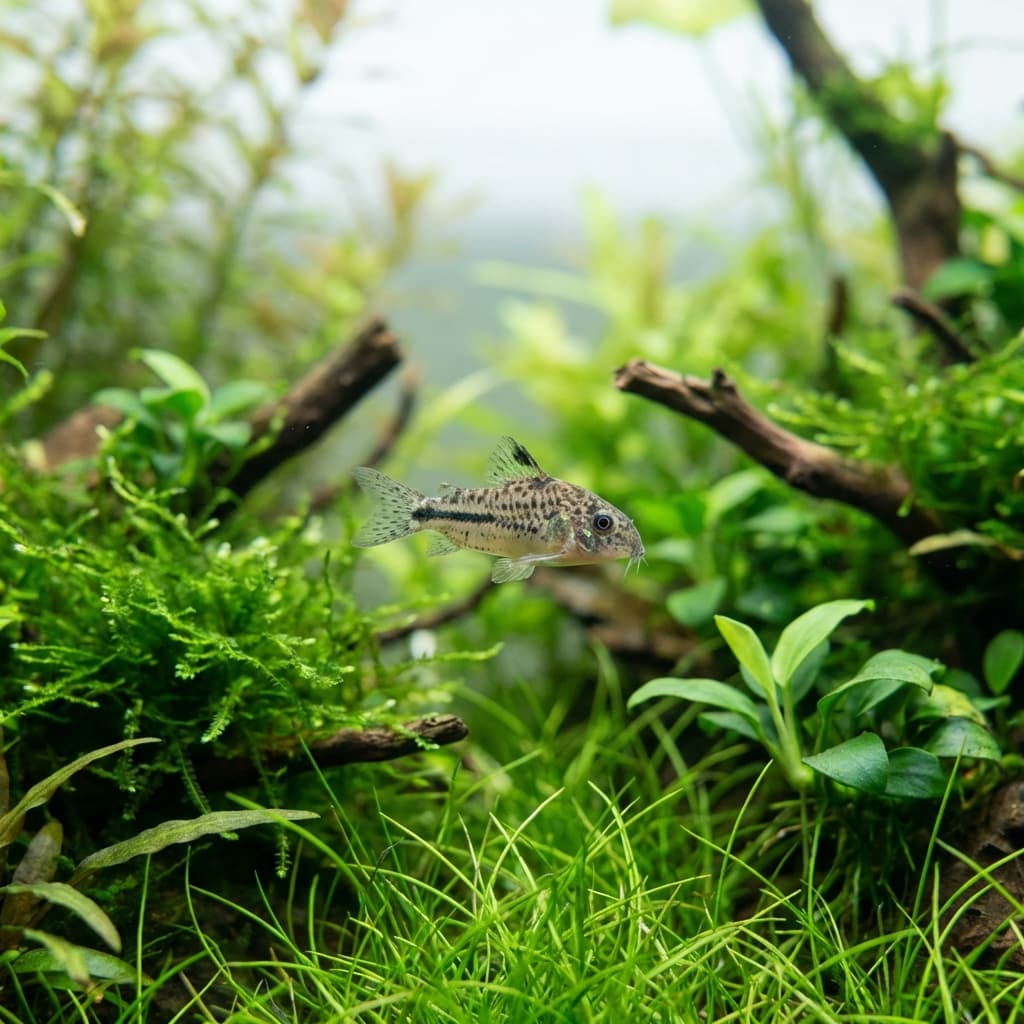
The body is silver with a thin dark horizontal stripe running from behind the eye through the caudal peduncle to the middle of the tail fin. The belly is pale, and the scales show a slightly pearlescent sheen. Males are slimmer; females are slightly larger and rounder when gravid.
Unlike most corydoras that remain strictly benthic (bottom-dwelling), Pygmy Corydoras exhibit unique schooling behavior: they swim in open mid-water as a group, often seen darting upward together to gulp atmospheric air, then returning to mid-water positions, or briefly touching down on plant leaves or the substrate before swimming freely again. This mid-water schooling is entertaining and unusual for corydoras.
In the wild, C. pygmaeus inhabits slow-moving to still, soft, slightly acidic waters with dense aquatic vegetation — environments quite different from the faster-flowing habitats of larger corydoras species.
Care Guide
Pygmy Corydoras prefer soft to moderately hard, slightly acidic water: pH 6.0–7.5, hardness 2–12 dGH, and temperatures 22–26°C. As a warm-water Amazon species, they require tropical conditions and are more sensitive to cold than temperate corydoras like C. paleatus.
A minimum 30-liter aquarium with fine sand substrate, dense fine-leaved plant cover, and gentle filtration suits a group of 8–10 well. Dark substrate and subdued lighting replicate their natural blackwater forest stream habitat. Keep lighting gentle — they prefer shade.
Feed micro-sized sinking foods: nano corydoras pellets, micro worms, baby brine shrimp nauplii, daphnia, and very finely crushed flake. Their small mouths require appropriately tiny food particles. Feed in the evening when corydoras are most active.
Pygmy Corydoras are entirely peaceful and ideal for nano community setups with other small, gentle species: nano rasboras, ember tetras, small bettas, sparkling gouramis, and small shrimp. Compatible with freshwater shrimp — they do not prey on adult or juvenile shrimp.
Keep in groups of at least 8–10 for best behavior and health. Their mid-water schooling is most impressive and natural in larger groups. Weekly water changes of 25–30% maintain water quality.
Buy Pygmy Corydoras (Corydoras pygmaeus) from FinsHQ shops
Shops currently listing this species with stock available
Sell Pygmy Corydoras (Corydoras pygmaeus) in your shop?
Join aquarium shops already using FinsHQ. Get a beautiful webshop, mobile app, and inventory management — built for aquatic retailers.
Start your free store