
Red Eye Tetra (Moenkhausia sanctaefilomenae)
Moenkhausia sanctaefilomenae
Also known as: Red Eye Tetra, Yellowhead Tetra
Origin: South America (Paraná, Paraguay, São Francisco river basins)
Water Parameters
Quick Stats
- Max Size
- 7 cm
- Min Tank
- 60 L
- Lifespan
- 3–5
- Swimming Level
- Middle
- Schooling
- Yes (8–15+)
- Diet
- Omnivore
- Temperament
- Generally peaceful; may nip fins in small groups — keep in schools of 8+ to minimize
About
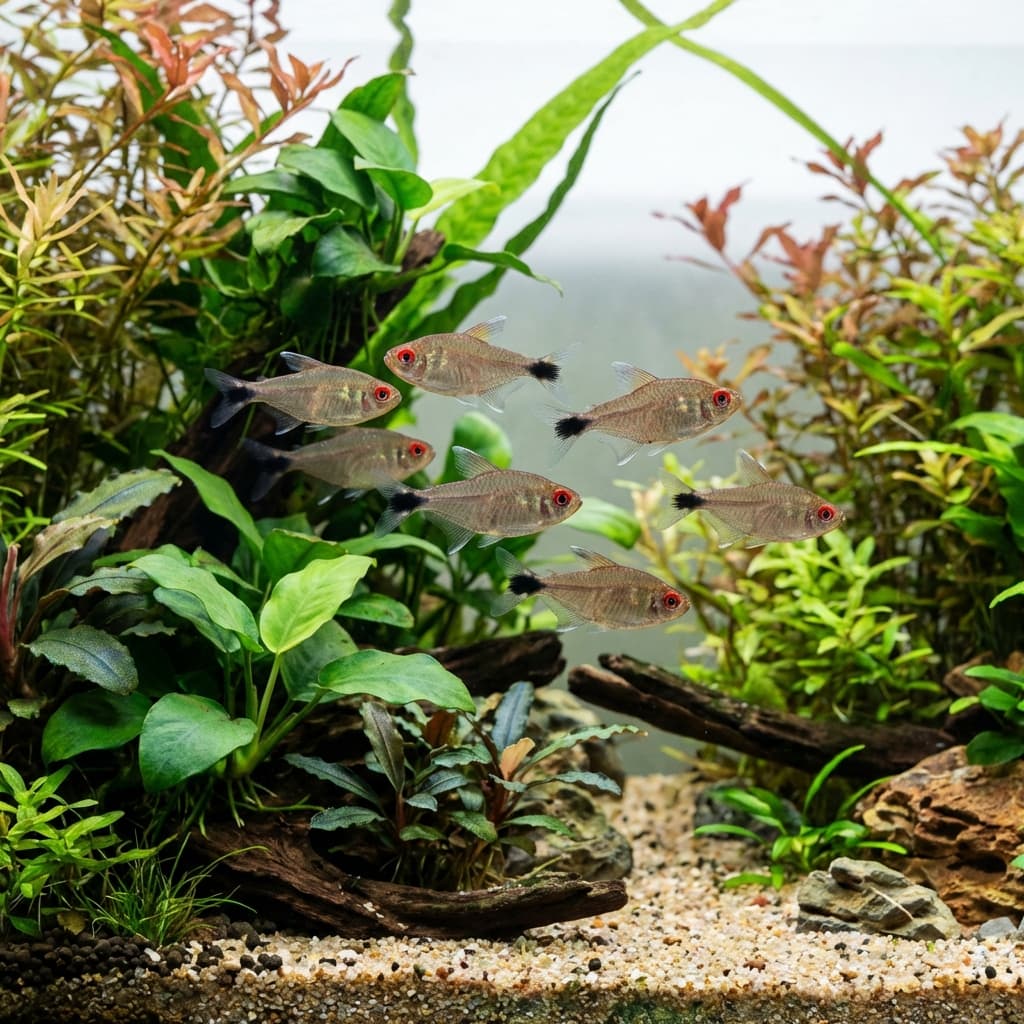
The Red Eye Tetra (Moenkhausia sanctaefilomenae) is a popular and resilient characid from the Paraná, Paraguay, and São Francisco river basins of Brazil, Bolivia, and Argentina. Named for its vivid red upper iris, this silver-bodied tetra also sports a bold black band near the tail base with a yellow patch above it, creating a distinctive rear marking visible when the school moves together.
This is one of the hardier tetras available in the hobby, tolerating slightly acidic to moderately hard water and a range of temperatures. It adapts well to different aquarium setups and is a good choice for beginners seeking a schooling fish with personality. Red Eye Tetras are active swimmers that use all levels of the water column but tend to favor the middle and upper zones.
They are generally peaceful but can occasionally nip fins of slow-moving or long-finned tankmates, especially if kept in too-small groups. Keeping them in schools of 8 or more reduces fin-nipping behavior and encourages natural schooling displays. Their lively, coordinated movement makes a visual impact in planted and open-aquascape tanks alike.
Red Eye Tetras are robust eaters that accept flake food, small pellets, frozen, and live foods readily. They are active spawners in soft, slightly acidic water and will scatter eggs among fine-leafed plants.
Care Guide
Water Parameters: Red Eye Tetras thrive in pH 6.0–7.5 and temperatures of 22–28°C. They tolerate moderate hardness (GH 4–15) making them suitable for many tap water setups. Soft, slightly acidic water more closely mimics their native habitat but is not strictly required.
Tank Setup: A 60-liter minimum for a small school; larger tanks are preferred. Provide a mix of open swimming space and planted areas with fine-leafed plants. Dark substrate enhances their reflective silver coloration. Moderate lighting and good filtration with gentle current work well.
Feeding: Omnivores that accept flake food, micro pellets, frozen bloodworm, brine shrimp, and daphnia. Feed twice daily in small amounts. A varied diet promotes health and coloration.
Tankmates: Generally peaceful with similarly sized fish. Avoid long-finned or slow-moving species (like bettas or fancy guppies) as fin nipping may occur, especially in smaller groups. Good companions include other tetras, rasboras, cories, and small plecos. Keep in groups of 8+ to minimize aggression.
Health: A robust species with few specific health concerns when maintained properly. Ensure clean water to prevent common issues like ich, velvet, and bacterial infections. Sudden temperature drops should be avoided. Regular water changes (25–30% weekly) maintain water quality.
Buy Red Eye Tetra (Moenkhausia sanctaefilomenae) from FinsHQ shops
Shops currently listing this species with stock available
Sell Red Eye Tetra (Moenkhausia sanctaefilomenae) in your shop?
Join aquarium shops already using FinsHQ. Get a beautiful webshop, mobile app, and inventory management — built for aquatic retailers.
Start your free store