
Rosy Barb (Pethia conchonius)
Pethia conchonius
Also known as: Rosy Barb, Red Barb
Origin: South Asia (northern India, Pakistan, Afghanistan, Nepal)
Water Parameters
Quick Stats
- Max Size
- 14 cm
- Min Tank
- 100 L
- Lifespan
- 3–5
- Swimming Level
- Middle
- Schooling
- Yes (6–12+)
- Diet
- Omnivore
- Temperament
- Lively and boisterous; may nip fins in small groups — keep 6+ with robust tankmates
About
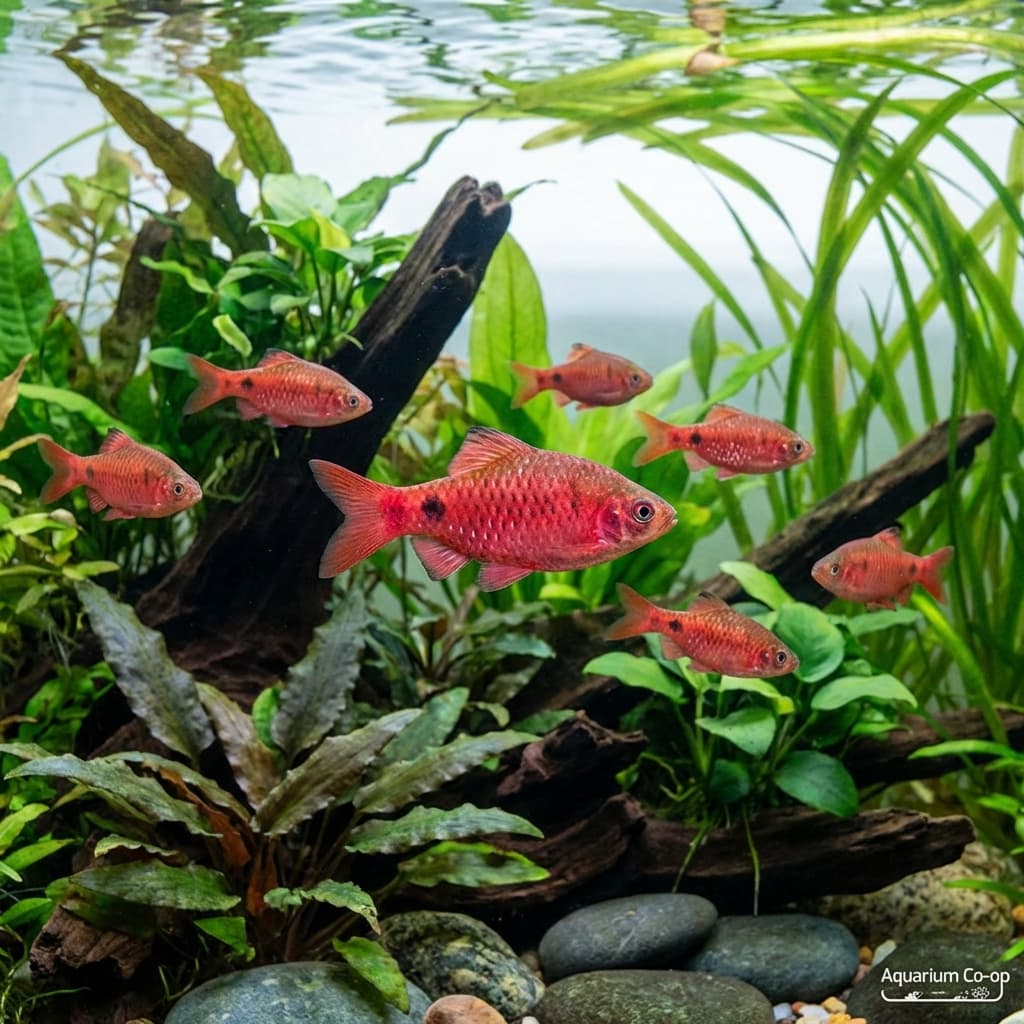
The Rosy Barb (Pethia conchonius) is a popular and robust barb native to fast-flowing rivers and streams of northern India, Pakistan, Afghanistan, and Nepal. Males in breeding condition display stunning rose-pink to deep red coloration with a black spot near the caudal peduncle, while females are silvery-olive with a similar dark spot. Both sexes have a characteristic iridescent sheen that catches the light.
This is one of the hardier and more adaptable barbs available, tolerating a wider range of temperatures and water conditions than many tropical species. It can even be kept in unheated aquariums in temperate climates, making it suitable for cool rooms or outdoor ponds in mild regions.
Rosy Barbs are active, boisterous schooling fish best kept in groups of 6 or more. Smaller groups may lead to fin-nipping behavior directed at slower, long-finned fish. Keeping them in adequate numbers reduces fin-nipping and encourages natural schooling displays. They occupy all levels of the water column but tend to swim in the middle and upper zones.
They are omnivorous and undemanding eaters, accepting flake food, pellets, frozen, live foods, and vegetable matter. Regular feeding of vegetable-based foods is beneficial for their gut health and coloration.
Care Guide
Water Parameters: Rosy Barbs are highly adaptable: pH 6.0–8.0, temperature 15–25°C, GH 4–20. They tolerate cool temperatures better than most tropical fish and can be kept in unheated aquariums in temperate environments. Avoid temperatures consistently above 26°C.
Tank Setup: A 100-liter minimum for a group of 6. These active fish need open swimming space. Provide robust plants that can withstand their boisterous activity, and some hiding spots. A mix of planted areas and open water works best. Good filtration is important.
Feeding: Omnivores that accept flake food, pellets, frozen bloodworm, brine shrimp, and vegetable matter. Include spirulina flakes or blanched vegetables for complete nutrition. Feed twice daily. Avoid overfeeding.
Tankmates: Best kept with similarly sized, robust fish: other barbs, danios, larger tetras, cories, and loaches. Avoid slow-moving long-finned species (bettas, fancy guppies) as fin-nipping is likely in small groups. Keep in groups of 6+ to minimize fin-nipping behavior.
Health: One of the hardiest aquarium fish available. Rarely sick when kept in appropriate conditions. Watch for ich if temperatures fluctuate significantly. Weekly water changes of 25–30% maintain optimal conditions.
Buy Rosy Barb (Pethia conchonius) from FinsHQ shops
Shops currently listing this species with stock available
Sell Rosy Barb (Pethia conchonius) in your shop?
Join aquarium shops already using FinsHQ. Get a beautiful webshop, mobile app, and inventory management — built for aquatic retailers.
Start your free store