
Sailfin Molly (Poecilia velifera)
Poecilia velifera
Also known as: Sailfin Molly, Giant Sailfin Molly, Yucatan Molly
Origin: North America (Yucatán Peninsula coastal lagoons, Mexico)
Water Parameters
Quick Stats
- Max Size
- 15 cm
- Min Tank
- 150 L
- Lifespan
- 3–5
- Swimming Level
- Middle
- Schooling
- No
- Diet
- Herbivore/Omnivore
- Temperament
- Peaceful community fish; males display actively but rarely cause injury
About
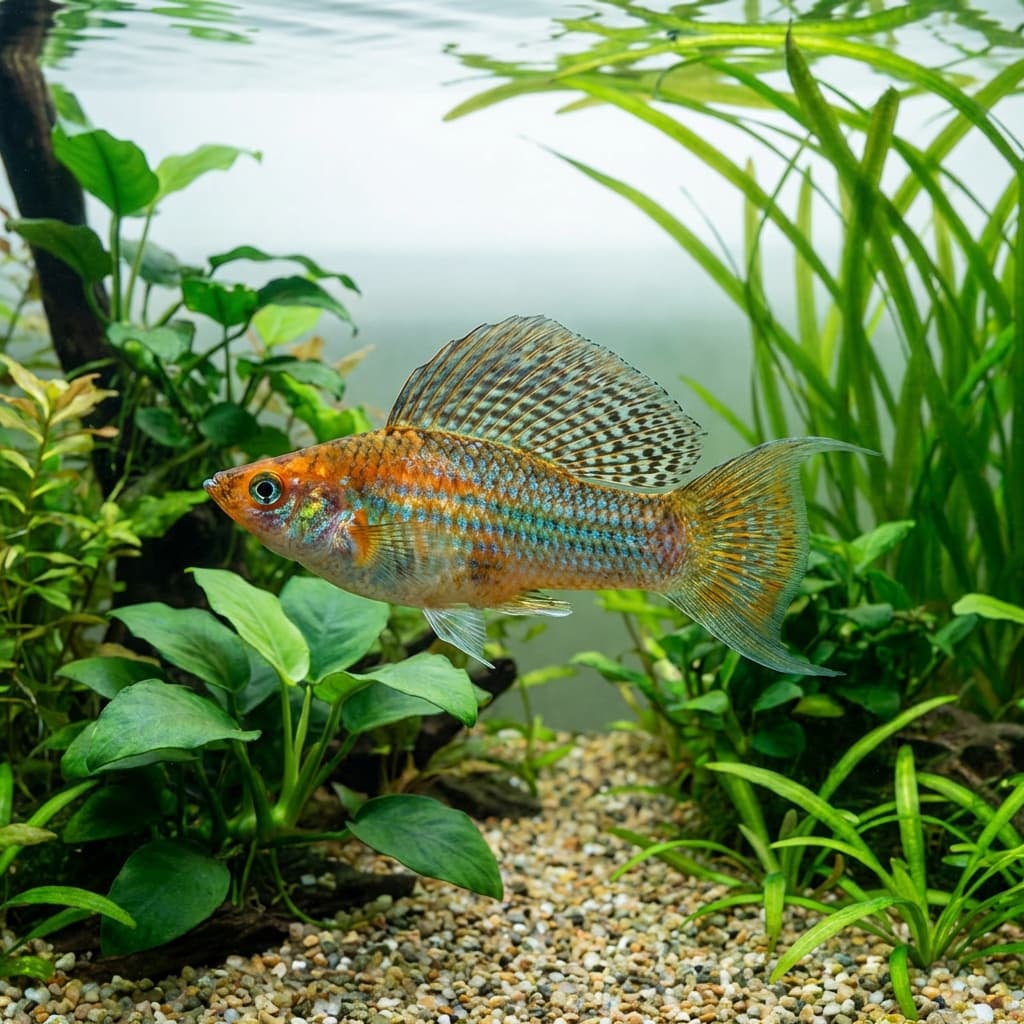
The Sailfin Molly (Poecilia velifera) is the largest of the molly species, renowned for the spectacular sail-like dorsal fin of mature males that can rival the height of their body depth. Native to coastal lagoons and estuaries of Mexico's Yucatán Peninsula, it naturally inhabits brackish and freshwater environments with access to vegetated shallows and tidal influence.
Male Sailfin Mollies are truly impressive fish, growing to 15 cm in the wild (typically 8–10 cm in aquariums), with a dramatically enlarged dorsal fin covered in iridescent spots. They display their sail fin constantly during courtship, creating a spectacular visual effect. Females are larger-bodied but lack the exaggerated fins.
Sailfin Mollies are livebearers that give birth to large broods of free-swimming young. They are prolific breeders and a good ratio of 2–3 females per male reduces male stress on females. The fry are born large enough to eat finely crushed flake food immediately.
As an herbivore-leaning omnivore, Sailfin Mollies need vegetable matter as a significant part of their diet. Spirulina flakes, blanched vegetables, and algae are important for their long-term health. They also appreciate a small amount of salt (1–3 teaspoons per 10 liters) in the aquarium, which mimics their natural brackish habitat and helps prevent common diseases.
Care Guide
Water Parameters: pH 7.0–8.5, temperature 24–28°C, GH 15–30. Sailfin Mollies prefer hard, alkaline water and thrive in slightly brackish conditions. Adding 1–3 teaspoons of aquarium salt per 10 liters significantly improves their health and disease resistance. They tolerate full saltwater as adults.
Tank Setup: Minimum 150 liters for a mixed group. Provide open swimming space for the males to display their sail fins. Robust plants, floating plants, and some refugia for fry are beneficial. Good filtration and oxygenation are important. A lid is recommended.
Feeding: Herbivore-leaning omnivore. Provide spirulina flakes as the dietary base, along with blanched vegetables (zucchini, spinach, lettuce), algae wafers, and occasional meaty frozen foods. Feed twice daily. Vegetable content is critical for health.
Tankmates: Best with other hard-water, brackish-tolerant species: other mollies, swordtails, platies, and Endler's livebearers. Tetras and other soft-water fish may suffer in brackish conditions. Avoid aggressive or fin-nipping species.
Breeding: Prolific livebearers. Females give birth to 20–100 fry every 4–6 weeks. Provide dense planting or a fry trap to protect young. Fry accept finely crushed food immediately.
Buy Sailfin Molly (Poecilia velifera) from FinsHQ shops
Shops currently listing this species with stock available
Sell Sailfin Molly (Poecilia velifera) in your shop?
Join aquarium shops already using FinsHQ. Get a beautiful webshop, mobile app, and inventory management — built for aquatic retailers.
Start your free store