
Siamese Tiger Fish (Datnioides pulcher)
Datnioides pulcher
Also known as: Siamese Tiger Fish, Siamese Tigerfish, Siamese Datnoid
Origin: Southeast Asia (Mekong and Chao Phraya basins, Thailand, Cambodia, Vietnam)
Water Parameters
Quick Stats
- Max Size
- 45 cm
- Min Tank
- 400 L
- Lifespan
- 15–20
- Swimming Level
- Middle
- Schooling
- No
- Diet
- Carnivore
- Temperament
- Predatory; will eat anything smaller than half its body length — keep only with very large robust fish
About
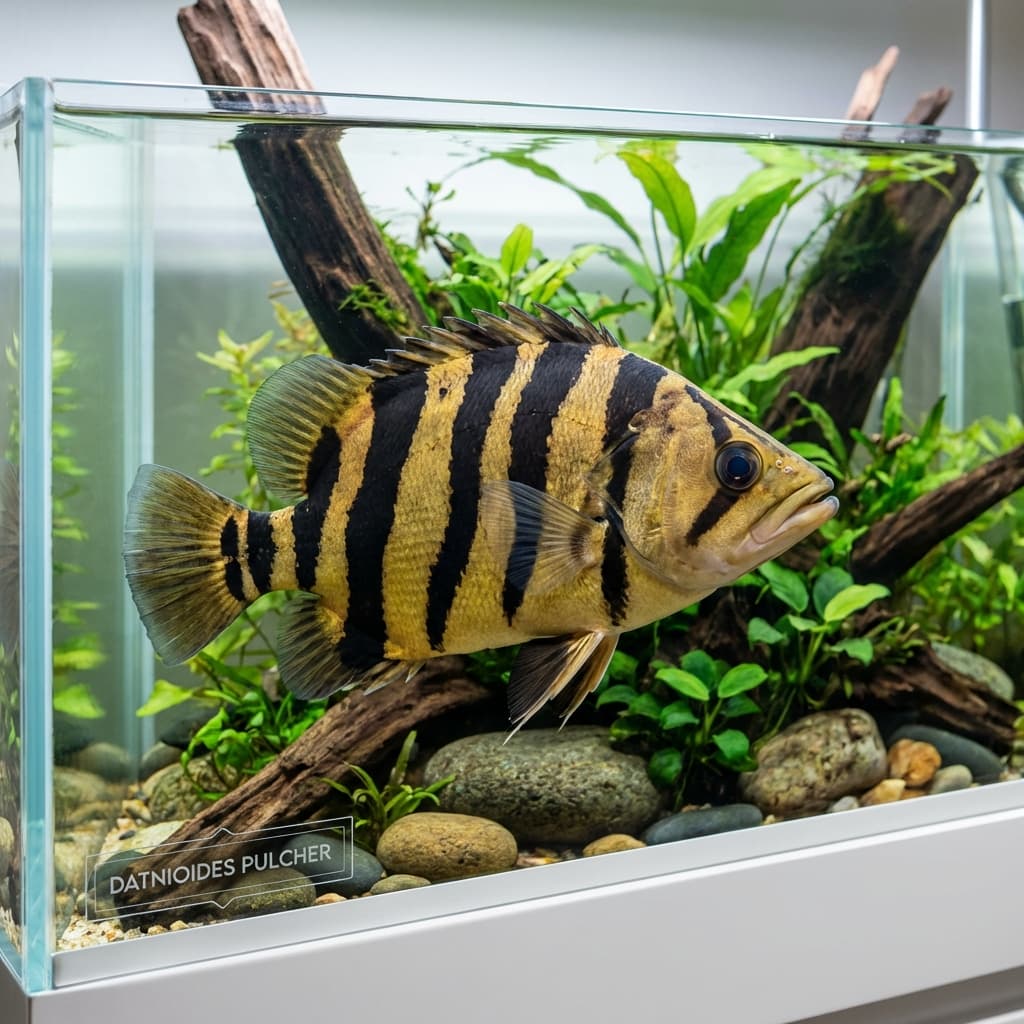
The Siamese Tiger Fish (Datnioides pulcher), also known as the Siamese Tigerfish or Siamese Datnoid, is one of the most strikingly patterned large predatory freshwater fish available in the hobby. Native to the Mekong and Chao Phraya river basins of Thailand, Cambodia, and Vietnam, it features vivid black vertical bands on a golden-yellow to orange body, creating a bold tiger-like pattern.
This species grows to 40–45 cm in the wild, though typically reaches 25–30 cm in aquariums. It is a powerful ambush predator that waits motionlessly and then strikes rapidly at prey. Despite its predatory nature, it is not actively aggressive toward fish too large to consume and can be kept with suitably large, robust tankmates.
Siamese Tiger Fish are not commonly available and are considered a specimen fish for experienced aquarists. They can be challenging to feed — new specimens often refuse dead or prepared foods and may require live fish to trigger initial feeding, after which they can often be weaned onto frozen or prepared foods with patience.
They require large aquariums with excellent water quality and neutral to slightly alkaline water. This species prefers a dimly lit setup with driftwood and overhangs to mimic its riverine habitat. A species tank or carefully selected large-fish community is ideal.
Care Guide
Water Parameters: pH 6.5–7.5, temperature 24–28°C, GH 8–18. Neutral to slightly alkaline water with good filtration. High water quality is essential for long-term health. Strong filtration to handle the bioload of a large predator. Weekly water changes of 30–40%.
Tank Setup: Minimum 400 liters for a single adult, larger for groups. Provide driftwood, overhangs, and hiding spots for ambush behavior. Subdued lighting is preferred. Strong filtration. A secure, heavy lid is essential — these fish are powerful and can escape or damage equipment.
Feeding: Initially reluctant to accept prepared food — may require live or fresh feeder fish to trigger feeding. Wean onto frozen fish, prawns, earthworms, and high-quality large cichlid pellets with patience. Do NOT feed feeder fish long-term (disease risk). Feed every 2–3 days.
Tankmates: Only suitable for similarly large, robust fish: large catfish, large cichlids, large barbs, and stingrays in appropriate setups. Anything smaller than half their body length will be eaten. Avoid housing with other Datnioides without careful observation.
Health: Sensitive to poor water quality. Maintain pristine conditions with regular water changes. Watch for ich, bacterial infections, and internal parasites. Feeding refusal is a common challenge with new arrivals — be patient with the weaning process.
Buy Siamese Tiger Fish (Datnioides pulcher) from FinsHQ shops
Shops currently listing this species with stock available
Sell Siamese Tiger Fish (Datnioides pulcher) in your shop?
Join aquarium shops already using FinsHQ. Get a beautiful webshop, mobile app, and inventory management — built for aquatic retailers.
Start your free store