
Three Line Cory (Corydoras trilineatus)
Corydoras trilineatus
Also known as: Three Line Cory, False Julii Cory, Leopard Corydoras
Origin: South America (Peru and Amazon basin)
Water Parameters
Quick Stats
- Max Size
- 6 cm
- Min Tank
- 80 L
- Lifespan
- 5–10
- Swimming Level
- Bottom
- Schooling
- Yes (6–12+)
- Diet
- Omnivore
- Temperament
- Completely peaceful schooling catfish; essential cleanup crew for community aquariums
About
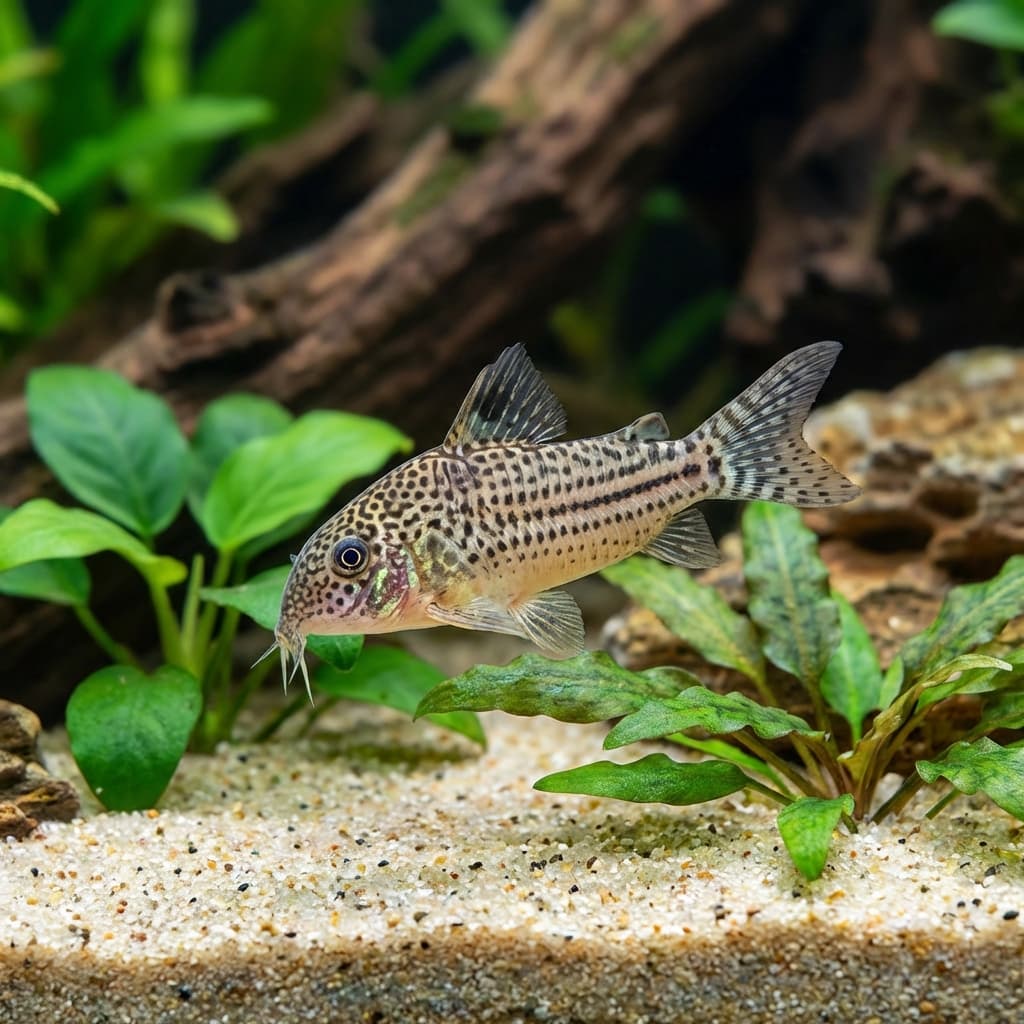
The Three Line Cory (Corydoras trilineatus) is a popular and commonly available Corydoras catfish from Peru and the surrounding Amazon basin. Often sold as or confused with the Julii Cory (C. julii), it is distinguished by its reticulated spots that often run together to form broken lines rather than the more rounded, isolated spots of C. julii. The name 'Three Line' refers to the three prominent horizontal stripes — one along the dorsal area, one mid-lateral, and one along the ventral area.
Like all Corydoras, this species is a peaceful schooling catfish that spends its time foraging along the substrate for food. It plays an important role in the aquarium ecosystem by consuming uneaten food and organic debris, helping to maintain water quality. The barbels on its snout are sensory organs used to locate food in substrate.
Corydoras trilineatus is hardy and adaptable but prefers soft, slightly acidic water that mimics its native Amazonian streams. It is a social species that must be kept in groups of 6 or more — solitary or small groups of Corydoras become stressed and inactive. In adequate groups, they are constantly active and entertaining.
They are sensitive to poor substrate conditions — sharp gravel can damage their delicate barbels. Fine sand or smooth-edged fine gravel substrate is essential for their long-term health.
Care Guide
Water Parameters: pH 6.0–7.5, temperature 22–28°C, GH 2–12. Soft, slightly acidic water is preferred. Good filtration with gentle to moderate flow. Avoid sharp or coarse substrate that can damage barbels.
Tank Setup: Minimum 80 liters for a school of 6. Fine sand or smooth fine-gravel substrate is essential — sharp gravel damages their sensitive barbels and causes infections. Add driftwood, leaves, and hiding spots. Open areas of clean substrate for foraging. Plants are appreciated.
Feeding: Omnivores that scavenge the substrate. Offer sinking micro pellets, sinking wafers, frozen bloodworm, daphnia, and brine shrimp. Feed in the evening to coincide with peak activity. Don't rely solely on them to eat leftovers — they need their own direct feeding.
Tankmates: Excellent with all peaceful mid and upper water species: tetras, rasboras, gouramis, angelfish, and dwarf cichlids. Avoid large aggressive fish. Can be kept with other Corydoras species. The ideal bottom-dwelling companion for any peaceful community aquarium.
Health: Sensitive to nitrate accumulation and poor substrate conditions. Barbel erosion is a common issue — always use fine sand. Weekly water changes of 25–30%. Watch for bacterial infections of the barbels.
Buy Three Line Cory (Corydoras trilineatus) from FinsHQ shops
Shops currently listing this species with stock available
Sell Three Line Cory (Corydoras trilineatus) in your shop?
Join aquarium shops already using FinsHQ. Get a beautiful webshop, mobile app, and inventory management — built for aquatic retailers.
Start your free store