
Tiger Barb (Puntigrus tetrazona)
Puntigrus tetrazona
Also known as: Tiger Barb, Sumatra Barb
Origin: Southeast Asia (Borneo, Sumatra, Peninsular Malaysia)
Water Parameters
Quick Stats
- Max Size
- 7 cm
- Min Tank
- 100 L
- Lifespan
- 5–7
- Swimming Level
- Middle
- Schooling
- Yes (8–20+)
- Diet
- Omnivore
- Temperament
- Lively schooling fish; fin-nipper in small groups — keep 10+ with short-finned robust tankmates only
About
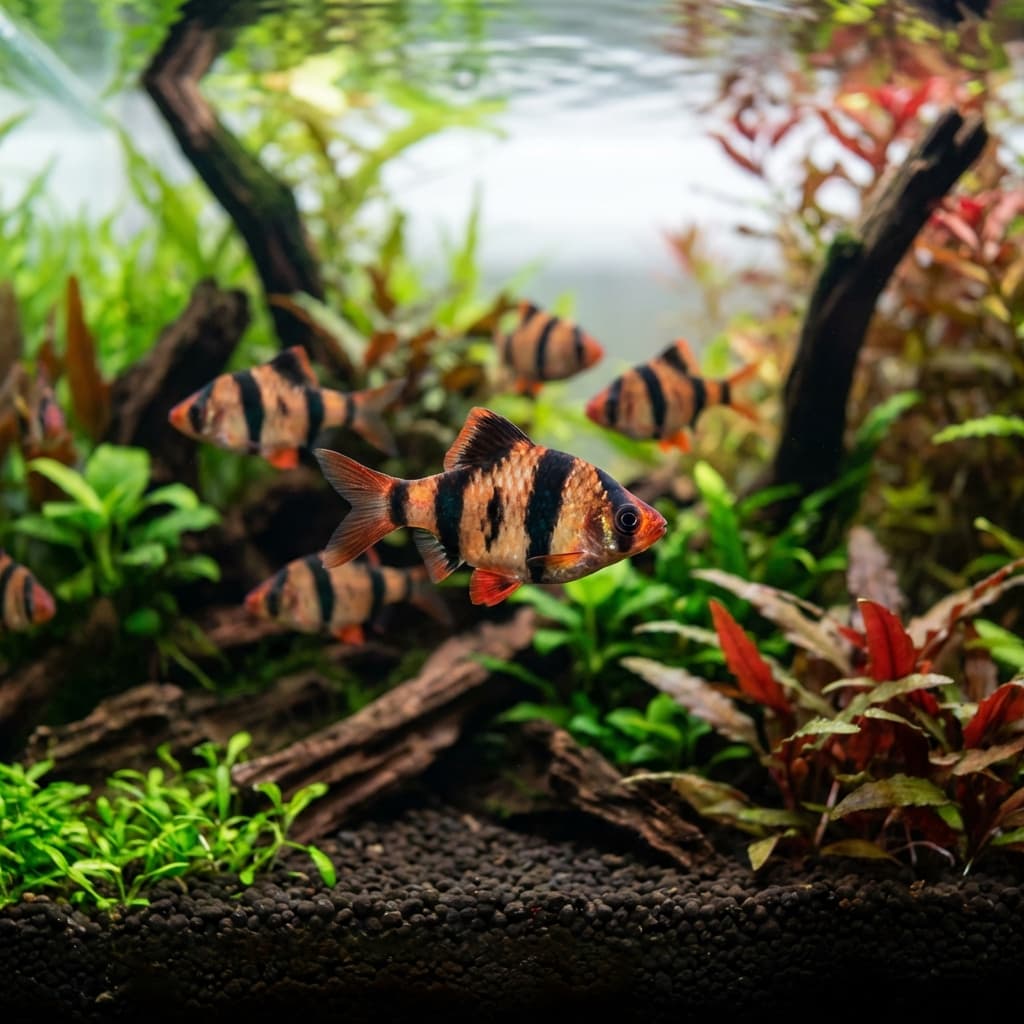
The Tiger Barb (Puntigrus tetrazona) is among the most recognizable and widely kept aquarium fish in the world. Native to the island of Borneo and Sumatra in Indonesia, and Peninsular Malaysia, it features a striking pattern of vivid orange-yellow body coloration with four bold black vertical bars — a pattern that inspired its common name. Several captive-bred color varieties exist including albino (pink/white), green, and platinum forms.
Tiger Barbs are vigorous, active, and entertaining fish with strong schooling instincts. When kept in groups of 10 or more, they form tight schools, display to each other constantly, and focus their energy within the group — resulting in peaceful, spectacular behavior. In smaller groups (especially 3–5 individuals), they become stressed, the social hierarchy breaks down, and fin-nipping becomes the primary behavioral outlet, making them problematic with long-finned species.
They prefer slightly acidic to neutral water with good filtration and moderate current that mimics their natural riverine habitat. An aquarium with open swimming space and some planted areas suits them well.
Tiger Barbs are hardy, bold, and readily available — an excellent choice for experienced beginners who understand their social requirements. In appropriate setups they are one of the most dynamic and entertaining schooling fish available.
Care Guide
Water Parameters: pH 6.0–7.5, temperature 22–26°C, GH 5–15. Slightly soft, slightly acidic water preferred. Good filtration with moderate current. Regular water changes of 25–30% weekly maintain optimal conditions.
Tank Setup: Minimum 100 liters for a school of 10. Open swimming space is essential for their active nature. Add some planted areas for structure and cover. Medium gravel or sand substrate. Good filtration with moderate flow to mimic riverine habitat. A secure lid is advisable.
Feeding: Omnivores that accept quality flake food, small pellets, frozen bloodworm, daphnia, and brine shrimp. Include some vegetable-based food. Feed twice daily. They are enthusiastic eaters — avoid overfeeding.
Tankmates: ONLY with active, short-finned, robust fish: danios, other barbs, cories, loaches, and larger tetras. AVOID long-finned species (bettas, angelfish, fancy guppies, paradise fish) as fin-nipping is near-certain, especially in smaller groups. Keep 10+ to direct aggression within the school.
Health: Hardy and disease-resistant. Common issues include ich and white spot with temperature fluctuations. Fin-nipping damage to tankmates is the primary husbandry concern. Maintain appropriate group sizes and tankmate selection.
Buy Tiger Barb (Puntigrus tetrazona) from FinsHQ shops
Shops currently listing this species with stock available
Sell Tiger Barb (Puntigrus tetrazona) in your shop?
Join aquarium shops already using FinsHQ. Get a beautiful webshop, mobile app, and inventory management — built for aquatic retailers.
Start your free store