
Whiptail Catfish (Rineloricaria lanceolata)
Rineloricaria lanceolata
Also known as: Whiptail Catfish, Lanceolate Whiptail Pleco, Chocolate Whiptail
Origin: South America (Bolivia, Brazil, Argentina)
Water Parameters
Quick Stats
- Max Size
- 12 cm
- Min Tank
- 60 L
- Lifespan
- 5–8
- Swimming Level
- Bottom
- Schooling
- No
- Diet
- Herbivore/Omnivore
- Temperament
- Very peaceful bottom-dweller; ideal for community tanks of all kinds
About
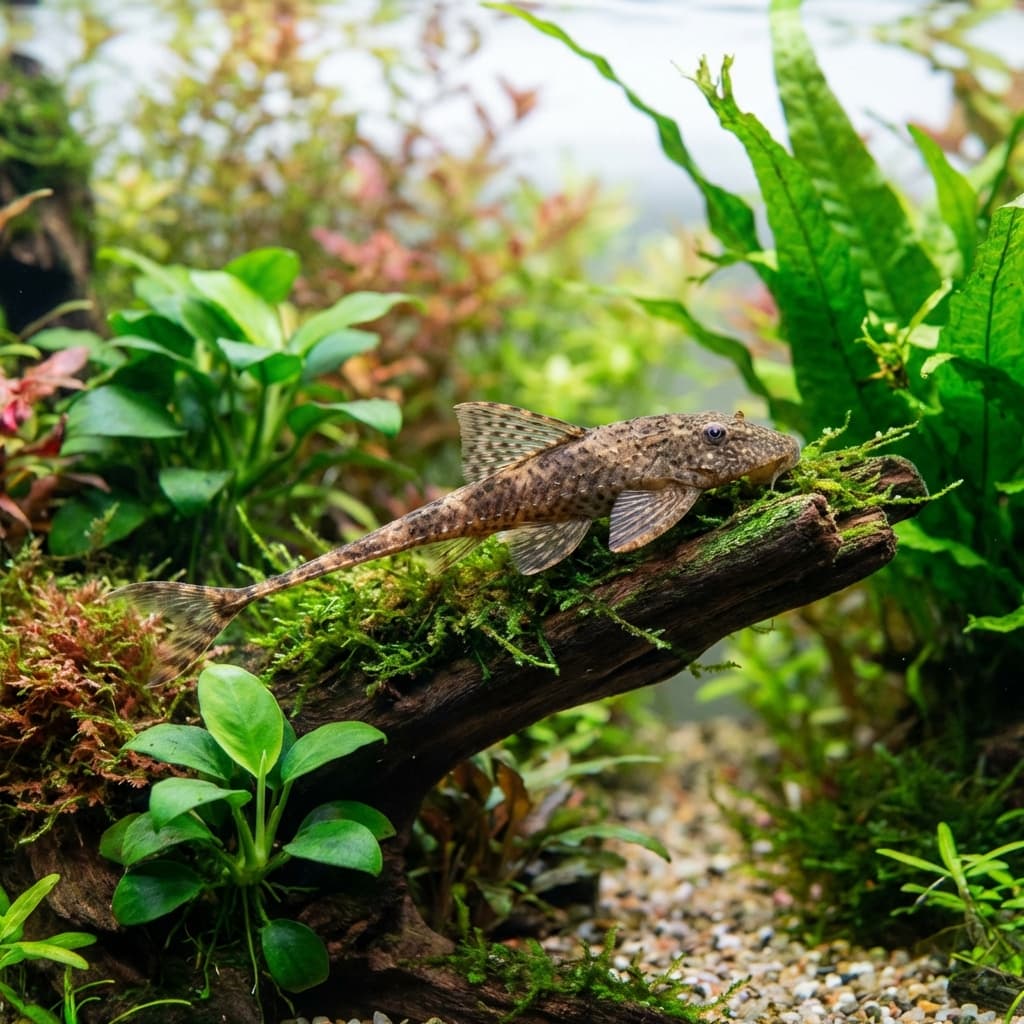
The Whiptail Catfish (Rineloricaria lanceolata), commonly known as the Lanceolate Whiptail Pleco or Chocolate Whiptail, is a slender loricariid catfish from river systems in Bolivia, Brazil, and Argentina. Its extraordinarily elongated, tapering body with a spine-like caudal extension gives it an unmistakable silhouette distinct from typical plecos. The body is covered in brown, tan, and darker patterning that provides excellent camouflage against substrate and wood.
In the aquarium, Whiptail Catfish spend their time clinging to driftwood, flat rocks, and smooth substrate surfaces, where they graze on algae, biofilm, and organic detritus with their inferior (downward-pointing) mouth. They are peaceful, nocturnal, and unobtrusive — contributing quiet beauty and cleanup utility to the community tank.
This species remains relatively small for a loricariid (about 10–12 cm) and is suitable for medium-sized aquariums. It is a cave-spawning species where males guard eggs and fan them with their fins until hatching. The fry are well-developed at birth and easy to raise on fine algae wafers and biofilm.
Whiptail Catfish are generally easy to keep when provided with appropriate soft, slightly acidic water, fine substrate, driftwood for grazing and shelter, and supplemental feeding with vegetable matter and occasional meaty foods.
Care Guide
Water Parameters: pH 6.0–7.5, temperature 22–28°C, GH 4–12. Soft, slightly acidic water preferred but adapts to neutral moderately hard conditions. Good filtration with gentle to moderate flow. Clean water is important for long-term health.
Tank Setup: Minimum 60 liters for a pair. Fine sand or smooth fine-gravel substrate. Plenty of driftwood for grazing and shelter. Flat rocks and small caves for resting and breeding. Live plants are tolerated. Subdued lighting. Gentle to moderate filtration.
Feeding: Supplement natural algae grazing with sinking algae wafers, blanched vegetables (zucchini, cucumber, spinach), and occasional meaty foods like frozen bloodworm. Feed in the evening. Avoid relying solely on algae in a clean tank — direct feeding is necessary.
Tankmates: Excellent community fish. Compatible with all peaceful species: tetras, rasboras, small cichlids, and other gentle bottom-dwellers. Their placid nature and small size make them safe with virtually all non-aggressive tankmates.
Breeding: Cave spawners. Males guard and fan eggs deposited in caves or PVC pipes. Fry are well-developed and accept fine algae wafers soon after becoming free-swimming. Easy to breed in appropriate conditions.
Buy Whiptail Catfish (Rineloricaria lanceolata) from FinsHQ shops
Shops currently listing this species with stock available
Sell Whiptail Catfish (Rineloricaria lanceolata) in your shop?
Join aquarium shops already using FinsHQ. Get a beautiful webshop, mobile app, and inventory management — built for aquatic retailers.
Start your free store