
Zebra Oto (Otocinclus cocama)
Otocinclus cocama
Also known as: Zebra Otocinclus, Zebra Dwarf Suckermouth
Origin: South America (Ucayali River, Peru)
Water Parameters
Quick Stats
- Max Size
- 4 cm
- Min Tank
- 40 L
- Lifespan
- 3–5
- Swimming Level
- Bottom
- Schooling
- Yes (6–12+)
- Diet
- Herbivore
- Temperament
- Very peaceful algae grazer; safe with all species including shrimp
About
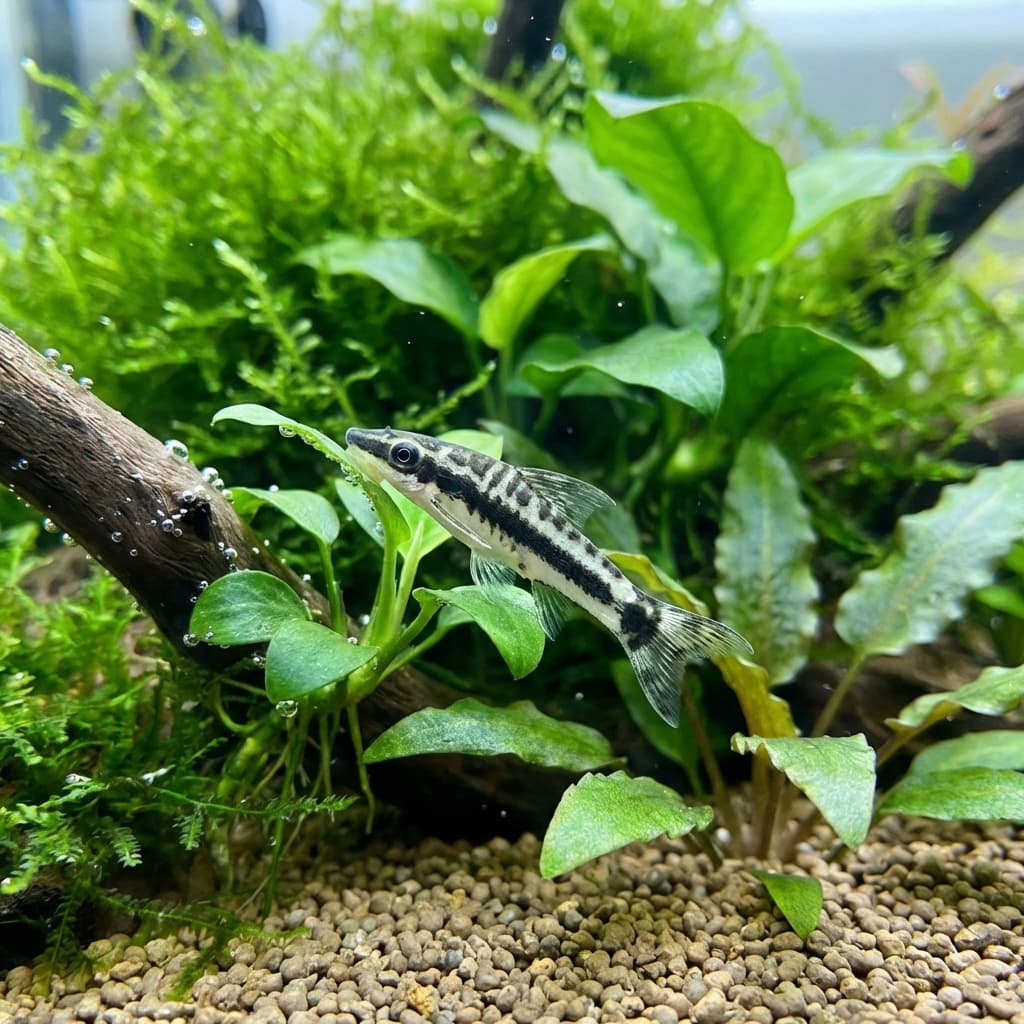
The Zebra Otocinclus (Otocinclus cocama), also known as the Zebra Dwarf Suckermouth, is a small loricariid catfish from the Ucayali River drainage in Peru. It stands apart from other otocinclus species with its striking pattern: bold, contrasting black and white horizontal stripes covering the entire body in a zebra-like design, making it the most visually distinctive of all otocinclus species.
Like its relatives, the Zebra Otocinclus is a dedicated algae and biofilm grazer that adheres to plant leaves, glass, and driftwood surfaces using its suction-cup mouth, consuming soft algae, biofilm, and aufwuchs throughout the day. Its small size (3–4 cm) makes it ideal for planted nano to medium aquariums where it performs valuable algae-cleaning work without disturbing plants or substrate.
Zebra Otocinclus are social fish that do best in groups of 6 or more. They are sensitive to poor water quality and low oxygen — conditions that frequently cause mortality in newly purchased specimens. Acclimation should be done carefully, and a mature, cycled aquarium with established algae growth is essential before introducing them.
Despite their delicacy upon introduction, established Zebra Otocinclus are rewarding, active, and charming fish. Their unique patterning, practical algae-clearing function, and peaceful temperament make them among the most desirable otocinclus species in the hobby.
Care Guide
Water Parameters: Soft, slightly acidic water: pH 6.0–7.5, temperature 22–26°C, GH 2–12. High dissolved oxygen is critical. Good filtration with gentle to moderate flow. Stable parameters are very important — avoid sudden changes. Weekly water changes of 20–25%.
Tank Setup: A well-established, cycled aquarium with existing algae growth is essential before adding Zebra Otocinclus. Minimum 40 liters for a group of 6. Dense planting, driftwood, and algae-covered surfaces for grazing. Gentle sponge or HOB filtration. Avoid overcrowded or newly set-up tanks.
Feeding: Algae and biofilm grazers. Supplement with blanched zucchini, cucumber, and spinach, plus sinking algae wafers. Direct supplemental feeding is mandatory if the tank's algae supply is insufficient. Do not rely on the tank's algae alone — they need regular direct feeding. Feed in the evening.
Tankmates: Excellent with all peaceful community fish of similar or smaller size. Safe with dwarf shrimp (too small to be a predator). Their gentle, non-competing nature makes them ideal for planted community aquariums. Avoid large or boisterous fish that stress them.
Health: Sensitive during acclimation — the most critical period. Ensure oxygen-rich water, established algae, and gentle acclimation. Starvation is a common cause of death — ensure supplemental feeding. Once established, hardy. Watch for ich and bacterial infections.
Buy Zebra Oto (Otocinclus cocama) from FinsHQ shops
Shops currently listing this species with stock available
Sell Zebra Oto (Otocinclus cocama) in your shop?
Join aquarium shops already using FinsHQ. Get a beautiful webshop, mobile app, and inventory management — built for aquatic retailers.
Start your free store