
Anubias Barteri var. Nana
Anubias barteri var. nana
Also known as: Anubias Nana, Dwarf Anubias, Nana Anubias
Origin: Africa (West/Central Africa)
Care Requirements
Quick Stats
- Placement
- Foreground / Midground
- Growth Rate
- Very Slow
- Height
- up to 15 cm
- Propagation
- Rhizome division
About
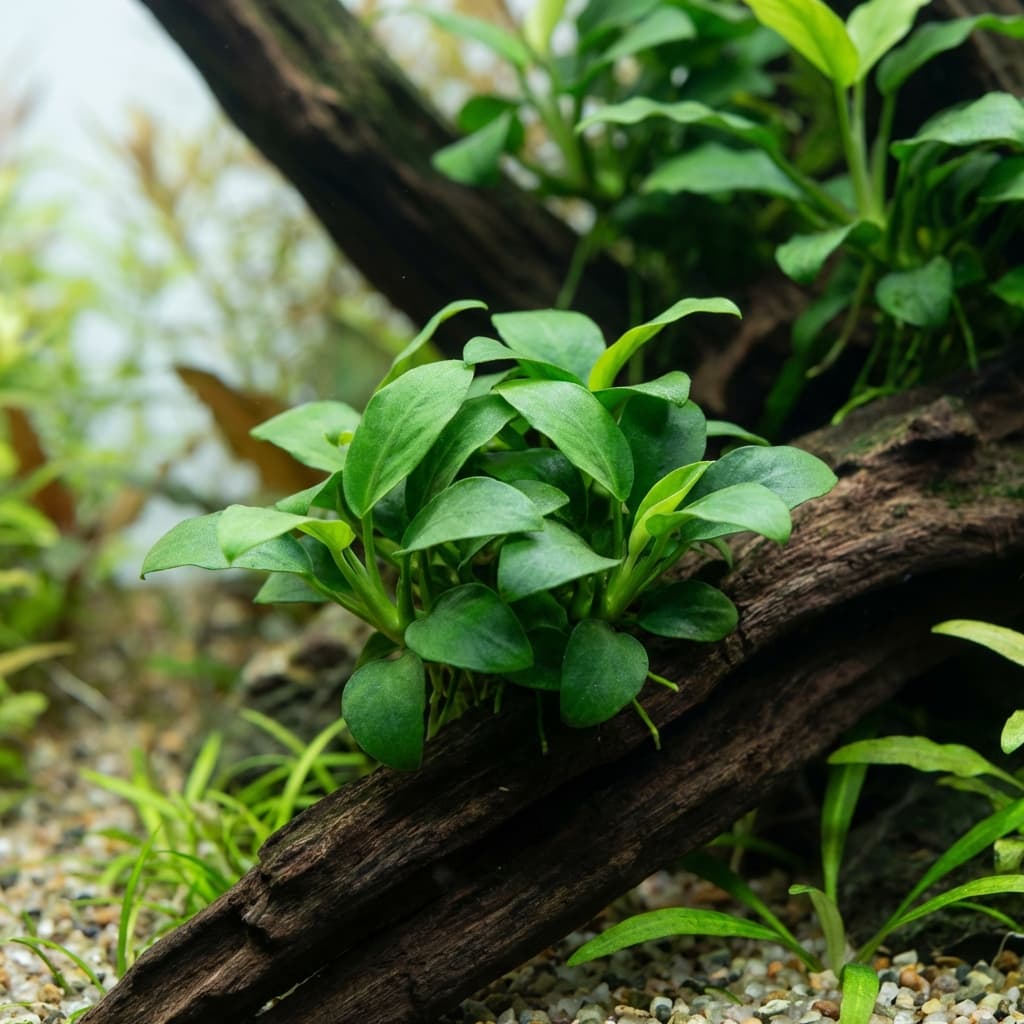
Anubias barteri var. nana is a naturally occurring compact variety of Anubias barteri, native to Cameroon and Nigeria in West Africa, where it grows along the margins of rivers and streams in shaded, humid conditions. In the aquarium it is the archetypal beginner plant — slow-growing, extraordinarily hardy, tolerant of low light, and able to survive without CO2 injection in a wide range of water parameters. The leaves are noticeably smaller and more rounded than the standard A. barteri, typically reaching 4–7 cm in length, with a glossy, dark green surface and a slightly undulating margin. The rhizome is short and compact, making it easy to position precisely on driftwood, stones, or in the midground of the aquascape. Anubias nana is one of the few truly undemanding aquarium plants that retains its beauty indefinitely without high-tech equipment. It is the backbone of countless low-tech planted tanks, nano aquariums, and beginner setups worldwide. Its tough, leathery leaves are highly resistant to fin-nipping fish and vigorous diggers, making it suitable for tanks with cichlids, goldfish, and other boisterous inhabitants that would destroy most other plants. Like all Anubias species, it produces white arum-shaped flowers under both submerged and emersed conditions. Flowers appear periodically without any special treatment in well-maintained tanks and are a pleasant bonus. The main management challenge is algae accumulation on old leaves due to the plant's very slow leaf turnover rate. Keeping light levels modest and the tank clean prevents most algae issues.
Care Guide
Water Parameters Anubias nana is highly adaptable: pH 6.0–7.5, temperature 20–28 °C, and a wide range of water hardness. It tolerates moderately hard, alkaline water better than most tropical aquatic plants.
Lighting Low to moderate light (15–50 µmol) is ideal. This variety is one of the few aquarium plants that genuinely thrives in the shaded spots of a tank — under taller stem plants, in corners, or near the back where light is reduced. High light accelerates algae growth on leaves without meaningfully improving plant health.
Attachment and Placement Attach the rhizome to driftwood, rocks, or decoration with thread, zip ties, or gel glue. The plant establishes a firm grip within 4–8 weeks. For midground placement, wedge the rhizome between rocks or against driftwood and allow roots to anchor naturally.
CO2 and Fertilization No CO2 supplementation needed. Weekly liquid fertilizer with trace elements and iron supports lush, dark green foliage. Slow growth means nutrient demands are modest.
Algae Management Old leaves with established algae growth can be trimmed off at the rhizome. Nerite snails are particularly effective at cleaning algae from Anubias leaves without damaging them. Otocinclus catfish also graze on soft algae coating.
Propagation Divide the rhizome when it grows long, cutting between nodes with a sharp blade. Each section needs at least 2–3 leaves to establish successfully. Share divided portions or use them to fill other areas of the aquascape.
Buy Anubias Barteri var. Nana from FinsHQ shops
Shops currently listing this plant with stock available
Sell Anubias Barteri var. Nana in your shop?
Join aquarium shops already using FinsHQ. Get a beautiful webshop, mobile app, and inventory management — built for aquatic retailers.
Start your free store